Decree 46 pause highlights vietnam’s shift toward business-centered governance
Vietnam’s handling of Decree 46 highlights the importance of legal stability, responsive governance and closer business participation in policymaking. In today's Words on the Street article, we will look deep into how a swift change means to both businesses and government.
THE HANOI TIMES — Stability in the legal and regulatory system undoubtedly plays a decisive role in economic development because policy decisions directly affect domestic enterprises.
The case of Government Decree 46, issued and enforced in late January 2026, illustrates this clearly. The decree caused thousands of imported containers to pile up at seaports and border gates after authorities tightened food safety requirements for imported goods.
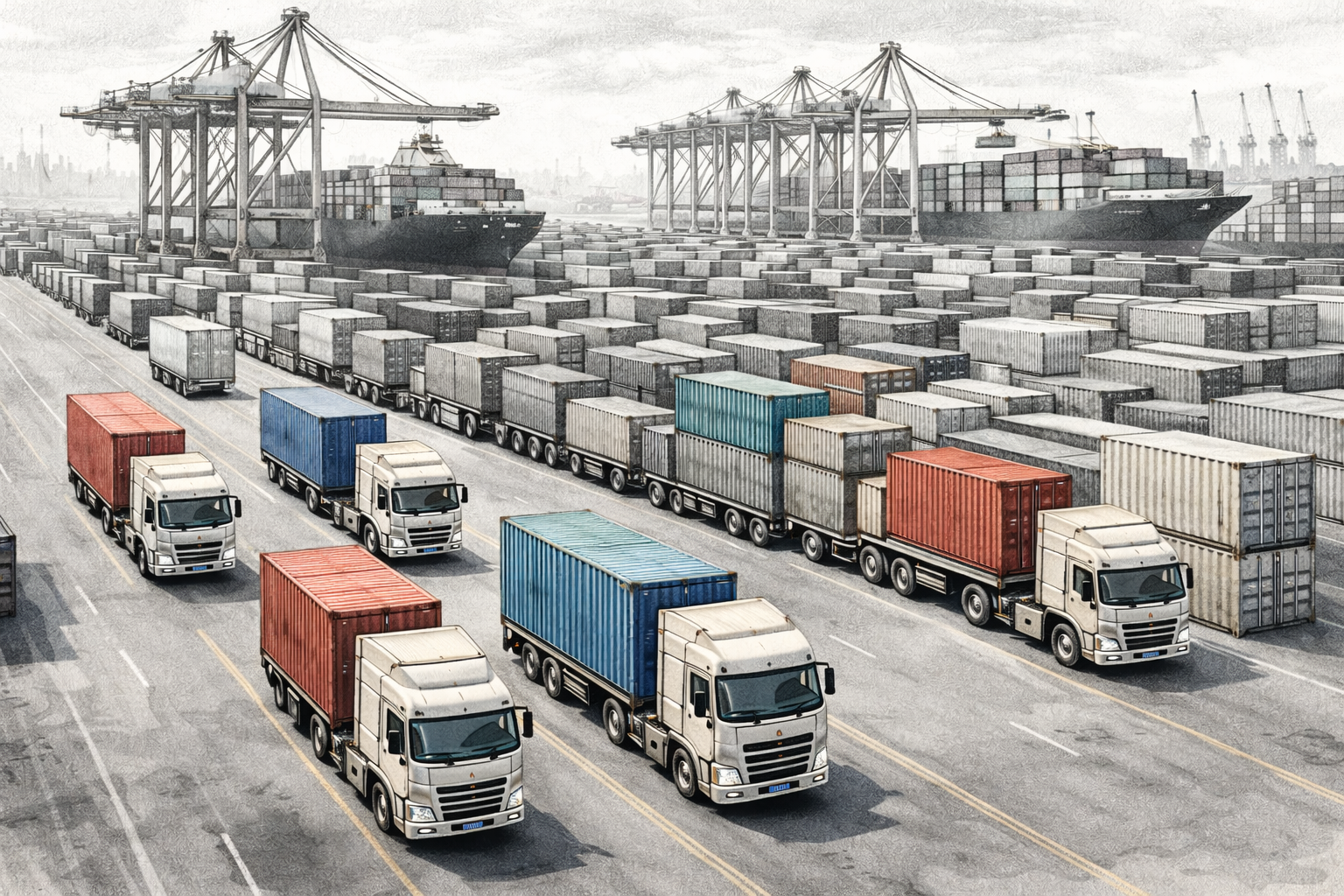
An AI-generated shows thousands of containers waiting for being accepted.
Domestic media reported that as many as 18,000 containers remained stuck at Cat Lai Port in Ho Chi Minh City up to February 4.
One importer had three containers of walnuts worth more than VND12 billion (US$462,200) sitting idle at the port despite clearing customs under existing regulations. The company had to wait without a clear timeline, turning each additional day into higher costs and growing uncertainty.
A logistics manager involved in the shipment postponed a new import order to preserve cash for unexpected port expenses. The situation did not cause a sudden breakdown, but it forced a series of quiet compromises, the kind businesses make when policy risk quickly turns into operational risk.
After the decree took effect, storage fees rose daily, delivery schedules slipped and cash flow tightened almost overnight. Similar disruptions soon spread across other sectors.
Importers of spices, food ingredients and beverages faced bottlenecks as Decree 46 introduced stricter inspection requirements without a clear transition plan. Goods that met requirements one day became questionable the next, not because standards changed, but because procedures did.
Business associations raised concerns early and warned that abrupt changes in inspection procedures could disrupt supply chains and weaken confidence.
Vu Kim Hanh, Chairwoman of the High-Quality Vietnamese Goods Business Association, said companies support stricter food safety controls but called for a phased and practical rollout.
She argued that regulators should manage food safety based on risk levels and introduce measures step by step, warning that uniform inspections without preparation would inevitably lead to congestion.
Her comments reflected a broader view from the private sector. Regulators should distinguish between high-risk and low-risk products and between firms with strong compliance records and those without.
Dau Anh Tuan, Vice Secretary-General of the Vietnam Chamber of Commerce and Industry, said modern regulatory systems worldwide increasingly rely on risk management and post-clearance inspections rather than blanket pre-clearance controls.
He noted that authorities should not treat companies with strong compliance histories and recognized certifications the same as first-time or high-risk importers, as such an approach could penalize those who already follow the rules.
From a policy perspective, tighter food safety oversight draws little opposition. Consumers deserve stronger protection and Vietnam’s regulatory framework must continue aligning with international standards. This episode showed, however, that policy effectiveness depends on careful sequencing, clear guidance and administrative readiness.
Proof for government’s willingness to play ‘supportive’ role
The near-crisis, along with the Government’s timely decision to halt enforcement and step back, revealed how Vietnam’s economic governance continues to evolve in practice.
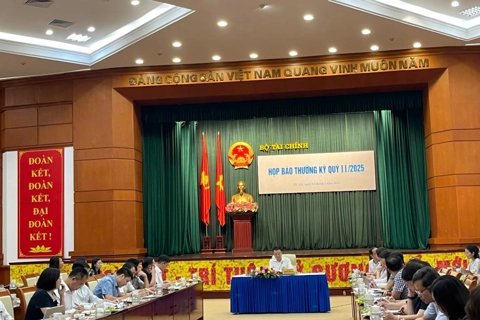
By delaying enforcement of Decree 46 until mid-April 2026, the Government showed that it can respond quickly to feedback from the business community.
The decision carried significance beyond a technical adjustment. It reflected a governing mindset aligned with the Party’s long-standing orientation of building an economy where enterprises drive growth and the State plays a facilitating and supportive role.
For years, Party resolutions and government action plans have emphasized a shift from management to creation and from control to enablement. Under this approach, the Government does not stand above enterprises. It works alongside them, listens to concerns, adjusts policies and removes obstacles to legitimate business activity.
Prime Minister Pham Minh Chinh has repeatedly stressed this approach through his governing motto for the 2021–2026 term, which focuses on enabling governance, integrity, decisive action and service to the people.
Statements by Party General Secretary To Lam and Prime Minister Pham Minh Chinh consistently underline the determination of the Party, the State and the Government to improve the business environment by listening more closely to enterprises. Viewed in this context, the decision to postpone Decree 46 until April 15 stands as a concrete step that turns commitment into action.
The pause eased immediate pressure at ports and warehouses, prevented wider congestion and gave regulators and businesses time to recalibrate. More importantly, it showed that policy implementation allows adjustment when unintended consequences emerge.
This reality highlights the next challenge for policymakers. Responsiveness must lead to institutional clarity. Businesses can adapt to higher standards, but sudden shifts without detailed guidance undermine trust and disrupt operations that rely on long planning cycles.
Seen through this lens, Decree 46 has become more than a food safety regulation. It serves as a practical test of the State’s commitment to a development model that shields enterprises from unnecessary shocks and advances reform through consultation, transparency and reasonable transition periods.
Vietnam’s business community does not resist reform. Many companies recognize that stricter standards support consumer protection and long-term competitiveness. What they seek and what recent actions suggest the Government increasingly provides, include dialogue, predictability and a regulatory environment that supports growth rather than stalls it.
As noted at the outset, many enterprises remain skeptical about the effectiveness of regulatory decision-making. The next step is to standardize policymaking procedures and allow businesses to participate more actively, helping prevent economic disruptions like those seen in recent weeks.