Social Affairs
Deputy PM asks higher set targets for multidimensional poverty reduction programme
Deputy Prime Minister Vuong Dinh Hue instructed the Central Steering Committee for National Target Programmes set higher targets for the multidimensional poverty reduction programme at a committee meeting in Hanoi on January 10.
Deputy Prime Minister (PM) Vuong Dinh Hue chaired the meeting of the Central Steering Committee for National Target Programmes for 2016-2020 in Hanoi on January 10 to review its implementaions in 2016 and deploy tasks in 2017.
Speaking at the meeting, Deputy PM Hue highlighted that in 2016 the country reached positive results in new-style rural area building programme and poverty reduction.
The Deputy PM asked the committee to work harder to ensure at least 50 percent of total communes across the country become new-style rural areas by 2020, and no localities fulfill less than five criteria of the programme.
He also required the committee set higher targets for the multidimensional poverty reduction programme, while directing ministries and sectors to complete legal framework and finalise all documents for the first quarter of this year, especially those related to capital.
The Deputy PM directed the Ministry of Agriculture and Rural Development to guide the implementation of 19 criteria for the new-style rural area building programme in the first quarter of 2017, while publishing a handbook on the programme.
He also urged ministries to improve their policies to encourage stronger engagement of businesses in agriculture, stressing that the current rate of firms investing in the sector is too low.
Addressing the meeting, Minister of Agriculture and Rural Development Nguyen Xuan Cuong said that 2016 was the first year that the new-style rural area building programme was integrated with the multidimensional poverty reduction programme, adding that the ministry completed a large legal framework supporting the work.
15 districts nationwide were recognised as new-style rural areas in 2016, increasing two times against the same period of the previous year, the minister said.
In 2017, the country targets for 30 percent of total communes to fulfill all the programme’s criteria, an increase of four percent over last year.
Total debt for basic construction in the new-style rural area building programme was reduced to about 9.55 trillion VND (434 million USD) at the end of 2016 from over 15.27 trillion VND (694 million USD) early last year, according to the Central Steering Committee for National Target Programmes for 2016-2020.
Seventeen out of 25 provinces with debt of over 100 billion as of January 31, 2016 have managed to trim down their debt to a total 5.62 trillion VND, reported the committee.
In 2016, total capital mobilised for the programme was nearly 228.4 trillion VND sourced from credit loans (59.7 percent), the community (8.5 percent), local budgets (12.3 percent), businesses (5.9 percent) and the central budget (3.2 percent).
During last year, 15 districts and 828 communes were recognised as new-style rural areas, raising the total number of communes fulfilling all criteria of the programme to 2,358, 26.43 percent of total communes nationwide, along with 30 recognised districts. The average commune completed 13.47 out of total 19 criteria.
According to the Ministry of Labour, Invalids and Social Affairs, by the end of 2016, the country’s poverty ratio was about 8.38 percent, a reduction of 1.5 percent year on year. The rate in poor districts was 46.43 percent, down 4 percent year on year.
The northwestern mountainous region recorded highest ratio of poverty reduction which varied from 2.7 to 31.8 percent, according to Ministry of Labour, Invalids and Social Affairs.
In 2017, the committee aims for a 1-1.5 percent reduction in the national average ratio of poor households, four percent in poor and ethnic minority localities and an increase of 1.5 times in per capita income of poor households from 2015.

Deputy Prime Minister Vuong Dinh Hue chairs the meeting of the Central Steering Committee for National Target Programmes for 2016-2020
|
The Deputy PM asked the committee to work harder to ensure at least 50 percent of total communes across the country become new-style rural areas by 2020, and no localities fulfill less than five criteria of the programme.
He also required the committee set higher targets for the multidimensional poverty reduction programme, while directing ministries and sectors to complete legal framework and finalise all documents for the first quarter of this year, especially those related to capital.
The Deputy PM directed the Ministry of Agriculture and Rural Development to guide the implementation of 19 criteria for the new-style rural area building programme in the first quarter of 2017, while publishing a handbook on the programme.
He also urged ministries to improve their policies to encourage stronger engagement of businesses in agriculture, stressing that the current rate of firms investing in the sector is too low.
Addressing the meeting, Minister of Agriculture and Rural Development Nguyen Xuan Cuong said that 2016 was the first year that the new-style rural area building programme was integrated with the multidimensional poverty reduction programme, adding that the ministry completed a large legal framework supporting the work.
15 districts nationwide were recognised as new-style rural areas in 2016, increasing two times against the same period of the previous year, the minister said.

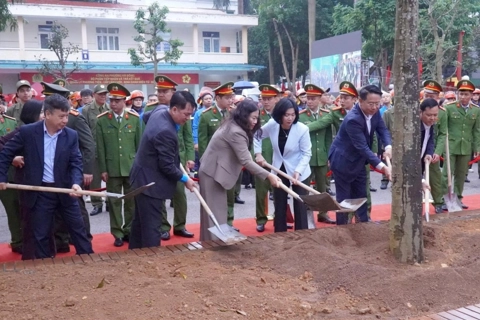
Photo for illustration
|
Total debt for basic construction in the new-style rural area building programme was reduced to about 9.55 trillion VND (434 million USD) at the end of 2016 from over 15.27 trillion VND (694 million USD) early last year, according to the Central Steering Committee for National Target Programmes for 2016-2020.
Seventeen out of 25 provinces with debt of over 100 billion as of January 31, 2016 have managed to trim down their debt to a total 5.62 trillion VND, reported the committee.
In 2016, total capital mobilised for the programme was nearly 228.4 trillion VND sourced from credit loans (59.7 percent), the community (8.5 percent), local budgets (12.3 percent), businesses (5.9 percent) and the central budget (3.2 percent).
During last year, 15 districts and 828 communes were recognised as new-style rural areas, raising the total number of communes fulfilling all criteria of the programme to 2,358, 26.43 percent of total communes nationwide, along with 30 recognised districts. The average commune completed 13.47 out of total 19 criteria.
According to the Ministry of Labour, Invalids and Social Affairs, by the end of 2016, the country’s poverty ratio was about 8.38 percent, a reduction of 1.5 percent year on year. The rate in poor districts was 46.43 percent, down 4 percent year on year.
The northwestern mountainous region recorded highest ratio of poverty reduction which varied from 2.7 to 31.8 percent, according to Ministry of Labour, Invalids and Social Affairs.
In 2017, the committee aims for a 1-1.5 percent reduction in the national average ratio of poor households, four percent in poor and ethnic minority localities and an increase of 1.5 times in per capita income of poor households from 2015.