Digital shift poses challenges for Ninh Binh’s OCOP products online
Ninh Binh’s One Commune One Product (OCOP) producers struggle with high costs, logistics, and digital skills as e-commerce expands, highlighting both barriers and opportunities in Vietnam’s rural digital transformation.
THE HANOI TIMES — As digital transformation accelerates across industries, e-commerce platforms are expected to become an efficient and flexible sales channel for Vietnam’s One Commune One Product (OCOP) items.
Yet, in the northern province of Ninh Binh, the journey of bringing rural products online is proving far from simple.
Barriers to entry

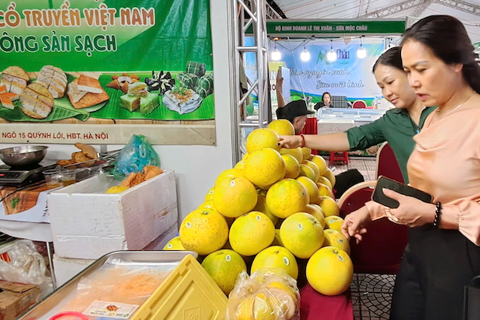
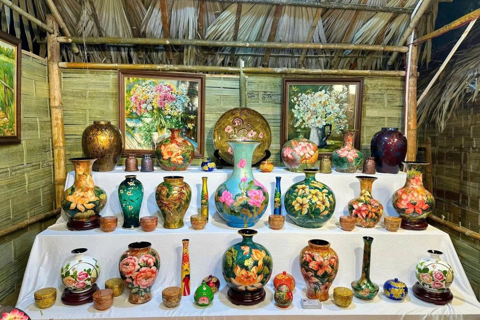
Showcased OCOP products from Ninh Binh Province. Photo: Kinh te & Do thi Newspaper
Sapo Trading and Production Co Ltd, among the first in Khanh Nhac Commune to experiment with e-commerce back in 2019, has tried to sell its four-star OCOP incense brand online.
However, the early phase was fraught with obstacles such as incomplete production process and limited digital business knowledge, said company representative Nguyen Thi Thu Hoai.
The company had halted its e-commerce operations until early 2025 and resumed with its Shopee and TikTok Shop accounts.
Despite the promise of online markets, Hoai reported that e-commerce sales account for just 15% of revenue while platform taxes and fees can swallow up to 25%.
“Constant algorithm changes demand constant adaptation, but with untrained staff, running online stores remains a challenge,” she said.
Other OCOP producers share similar struggles.
Vu Anh Toan, Director of Kim Son Mangrove Honey Co Ltd, said that operating costs and risks of return on TikTok Shop remain high.
As such obstacles outweigh the benefits, the company is considering opting for traditional distribution channels, he said.
For Kim Son Mangrove Honey Co Ltd and many OCOP producers, the problems also include strict requirements on packaging, logistics and transportation, particularly perishable foods and agricultural products.
Tran Van Quoc in Lai Thanh Commune said that a 5ml bottle of basil essential oil is sold for VND25,000 (US$1) at the workshop, but the price falls to VND20,000 ($0.8) online after fees.
“At that price, we cannot compete with imports and industrial goods,” he said.
Quoc added that he is still working with major partners to ensure production and minimize risks.
According to the provincial Department of Agriculture and Environment, Ninh Binh has 980 OCOP products rated three stars or higher, more than 80% of which are food.
Recognition has boosted sales and incomes, but small-scale production, limited raw materials, plain designs and a lack of digital skills have remained major obstacles.
Seeking solutions
According to experts, the real challenge for OCOP producers in exploring online opportunities lies in how to build effective operations, develop brands and retain customers.
Without proper ways in marketing and customer care, OCOP goods risk getting lost among countless competitors.
To address this, Ninh Binh authorities have improved support policies from raw material development and production capacity building to e-commerce training and digital trade promotion.
International interest in Vietnam’s OCOP model is growing, proved by recent visits by agricultural ministers from Africa and Asia-Pacific. These visits proved the potential of Vietnamese OCOP products to go global.
However, to seize these opportunities, OCOP producers must strengthen their capabilities in production, communication, labor skills and technology, according to the provincial Department of Agriculture and Environment.
The department described each product as a “cultural ambassador” carrying Vietnamese identity to the world rather than mere merchandise.
For the province’s OCOP goods to thrive in the digital era, coordinated efforts from the state, businesses and local communities will be essential.