Diplomatic corps praises Vietnam’s sweeping administrative reforms
Prime Minister Pham Minh Chinh highlights Vietnam’s three‑pillar strategy and administrative reforms to meet development goals by 2030 and 2045.
THE HANOI TIMES — International diplomats have endorsed Vietnam’s sweeping government restructuring, with Moroccan Ambassador Jamale Chouaibi saying the reforms set the stage for the nation to achieve its target of becoming a high-income developed country by 2045.
Speaking on behalf of the diplomatic corps at a July 31 meeting in Hanoi, Chouaibi hailed the overhaul as “bold and visionary,” noting that it demonstrates Vietnam’s forward-looking leadership and will boost its standing in global rankings for sustainable development, economic freedom, and innovation.
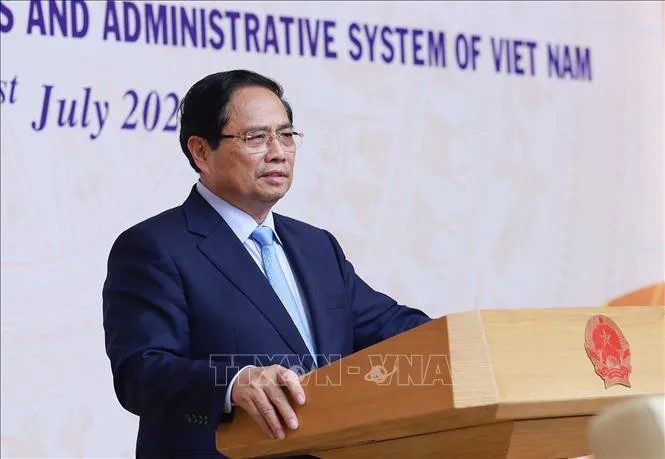
He added that international partners stand ready to support Vietnam’s reform agenda and aspirations, emphasizing that such transformations would also benefit global and regional businesses seeking deeper engagement with the country.
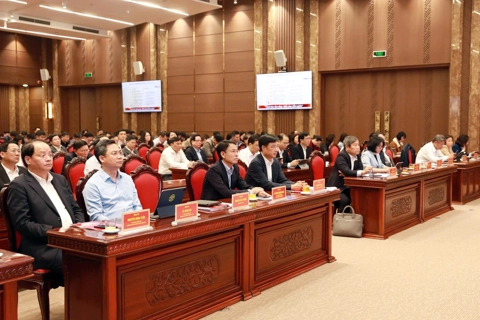
The meeting, chaired by Prime Minister Pham Minh Chinh, brought together over 80 ambassadors, chargé d’affaires, and representatives of international organizations. It provided an update on Vietnam’s major administrative reforms, including the shift to a two-tier local government model and the reduction of cities and provinces to 34.
Minister of Home Affairs Pham Thi Thanh Tra reported that Vietnam has completed the first crucial phase of streamlining its political and administrative system. The reform was made possible through strong political will, broad consensus across the Party and government, and public support.
Key changes include merging five political and social organizations into the Vietnam Fatherland Front, cutting internal agencies by about 45 percent.
At the central level, five ministries and three government agencies were reduced, with similar restructuring at the provincial level, cutting 70–90 percent of internal units.
Vietnam now has 34 provinces and centrally-run cities, down from 63. District-level administrative units have been dissolved, and commune-level units reduced by about 70 percent, leaving 3,321 communes nationwide.
Minister Tra described the reform as a “historic milestone” in Vietnam’s 80-year state-building process, designed to remove bottlenecks, improve governance efficiency, and boost socio-economic development while strengthening national defense and diplomacy.
Long-term vision
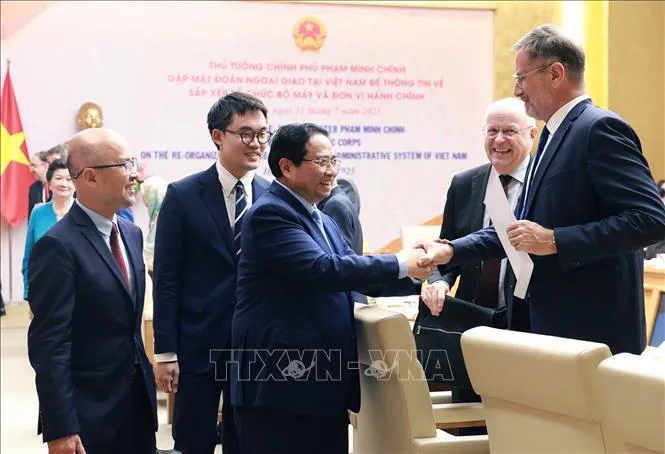
Prime Minister Pham Minh Chinh reaffirmed Vietnam’s development goals of becoming a modern industrialized nation with upper-middle income by 2030 and a high-income developed country by 2045.
“Vietnam is pursuing a governance “revolution” anchored in three pillars, including socialist democracy, a socialist rule‑of‑law state, and a socialist‑oriented market economy, with people at the center of all development efforts,” said Chinh.
The prime minister said that economic development remains Vietnam’s central task. The country aims to build an independent and self‑reliant economy while proactively integrating into the global economy in a practical and effective manner. Its foreign policy is independent and diversified, positioning Vietnam as a reliable partner and good friend to all nations and organizations worldwide.
Other strategic priorities include maintaining the “four no’s” defense policy, building a progressive culture imbued with national identity, ensuring social fairness and welfare so that no one is left behind, strengthening the Party and political system, and intensifying the fight against corruption.
Despite recent global headwinds, Chinh noted Vietnam’s macroeconomic stability, controlled inflation, and sustained growth. Public debt levels remain under control, living standards are improving, and the country’s happiness index has risen by 33 places.
Looking forward, the prime minister warned that reaching the 8.3–8.5 percent growth target for 2025 is critical to laying the foundation for future development. Achieving the strategic goal of becoming an upper‑middle‑income country by 2030 and a high‑income developed nation by 2045 will require continued reforms and bold action, he stressed.
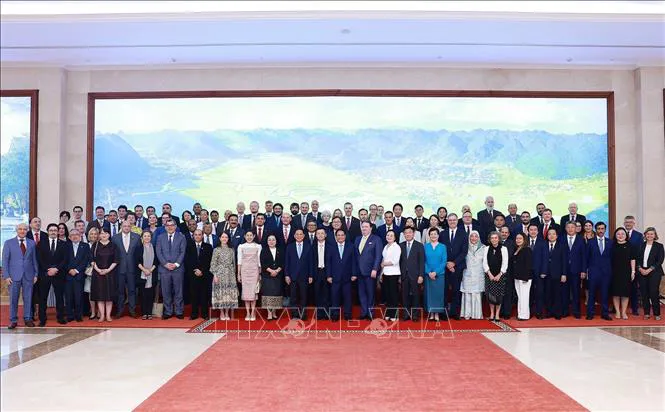
Prime Minister Pham Minh Chinh and ambassadors and representatives of international organizations in Vietnam.
Since early 2025, Vietnam has embarked on what Chinh called a “revolution in state organization,” shifting from a passive administrative model to a proactive, service‑oriented one. This includes major reforms in science and technology, innovation, digital transformation, global integration, legal and institutional breakthroughs, and private‑sector development.
The government also plans new policies in education, healthcare, and culture to support this transformation.
International partners attending the meeting expressed support for Vietnam’s reform agenda, pledging cooperation in green development, administrative modernization, human‑resource development, and social welfare. Chinh described diplomats as “crucial bridges” linking Vietnam with the world in fostering peace, cooperation, and shared prosperity.