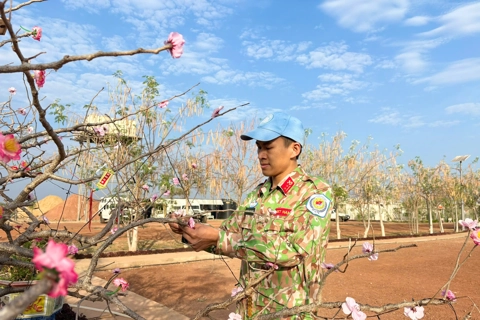
When Vietnamese Tet reaches the heat of Abyei
Vietnamese peacekeepers in Abyei mark Tet amid extreme heat and red dust, sustaining Lunar New Year traditions while rebuilding roads, bridges and schools as a quiet testament to resilience, solidarity and peace.
THE HANOI TIMES — Vietnamese peacekeepers in Abyei are preparing for a Tet far from home amid swirling red dust and dry-season heat that often tops 40°C.
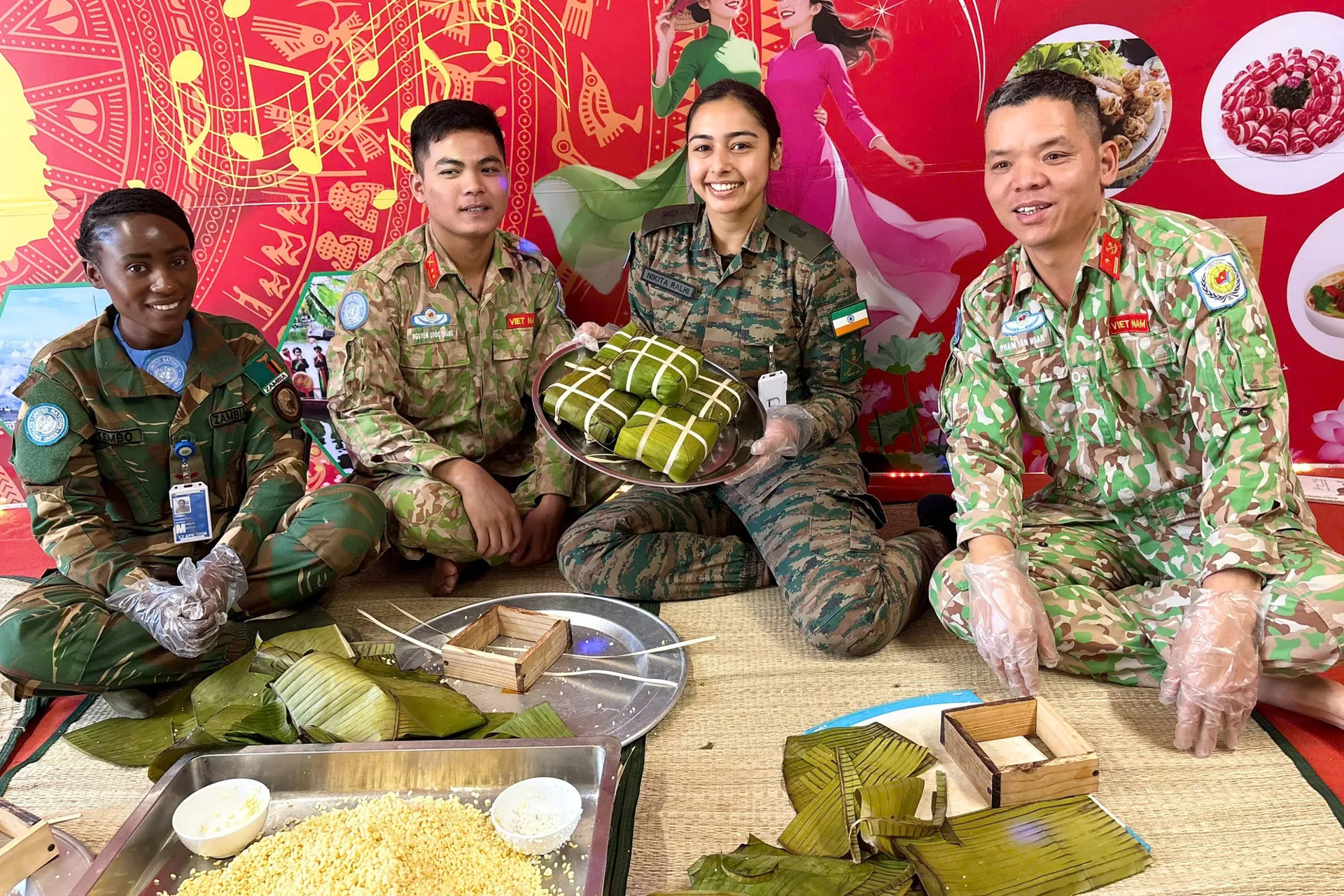
Vietnamese Tet in Abyei marked by iconic banh chung. Photos: Vietnam's Peacekeeping Center
Without familiar things like real peach blossoms, there are only flowers shaped by hand from colored paper and banh chung (glutinous rice cake) wrapped in wild African banana leaves instead of dong leaves. Yet even in harsh conditions, spring still arrives, carrying warmth from home and faith in peace.
For Engineering Unit Rotation 4 of Vietnam, Tet in Abyei comes with roads, bridges and visible change. From the moment the unit arrived, restoring transport infrastructure became a core mission as roads are the lifeline of this disputed region.
Banton Bridge, a key connection point, was quickly reinforced and repaired while damaged community roads were reopened ahead of the Lunar New Year. Every meter met strict United Nations technical standards to ensure safety and revive daily life for local communities.
The impact has been recognized by the mission itself. Colonel Alexander De Lima, Chief of Staff of the United Nations Interim Security Force for Abyei (UNISFA) military force, said Vietnamese soldiers are not only builders but also ambassadors of professionalism and compassion, making improvements to living and working conditions across the mission area.
Behind each completed project are long days under the relentless sun, with red dust clinging to sun-darkened faces. Meals are taken quickly in the shade of heavy machinery and in the sharing of stories of home.
In such situations, wrapping banh chung with forest banana leaves becomes both a necessity and a comfort.
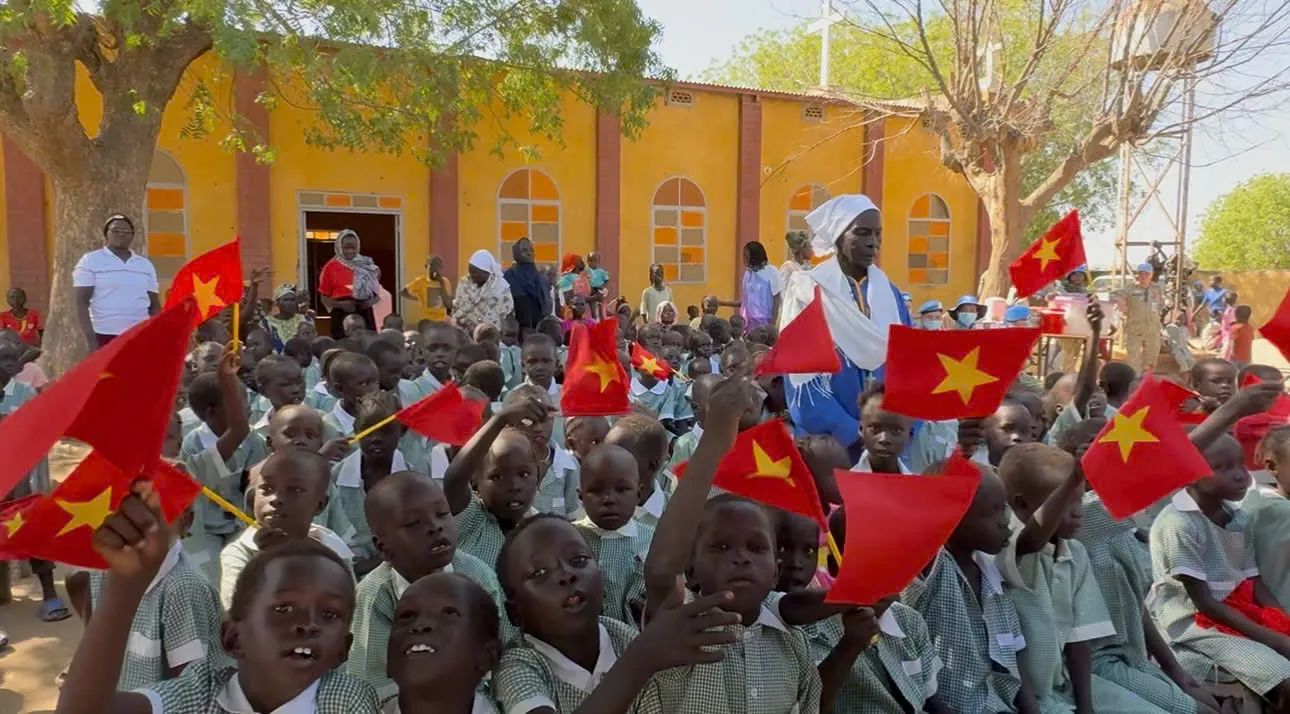
Spring in sparkling eyes of children in Abyei.
As roads return, so does life. In Abyei, where clean water is more precious than gold, reopened routes become corridors of hope for water trucks reaching remote communities.
Lieutenant Colonel Trinh Van Cuong, commander of Engineering Company No. 4, said nothing compares to seeing local children run after the vehicles, shouting “Vietnam! Vietnam!”. For him, that joy is the most meaningful Tet gift.
Vietnamese blue berets have also left their mark on Abyei High School. Between major assignments, the unit deployed machinery to level playgrounds and improve access to classrooms. Road rollers once used for strategic routes now smooth school grounds, helping children avoid dust and falls.
Kon Maneit Matiok, Minister of Physical Infrastructure and Public Utilities in the Abyei Administrative Area, described the effort as an invaluable gift, one that offers a better future for the next generation.
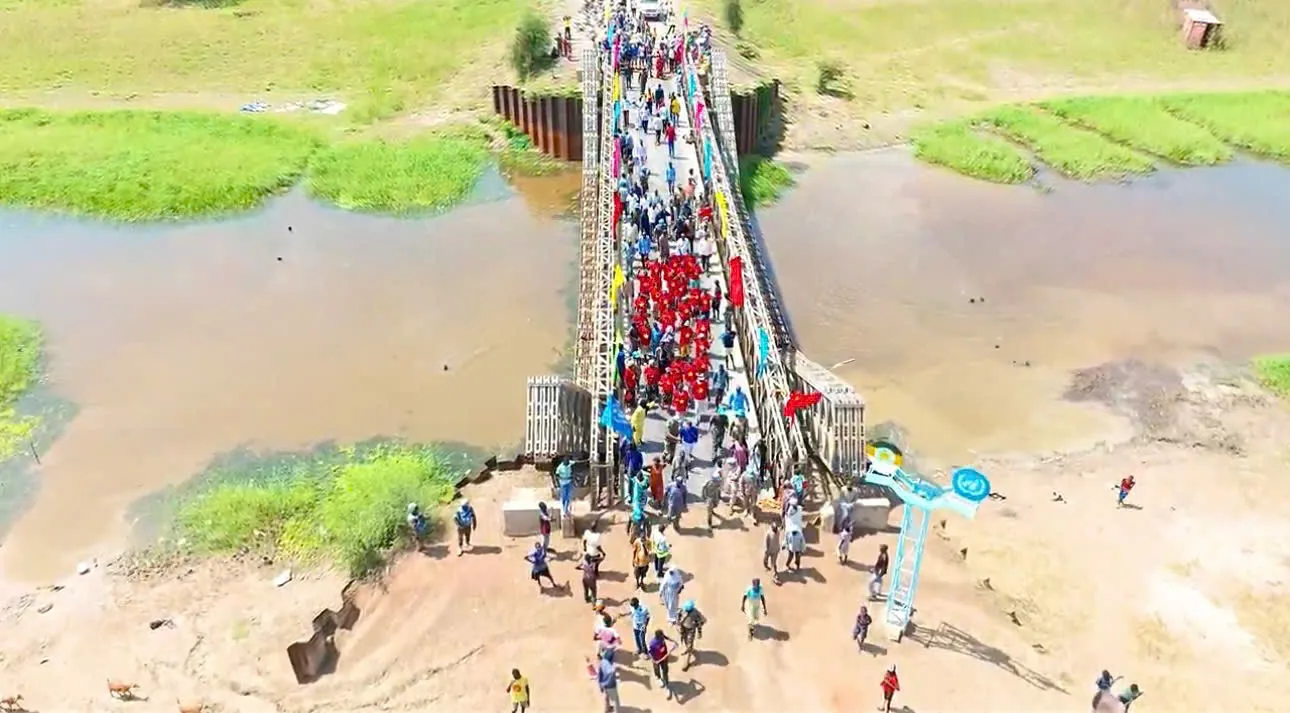
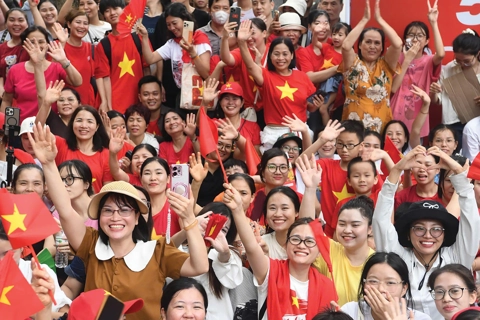
Locals celebrate peace with Vietnam's flag raised high on Banton bridge in Abyei.
As Tet approaches, “banh chung diplomacy” adds warmth to the season as cakes wrapped in banana leaves may lack the deep green of dong leaves but retain their texture and typical flavor. When being shared with international colleagues, they become edible symbols of Vietnamese culture and connection.
For young soldiers like Second Lieutenant Nguyen Trung Kien, spending Tet far from home is both a test and a moment of growth. Under the blazing sun, he carefully shapes paper peach blossoms, bringing Vietnamese spring into the base. Homesickness lingers but gives way to solidarity and pride.
Even as Tet arrives, duty comes first. Indeed, bulldozers and rollers are cleaned as if dressed for the holiday, and full combat readiness remains in place, while rifles stay close even during year-end meals.
That is how Vietnamese peacekeepers protect spring in Abyei through discipline, endurance and an unwavering commitment to peace.