Korean language gains ground as Vietnam approves TOPIK equivalency
Vietnamese students will soon be able to use TOPIK scores for university admissions and graduation requirements, following a government decision that places the Korean-language test within the national foreign language framework starting in 2026.
THE HANOI TIMES — The Ministry of Education and Training's recent recognition of the Korean-language proficiency test TOPIK as equivalent to tiers in Vietnam’s six-level foreign language framework starting in 2026 could spur greater interest in Korean for study and work.
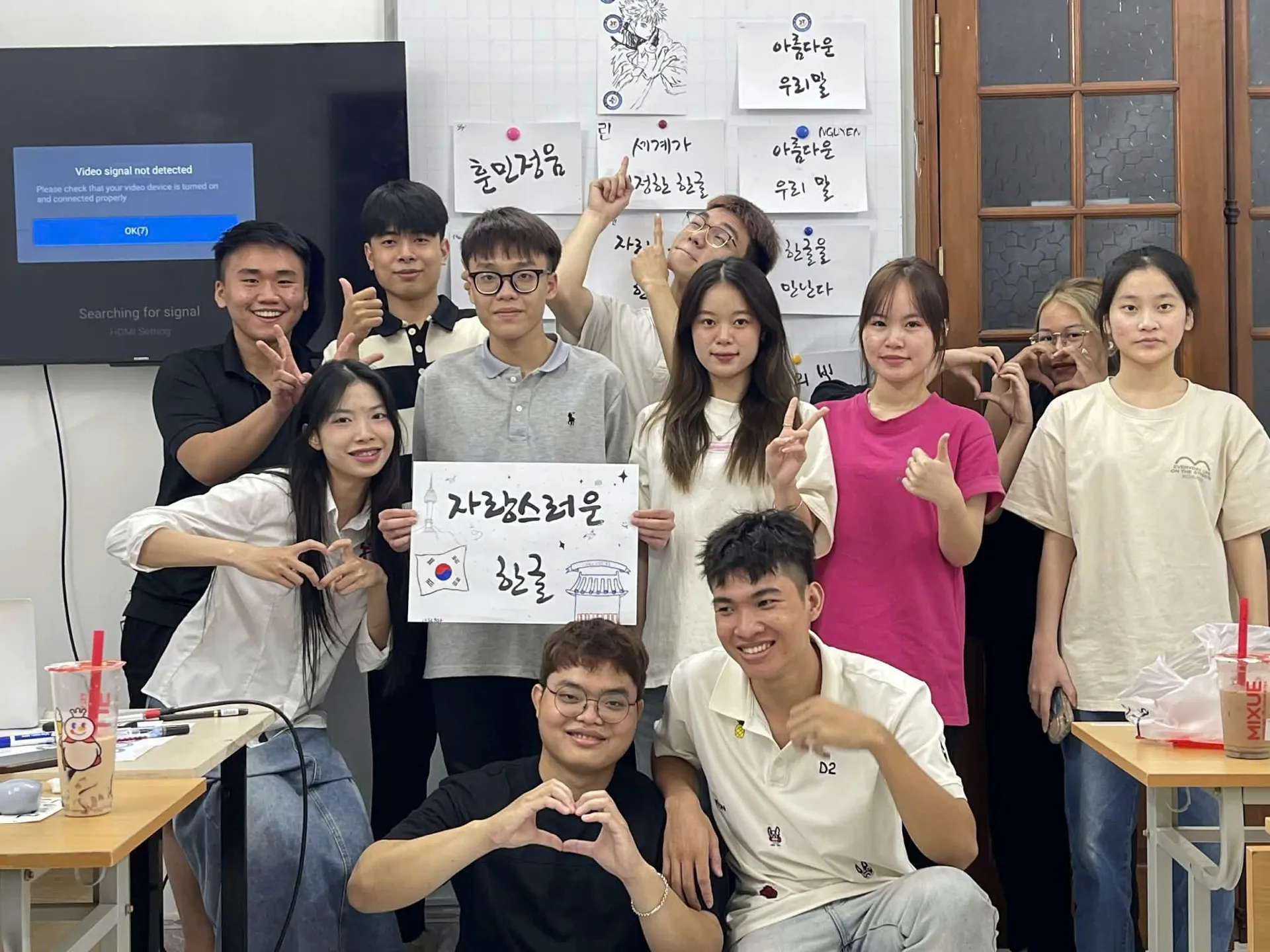
Students in To Thu Phuong’s TOPIK preparation class pose for a group photo. Photostch: Tung Lam/The Hanoi Times
Under the decision, candidates who achieve TOPIK level 3 or higher may be exempt from the foreign language subject in the elective group and universities will convert TOPIK scores for both graduation assessment and admissions.
To Thu Phuong, a TOPIK level 6 holder, former instructor and current student in South Korea, welcomed the decision.
“This is a positive policy because it recognizes real language proficiency and promotes learning beyond English,” she told The Hanoi Times.
Phuong said the move affirms Korean as a mainstream foreign language within Vietnam’s education system, giving students more options in university admissions and easing pressure to focus on a single language.
Duy Thi Hoa, a teacher at the High School for Foreign Languages under Vietnam National University, said the decision brings clear advantages for students.
“For those who have prepared for TOPIK, this recognition provides a competitive edge in university admissions,” she told The Hanoi Times.
Broader language options also help reduce exam pressure and allow students to build on strengths developed early, she added.
Hoa said deepening Vietnam-South Korea ties have driven the change. Many Korean companies operate in Vietnam, increasing demand for professionals with Korean-language skills.
South Korea is the largest foreign investor in Vietnam. As of the end of July 2025, South Korean investors had developed over 10,000 projects with total capital of US$94 billion.
Vietnam is also a major labor supplier to South Korea, where language proficiency is essential for employment.
Recognizing TOPIK in university admissions marks a step toward systematizing Korean-language education in the long term.
Vietnam recognized Korean as a second foreign language in 2020 and as a first foreign language included in the upper secondary graduation exam in 2021.
Nearly 170 primary and secondary schools in Vietnam now teach Korean to about 33,000 students. Vietnam accounts for roughly 15% of global TOPIK candidates, with nearly 86,000 test-takers.
As of 2025, some 350,000 Vietnamese are living, studying and working in South Korea.
According to Hanoi University and the University of Languages and International Studies under Vietnam National University, employment rates for Korean-language graduates range from 96% to 100%.
Strong performers can earn around VND20 million ($770) per month, while average starting salaries range from VND10 million ($385) to VND15 million ($577).
Challenges and obstacles
Vietnam and South Korea established diplomatic relations in December 1992 and upgraded ties to a comprehensive strategic partnership in 2022.
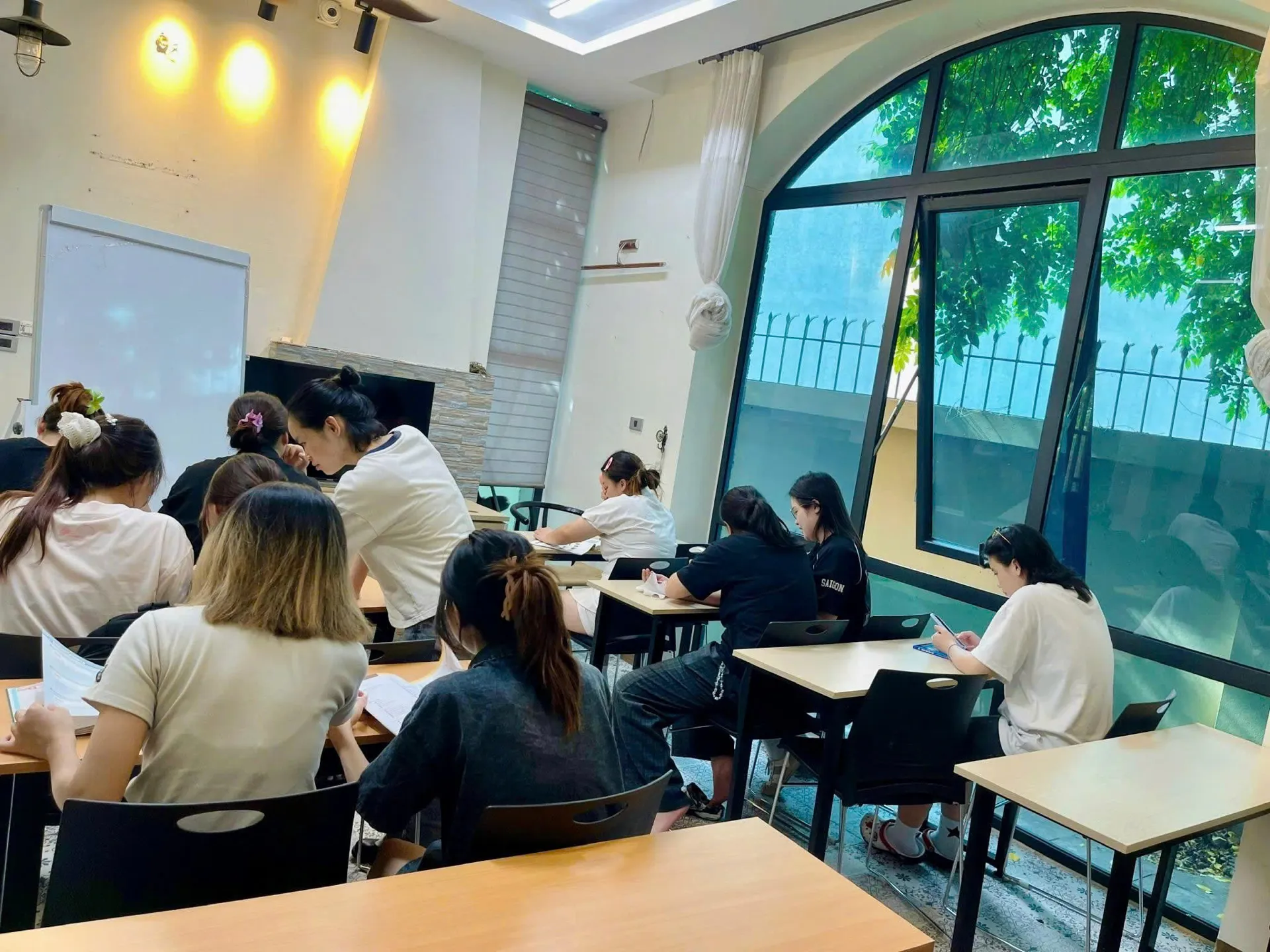
Students take an exam at Duy Thi Hoa’s TOPIK class.
South Korean culture gained popularity in Vietnam in the late 1990s through film, music and fashion, fueling growing interest in learning Korean for study, work and migration.
Doan Nguyen Phuong Linh, a Korean-language student in Hanoi, said job opportunities motivate her studies.
“Demand for Korean-speaking talent in Vietnam is rising alongside expanding bilateral cooperation,” she told The Hanoi Times.
Linh hopes Korean proficiency will open doors to jobs at South Korean companies and organizations operating in Vietnam, including Samsung, Lotte and KOICA.
Nguyen Ngoc Linh, who studies at Korea University on a full scholarship, said she initially learned Korean out of interest in K-pop and films.
“My motivation has changed since I moved here,” she said. “Korean now helps me secure scholarships, internships and interviews.”
She said many learners struggle in the early stages, as reading skills often outpace speaking ability.
“That makes lectures, discussions and daily communication difficult,” she said, adding that differences between academic Korean and everyday speech, as well as regional dialects, require constant practice.
Phuong said learners must move beyond grammar and vocabulary to develop practical communication skills.
“Korean in real-life settings can differ significantly from textbook language,” she said.
She cautioned that converting TOPIK scores, especially from level 3, requires a clear scale and distinction between graduation requirements and admissions criteria.
“If objectives are unclear, students may focus on certificates rather than practical competence,” she said.
Hoa noted that speaking ability remains a common weakness and said many employers now include oral assessments such as OPIc in recruitment.
She urged students to build broader knowledge about South Korea and Vietnam to perform effectively in cross-cultural environments.
Sustainable development of Korean-language education will require stronger teaching staff, updated curricula and closer cooperation with businesses to align training with labor market demand, Hoa said.