Divergent views prevent international-awarded movies from being released at home
Several Vietnamese movies are honored by international specialists but not at home.
The breeze of the Vietnamese movie industry
Set in 19th century Vietnam, The Third Wife tells the story of 14-year-old May who becomes the third wife of a wealthy landowner. The young girl soon finds that, having given birth to a son, the first wife exerts greater influence in the family than the second, who has only had three daughters, and that the only way to gain security and independence is to give birth to a male child.
| A scene from The Third Wife the movie. Photo: Cinematone.info |
.jpg)
Filmed in the northern province of Ninh Binh, the movie was praised for the lushness of its images and exploration of themes including female sexuality and women's role in a patriarchal society.
The film has won several prizes at international festivals including the NETPAC Award at the Toronto International Film Festival (Canada), TVE-Another Look Award at the San Sebastian Film Festival (Spain), and Best Film award at the Kolkata International Film Festival (India).
However, Vietnamese audiences do not have a chance to experience this debut film by young female director Ash Mayfair who real name is Nguyen Phuong Anh. The Third Wife was pulled out of local theaters in 2019 amid criticism of its use of a 13-year-old actress in intimate scenes.
In recent years, many Vietnamese movies have won prizes at international film festivals but are not allowed to show in the local cinemas. This has both deprived the audience of the chance to enjoy these productions and reduced revenue of the Vietnamese film industry as well. “The problem lays on a huge gap in the mindset of the local film industry regulating body and the world movie critics”, according to Phan Dang Di, director of movie Bi, Don’t Be Afraid which won many international awards.
A different point of view
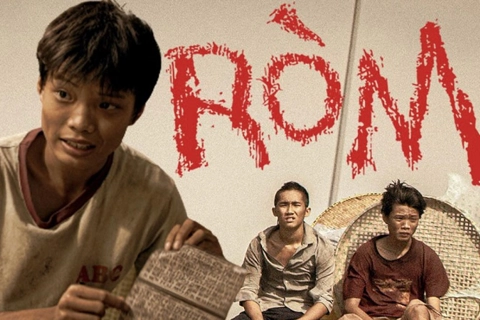
| Rom- the award-winning movie takes the background of the breathtaking brio on the mean backstreets of Ho Chi Minh City. Photo: Saigoneer.com |
.jpg)
The Third Wife is not an exception. Recently, the movie Vi (Taste) won the Special Jury Award in the Berlin International Film Festival’s Encounters section but was banned from showing in Vietnam due to nude scenes and the confusing image showing weak and submissive Vietnamese women, according to the National Film Evaluation Council.
Earlier, movie Rom was also barred from movie houses nationwide although it won the New Current Award at 24th Busan International Film Festival in 2019 and the Best First Feature award at the 24th Fantasia international film festival in 2020.
The prohibition showed the difference in viewpoint between the local film authority and international movie pundits, according to director Di.
Di also shared his view with The Hanoi Times that one of the factors for a movie to win at a big film festival is a special voice, which challenges common views. “However, some could see it as contrary to the tradition and customs,” he said.
Some filmmakers and local experts felt sorry for the ban on these films. One of them, director Vo Thach Thao said, "I wonder when filmmakers will be able to express their own artistic views and their work will have the opportunity to reach their audience."
“Despite some scenes of violence, the movie perfectly portrays the life of Ho Chi Minh City’s working-class, where there’s fierce competition for survival among the poor. However, Rom also shows that there are still people willing to lend a helping hand in this urban jungle, where love and sympathy are still existing,” movie commentator Hoang Cuong told The Hanoi Times.
No ‘line crossing’
Vi – Taste, the first film of Le Bao, showcases a dark and dreamlike world, at the frontier between dream and reality. Photo: Berlinale.de |
.jpg)
It is a fact that young filmmakers have followed the world trend to produce and bring their products to be honored at international film festivals.
These Vietnamese films left an impression of Vietnamese culture and people with international audiences, however, mainly the dark sides, as some other experts said. For example, while Vi tells the story of a Nigerian football player who ends up living with four middle-aged Vietnamese women in Saigon, Rom is about a 14-year-old boy, a lottery seller who earns commissions only when he picks the lucky numbers for his slum neighborhood’s debt-ridden dwellers.
But they also agreed that there is no reason to not make a good dark movie. However, it is a fact that not every filmmaker is able to do it at the moment. Some suggested a limited release for these kinds of movies only for research and references. However, it is still being considered as it has never been stipulated in any regulation.
There are different views and awards in different councils, according to Director of the Vietnam Cinema Department Vi Kien Thanh. “There are many films that though winning international awards are not appreciated by local experts because of the different culture standards,” he told The Hanoi Times.
Therefore, in order to reach the ultimate goal of a film, which is to have the agreement from the public, Deputy Minister of Culture, Sports and Tourism Ta Quang Dong has recently emphasized: “A harsher reprimand is needed for movies like Vi and Rom as a warning. At the moment, only producers and publishers are fined. Creators should be involved as well. In addition, it is also necessary to study and have regulations to prevent motion pictures from possibly ‘crossing the line’.