Domestic violence, gender-biased sex selection: Roots of gender inequality in Vietnam
Vietnam posts increasingly unbalanced sex ratio at birth at 111.5 male births for every 100 female newborns compared to the world’s normal rate of 105.
Harmful practices for women and girls like gender-biased sex selection and domestic violence continue to remain in Vietnam, requiring instant and persistent actions by the whole society and all stakeholders.
| Vietnam and UNFPA have made efforts to increase the value of the girl child. Photo: UNFPA Vietnam |
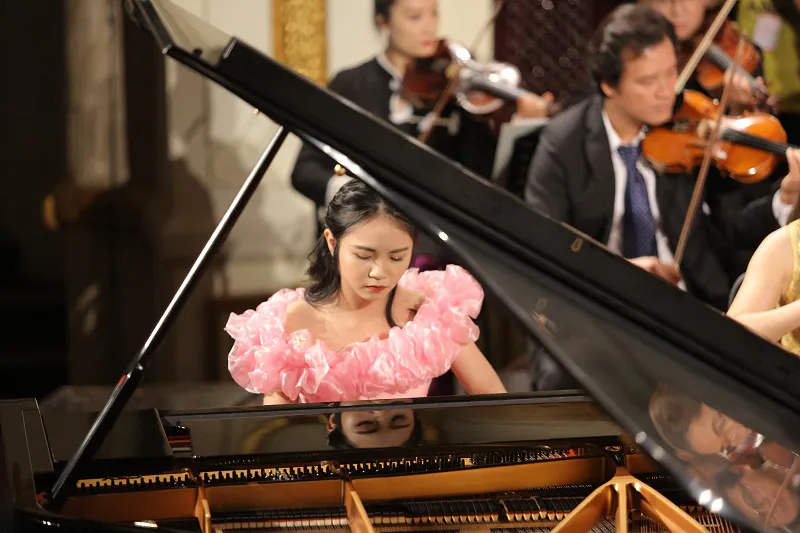
A benign tradition “son preference” which is anything but is a product of gender-biased systems that places higher social status to men and boys, and favors male over female children.
The manifestation of gender biased sex selection can be directly measured through “sex ratio at birth (SRB)” and Vietnam’s rate is the third highest in the world, following China and India.
According to the United Nations Population Fund (UNFPA), the unbalanced sex ratio at birth was first identified in Vietnam in 2004. Since 2005, it has rapidly increased and reached 111.5 male births for every 100 female births in 2019 as indicated in the 2019 Population and Housing Census, against the biologically “natural” or “normal” sex ratio between 105 and 106.
Symphony concert “Girls Deserve to Shine” opens at the Hanoi Opera House on November 27. Photo: UNFPA Vietnam |
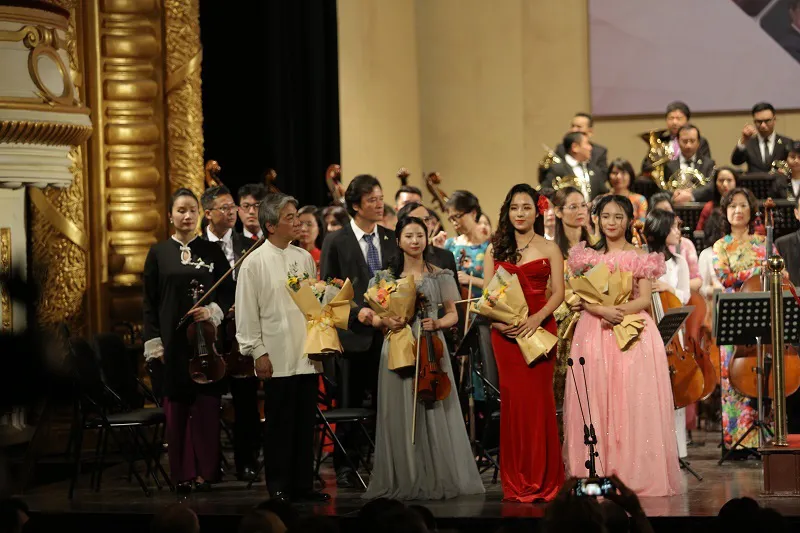
Evidence shows that this demographic imbalance is a result of pre-natal sex selection, which is the termination of pregnancy when the fetus is determined to be female. UNFPA’s State of the World Population Report estimates that every year, 40,800 female births are missing in Vietnam. It means that 40,800 girls are not born every year in Vietnam because they were found to be a girl.
Meanwhile, nearly 2 in 3 women (62.9%) experienced one or more forms of physical, sexual, emotional, and economic violence and controlling behaviors by their husbands in their lifetime as indicated in the 2019 National Study on Violence against Women, which was conducted by the government of Vietnam with financial and technical support from UNFPA and the government of Australia.
But seriously, domestic violence is largely hidden in Vietnam. Almost half of women did not tell anyone their status, and all women who experienced physical and/or sexual violence from husbands did not seek any help from formal service providers, largely because of fear of stigma, discrimination and further harassment.
| Ms. Naomi Kitahara, UNFPA Representative in Vietnam at the concert. Photo: UNFPA Vietnam |
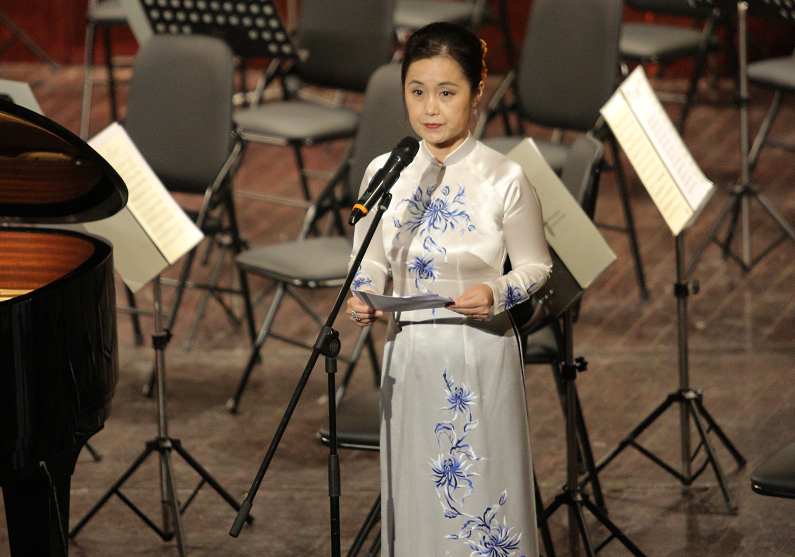
“The underlying cause of all these is gender-inequality and under-valuing of girls and women,” Ms. Naomi Kitahara, UNFPA Representative in Vietnam, said at the first-ever symphony concert “Girls Deserve to Shine” on November 27, which featured promising and outstanding Vietnamese young female soloists.
Organized at the Hanoi Opera House by UNFPA in collaboration with the Ministry of Culture, Sports and Tourism (MOCST) and the Vietnam National Symphony Orchestra, the concert is aimed to appreciate the value of gild child, as equal as to boys.
The concert is the initiative between the government of Vietnam and UNFPA in joining hands to raise public awareness and increase the value of the girl child within the context of addressing domestic violence and gender-biased sex selection in the nation.
The concert was part of the National Action Month on Gender Equality and Prevention of Violence against Women and Girls and 16 Days of Activism against Gender-Based Violence.
“Each one of us has a unique role and a shared responsibility to address issues that affect us all towards inclusive, equitable and sustainable development in Vietnam,” Ms. Naomi Kitahara said at the opening of the concert.