Exhibition presents two quintessences of Vietnamese art
At the Temple of Literature in Hanoi, lacquer paintings and agarwood sculptures come together in a poetic harmony of color and calm.
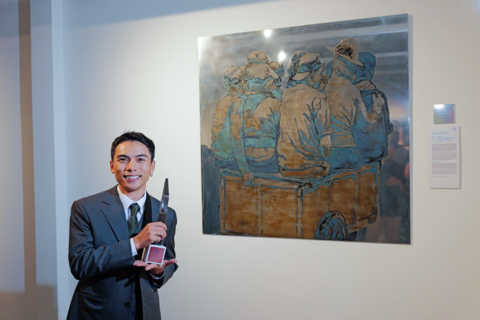
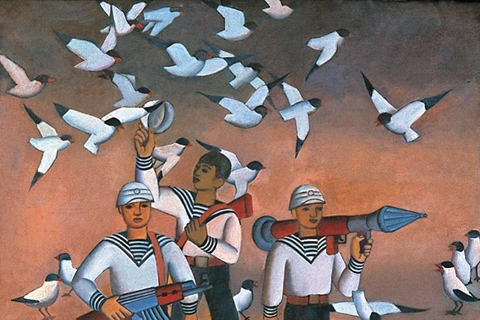
THE HANOI TIMES — The Sac Tam (Colors of Soul) exhibition at Hanoi's Temple of Literature until October 22 showcases 23 lacquer paintings and agarwood sculptures on themes of Buddhism, scholarship, filial piety and the capital city's heritage.
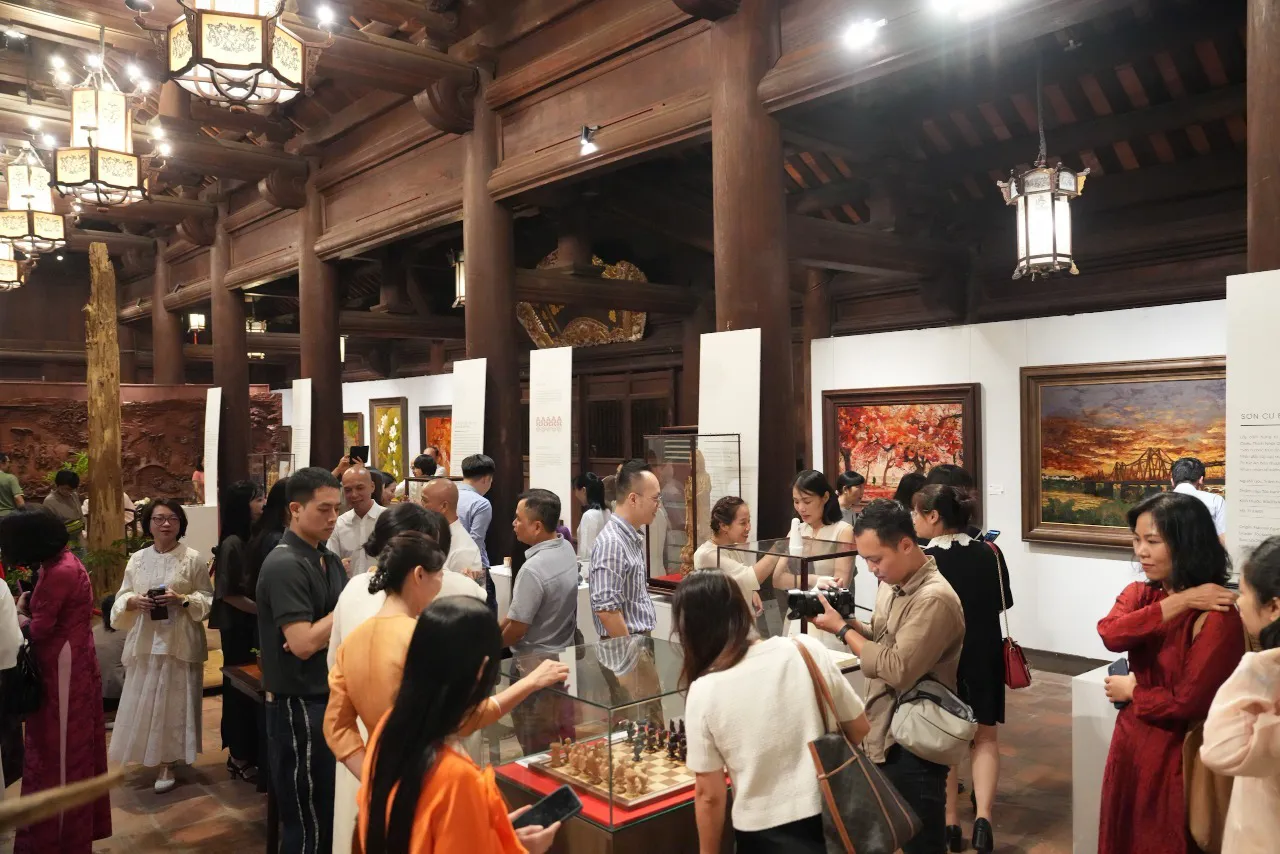
The exhibition captures the attention of visitors to the Temple of Literature in Hanoi.
Through the work of 14 painters and sculptors, lacquer is reimagined with a contemporary touch that preserves tradition while exploring new expressions. Featured artists include Trieu Khac Tien, Do Khai, Luong Duy and Trinh Que Anh.
According to Dr. Le Xuan Kieu, Director of the Center for Scientific and Cultural Activities Van Mieu - Quoc Tu Giam, the Sac Tam exhibition has been a long-held vision. Artists have made efforts to create works that embody the spirit of Vietnamese heritage.
“The artworks honor the pure beauty of nature, which forms the depth and identity of Vietnamese culture,” he said.
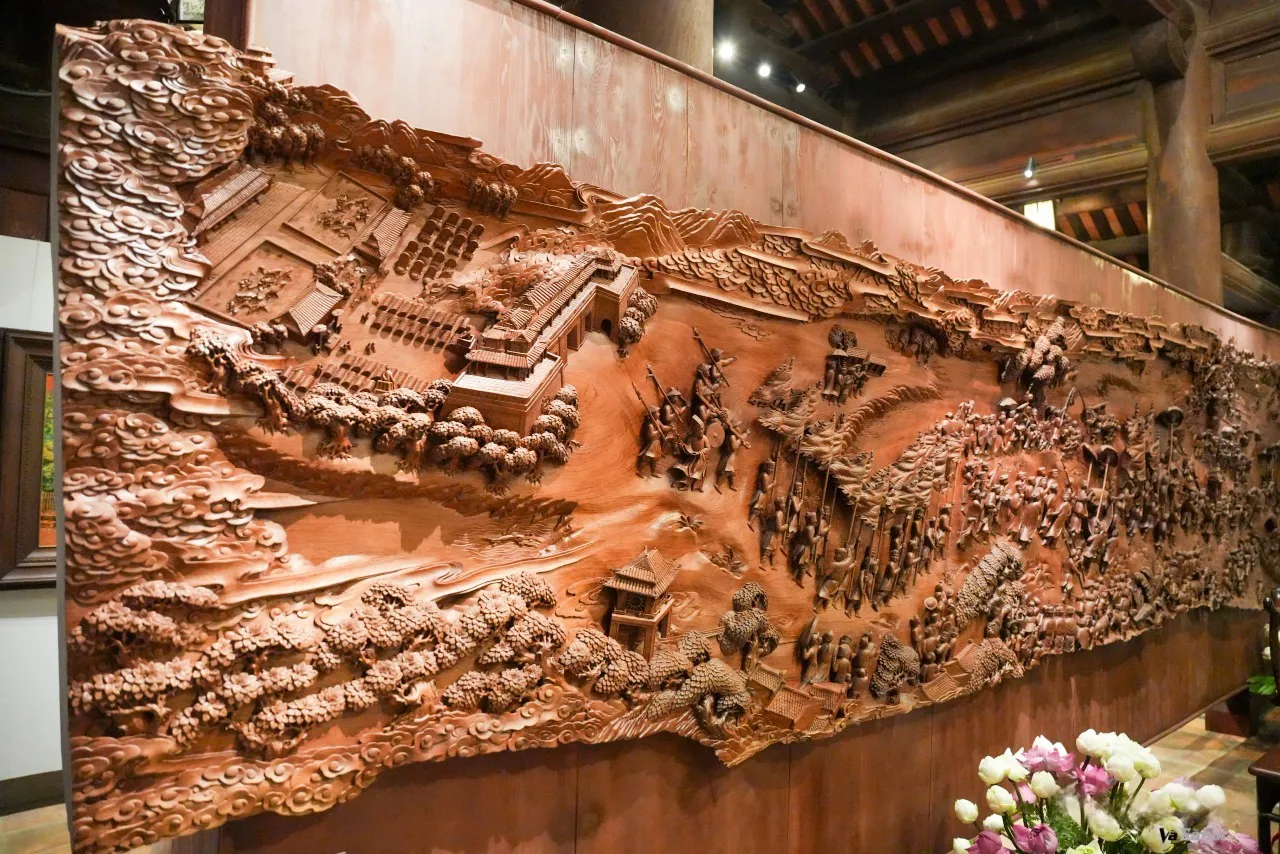
The magnificent woodcarving Vinh Quy Bai To (Return in Triumph to Pay Tribute to the Ancestors), crafted by Vietnamese artisan Bui Trong Lang.
Alongside lacquer works, visitors can admire unique agarwood creations shaped by the essence of Vietnamese soil and meticulous craftsmanship.
The exhibition’s highlight is Vinh Quy Bai To (Return in Triumph to Pay Tribute to the Ancestors), a nationally acclaimed wooden painting in the Front Hall of the Thai Hoc area. It holds two Vietnamese records: the largest hand-carved wood painting from a single block and the one featuring the most characters.
Carved from rare rosewood, the piece measures 8.33 meters long, 1.7 meters wide and 16 centimeters thick. Crafted over nearly three years by artisan Bui Trong Lang and his team at Bui Gia workshop, it depicts the journey of Vietnamese scholars from study to their honored homecoming procession.
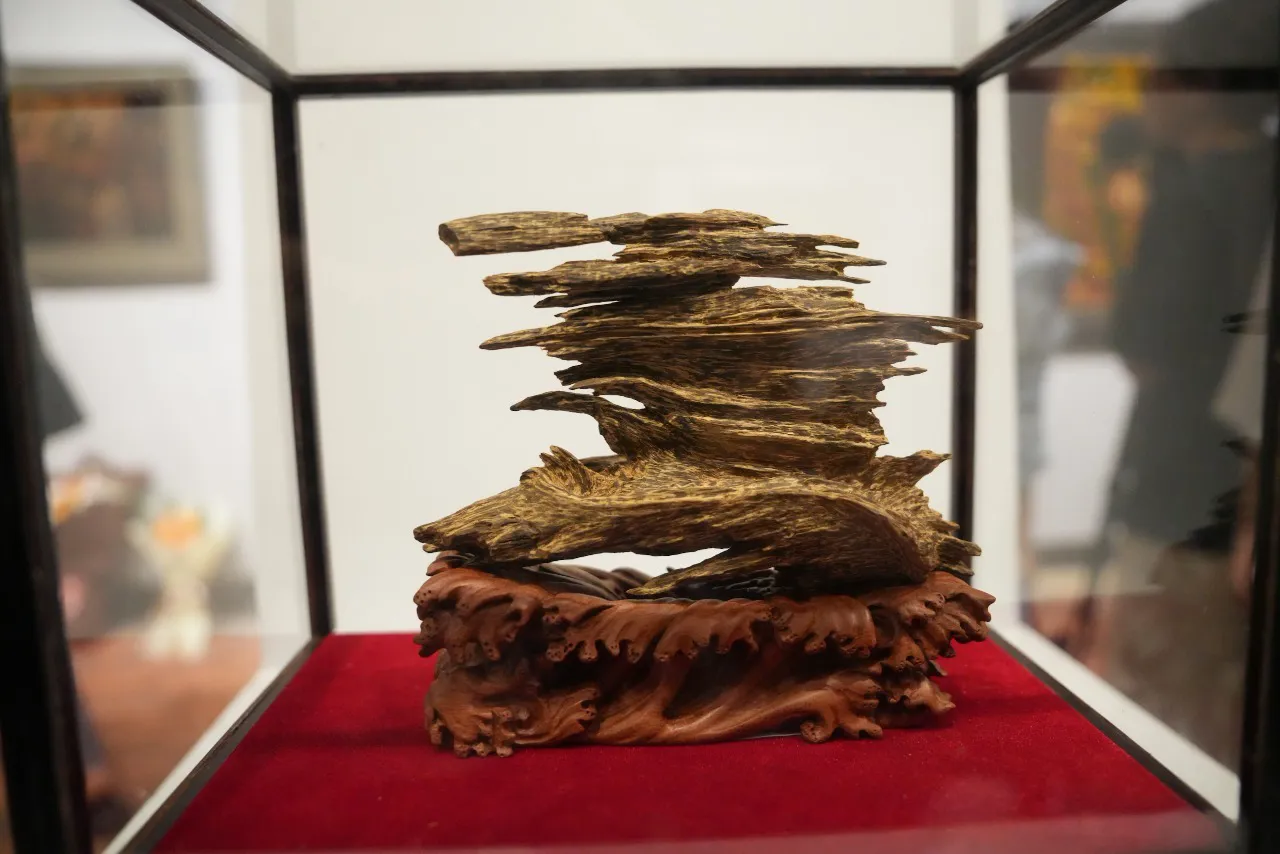
An agarwood driftwood sculpture graces the exhibition.
Set in a festive scene, the woodcarving features iconic landmarks such as the Moon Gate, Thai Hoa Palace of Thang Long Imperial Citadel, and the Literature Pavilion, alongside banyan trees, wells and village courtyards, forming a sweeping wooden epic.
The artwork took 27 months of meticulous hand-carving after nine months of research and sketching. It includes 348 figures, 41 symbolic elements like flags and fans, 55 animals and 35 architectural motifs, each enriching the intricate narrative.
The exhibition also presents other wood carvings and agarwood jewelry, reflecting a cultural symphony where the scent of incense and the sheen of lacquer honor the Vietnamese spirit.