Explore Tuong Phieu Communal House a 600 year old treasure in Hanoi
Set amid a peaceful flower-growing village on Hanoi’s outskirts, this centuries-old communal house offers international visitors a captivating glimpse into Vietnam’s living heritage.
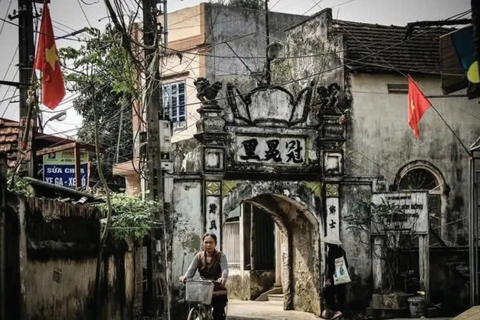
THE HANOI TIMES — Tucked in the quiet countryside 40 kilometers west of central Hanoi, Tuong Phieu Communal House, also known as Ca Communal House, stands as one of the Doai region’s most cherished architectural and spiritual landmarks in Son Tay Town.
The Doai region, historically encompassing several ancient villages west of Hanoi, forms part of the capital’s cultural hinterland and is renowned for its rich traditions, communal houses, and festivals.
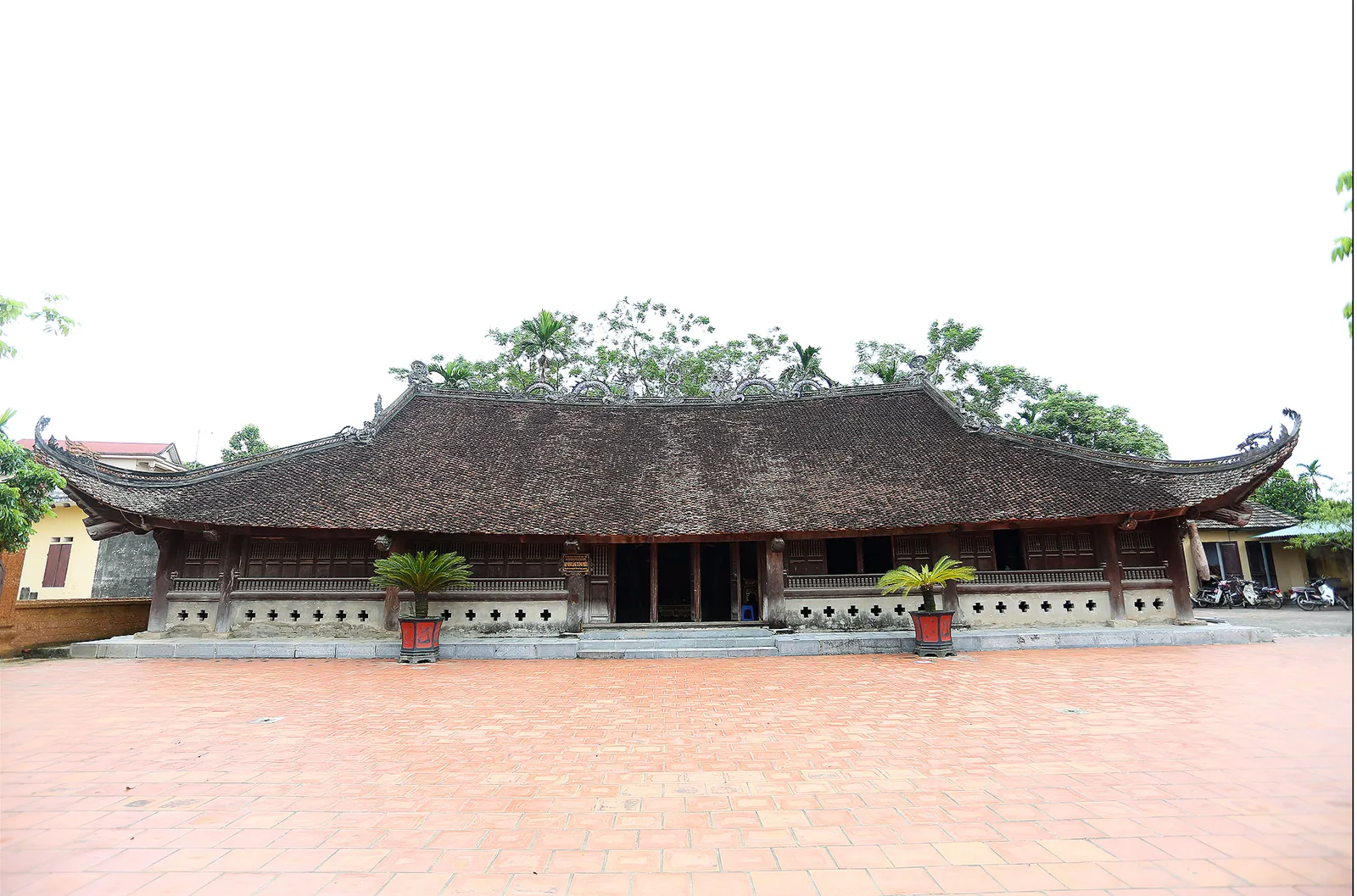
A timeless landmark, the communal house safeguards remarkable architectural and spiritual values of ancient Vietnamese culture. File photo
Nearly six centuries old, the site embodies both tangible and intangible heritage and has earned national-level recognition for its distinctive architecture and legendary festival traditions.
A sacred legacy
Set in Tuong Phieu Village of Phuc Tho Commune, the communal house is the largest of its kind in the ancient Doai area, a storied land once linked to the millennial capital of Thang Long.
According to local lore, the structure, built in the 17th- 18th centuries under the Le Dynasty, honors four village tutelary deities, including the three Tan Vien deities (Cao Son, Tan Vien and Quy Minh) or so-called Tan Vien Son Thanh and the Quan Son Tutelary Deity.
Its cultural significance was affirmed in 2018 when the Vietnamese Prime Minister recognized Tuong Phieu Communal House as a Special National Relic, followed by the listing of its traditional festival as a National Intangible Cultural Heritage.
Local elders recount that the communal house faces the Ba Vi Mountain Range, where the Temple of Tan Vien Mountain God stands.
According to preserved royal decrees and village lore, Tan Vien Son Thanh, during one of his heavenly patrols, discovered that Ca Village, now Tuong Phieu, sat at a precarious confluence of four rivers where repeated flooding destroyed farms and livelihoods.
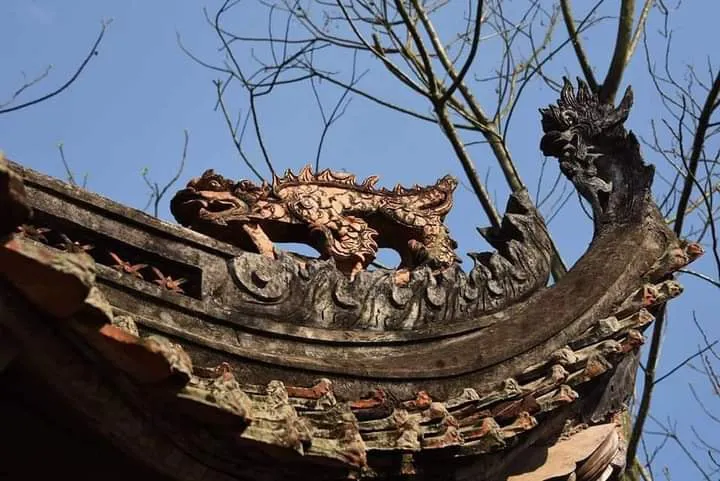
The ancient, moss-covered roof of the communal house adorned with meticulously carved figures. Photo: Doan Tan/ Phuc Tho Commune, Hanoi
Moved by compassion, he paused his journey to teach villagers how to build dikes and craft long-handled net traps to secure fish, transforming the community’s fortunes.
Grateful for his help, locals later built the communal house to honor the deity who saved their land.
A masterpiece of ancient Vietnamese craftsmanship
Tuong Phieu Communal House showcases traditional materials such as ironwood, laterite and baked clay brought together in a form rarely seen elsewhere.
Local cultural experts note that the site still preserves unique worship customs blending Chinese cultural motifs, Indian Buddhist influences and indigenous spiritual beliefs.
Viewed from the courtyard, the sweeping rooflines evoke the elegance of a grand stilt house.
At the roof ridge sits a sculpture of two dragons gazing toward a radiant sun, a hallmark of the Revival Le Dynasty (1533-1789).
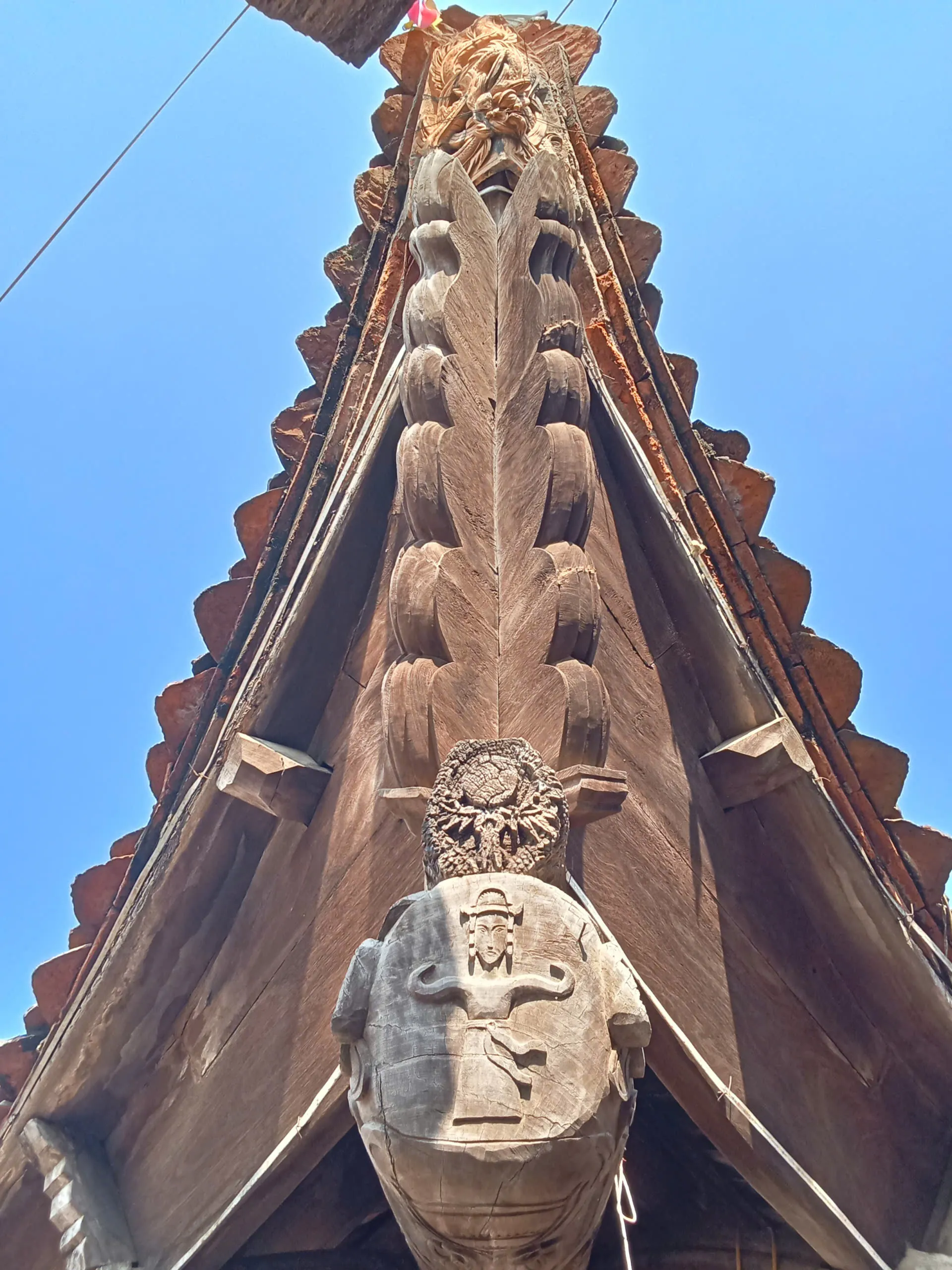
The roof of Tuong Phieu Communal House features remarkably vivid, intricate carvings. Photo: Jenna Duong
Inside, the Main Hall showcases exquisite Vietnamese woodcarving. Dragons, phoenixes, deer, unicorns and even graceful fairy figures appear on beams, panels and pillars. The communal house also preserves valuable heirlooms, including 17th and 18th-century palanquins, six Nguyen Dynasty royal decrees and centuries-old ceramics. Together, they form a living museum of spiritual and artistic heritage.
Tradition comes alive
Tuong Phieu Communal House is also the center of a vibrant ritual calendar. Four annual festivals mark the seasons: the Spring Festival on the 15th day of the first lunar month; the Sanctification and Day cake making festival on the 14th of the fifth month; the Ordination Festival on the 15th of the eighth month; and the Communal House Tidying Festival on the 15th of the twelfth month.
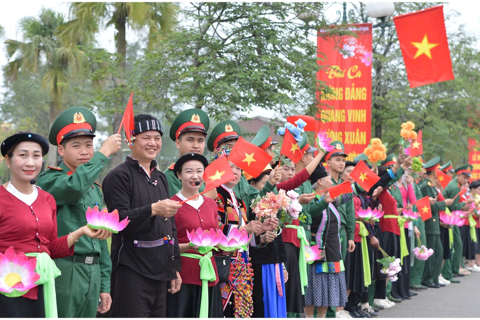
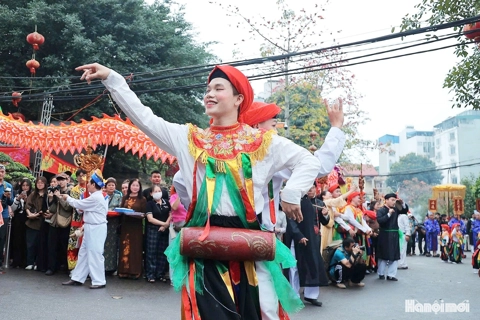
The Spring Festival, celebrating the birthday of Tan Vien Mountain God, is the grandest. It spans three joyful days and draws crowds from neighboring villages and the suburban Son Tay Ward. After its recognition as a National Intangible Cultural Heritage in 2024, the event has become one of the Doai region’s most anticipated celebrations.
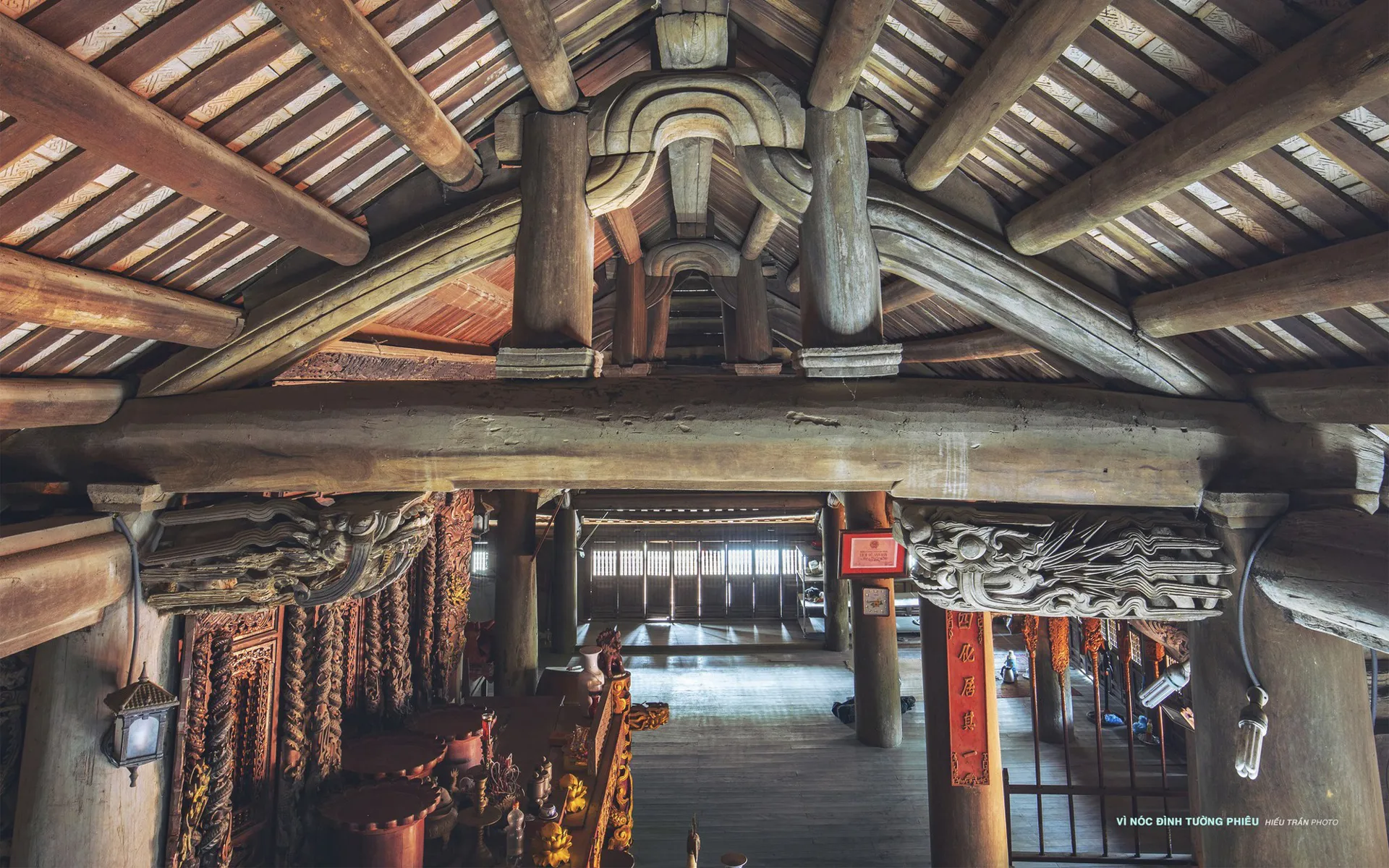
The Main Hall of Tuong Phieu Communal House, where Saint Tan Vien Son and other saints are honored. Photo: Doan Tan/Phuc Tho Commune, Hanoi
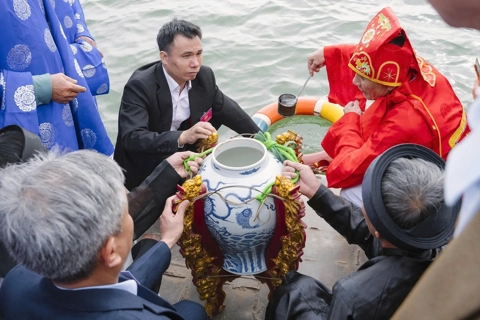
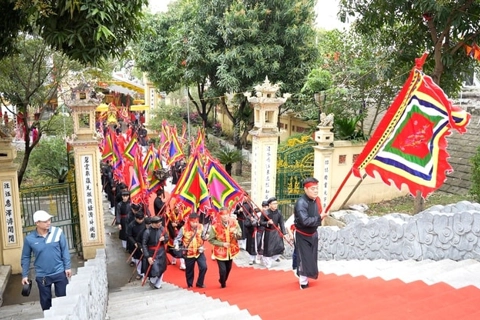
In the zodiac years of the Mouse, Rabbit, Horse and Rooster, a special procession is held. Villagers escort the tutelary gods from Tuong Phieu Communal House to Ngo Temple and back, symbolically revisiting the sacred sites where the deities once helped locals control floods and sustain fishing.
Inside the ceremonial space, an eight-instrument orchestra fills the air with ancient melodies and accompanies rituals that may last two to three hours. Visitors offer incense and prayers for peace, prosperity, good weather, abundant harvests and family harmony.
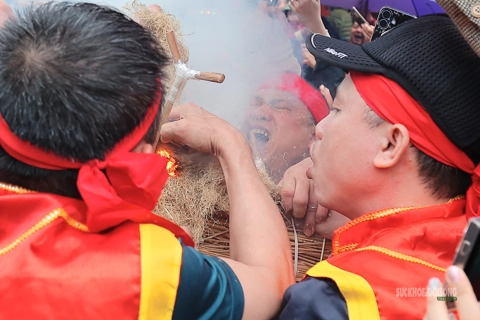
Beyond the rituals, the festival becomes a lively tapestry of culture and community. Colorful performances animate the main grounds, while folk games such as tug of war, swinging, rice cooking competitions, Chinese chess, clay-pot smashing and chasing loaches in jars draw visitors into the joyful rhythms of rural Vietnamese life.
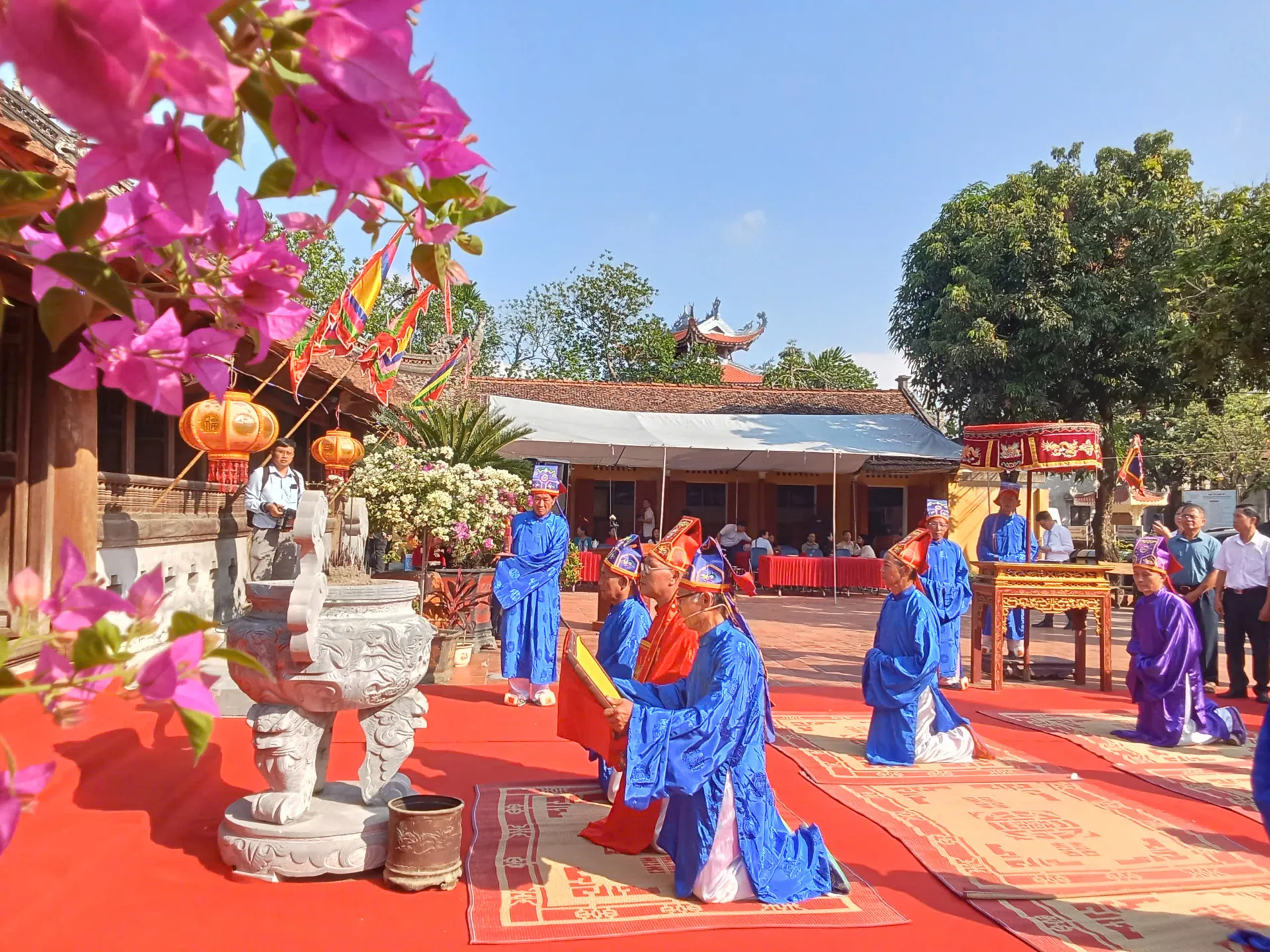
The village elders carry out a traditional ritual to greet the saint during visits from notable guests. Photo: Jenna Duong
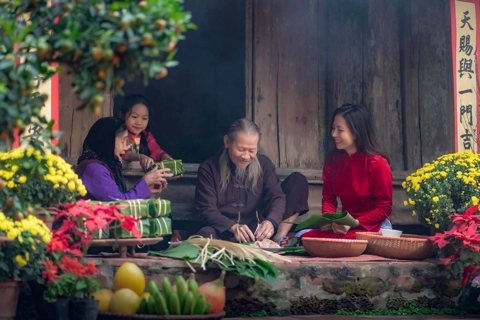
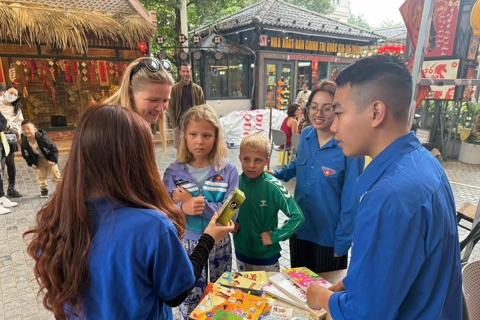
Festival-goers can also visit the nearby Tich Giang ornamental plant village or wander through Ngo Pagoda, where Lunar New Year re-creations revive vivid memories of countryside Tet celebrations.
Rich in legend, artistry and community spirit, Tuong Phieu Communal House is a living heartbeat of Vietnamese cultural identity. For travelers seeking a deeper, authentic encounter with Hanoi’s heritage, this nearly 600-year-old communal house and its vibrant spring festival offer an unforgettable journey into the soul of the Doai region.
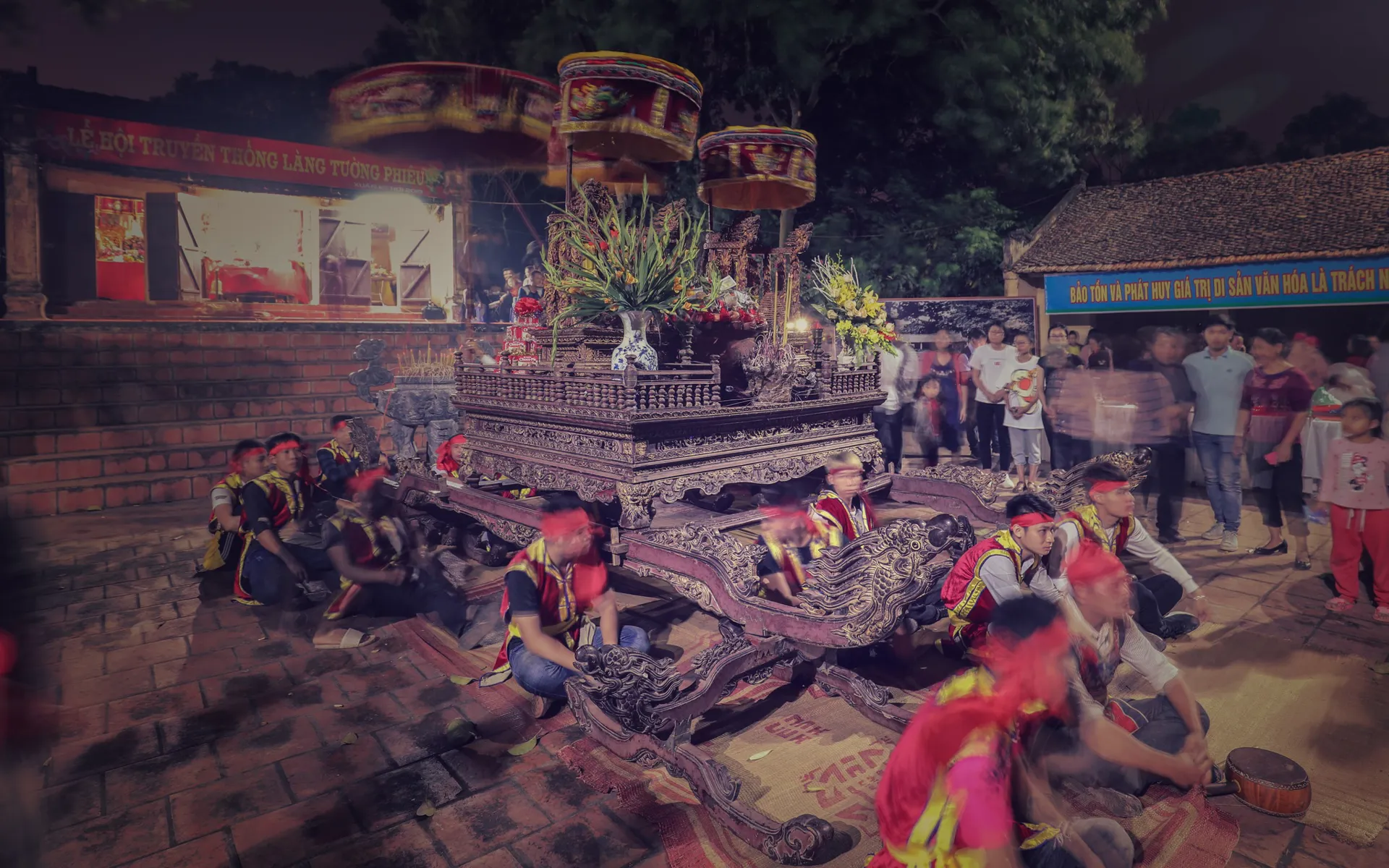
The palanquin procession team of Tuong Phieu Temple has been gathering since night, preparing for the Tuong Phieu Temple festival the following morning. Photo: Doan Tan/Phuc Tho Commune, Hanoi