Life
Famous pagodas in capital city
With over 1,000 years of history, Hanoi has been Vietnam’s centre of Buddhism for centuries. The capital city has more than 600 temples and pagodas, many of which are not only religious relics but also popular tourist sites.
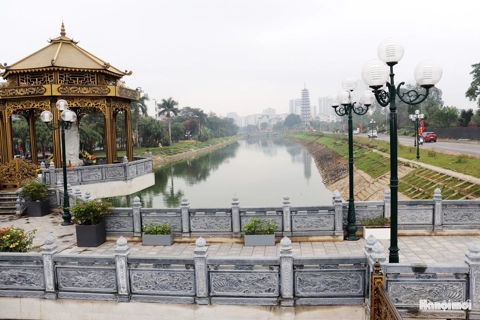
Located on a small peninsula on the East side of West Lake, Tran Quoc is regarded as the most ancient pagoda in Hanoi with its history going back more than 15 hundred years.
The architecture of this Buddhist place of worship is a subtle combination between the solemn and beautiful landscape, and the peaceful and quiet ambiance of West Lake’s surface.
Nguyen Hong Phuong from Ba Dinh district said “I like the landscape of Tran Quoc pagoda very much. This is a very old pagoda, and the tranquil atmosphere gives me a sensation of peace every time I come here.”
Humbly standing on busy Hang Duong street, Cau Dong pagoda was built to worship Buddha and to honor a general who contributed significantly to the prosperity of the Tran Dynasty (1225-1400).
As this pagoda has witnessed numerous historical changes over the centuries, its architecture reflects the quintessence of different dynasties that contributed to its multiple restorations.
When regarding famous pagodas in Hanoi, visitors must not miss out on Quan Su pagoda. The pagoda was built in the shape of a Chinese Gong character, with three roofs in each building, and what makes it even more special are the unicorn statues carved on the roofs.
Thich Thanh Nhieu, Permanent Vice President of the Vietnam Buddhist Sangha Executive Council, said having gone through a lot of renovation, Quan Su pagoda has still managed to preserve its original architecture. The things that make it special are the curved roofs with carved unicorns on them.
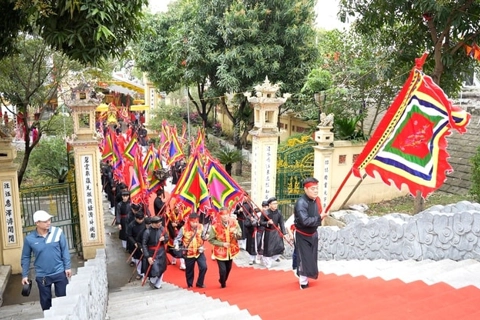
It has been a long-lasting custom of the people in the country, when each New Year comes, it is time to visit a pagoda. In Vietnam, the custom is described as “Le Chua” – in which “le” means not only visiting but also showing respects in all sincerity to Buddha and the Gods of the pagodas and temples.
Nguyen Thi Yen from Tay Ho district, said she visited the pagodas during spring to pray for health and prosperity for my family members.
Meanwhile, Trieu Nhu Thang from Dong Da district, said visiting pagodas during spring time not only has a spiritual meaning, but also aims to let the young generation understand more about the customs of the homeland.
Not only that, praying at pagodas and temples is a great way to get outside and enjoy the spring air. Mixing ones’ soul with these spiritual spaces, breathing in the aroma of burning incense and flowers, and enjoying the relaxing view of a pagoda’s gardens - helps heal all the stresses and worries from the previous year.
The architecture of this Buddhist place of worship is a subtle combination between the solemn and beautiful landscape, and the peaceful and quiet ambiance of West Lake’s surface.

Tran Quoc pagoda.
|
Humbly standing on busy Hang Duong street, Cau Dong pagoda was built to worship Buddha and to honor a general who contributed significantly to the prosperity of the Tran Dynasty (1225-1400).
As this pagoda has witnessed numerous historical changes over the centuries, its architecture reflects the quintessence of different dynasties that contributed to its multiple restorations.
When regarding famous pagodas in Hanoi, visitors must not miss out on Quan Su pagoda. The pagoda was built in the shape of a Chinese Gong character, with three roofs in each building, and what makes it even more special are the unicorn statues carved on the roofs.
Thich Thanh Nhieu, Permanent Vice President of the Vietnam Buddhist Sangha Executive Council, said having gone through a lot of renovation, Quan Su pagoda has still managed to preserve its original architecture. The things that make it special are the curved roofs with carved unicorns on them.
It has been a long-lasting custom of the people in the country, when each New Year comes, it is time to visit a pagoda. In Vietnam, the custom is described as “Le Chua” – in which “le” means not only visiting but also showing respects in all sincerity to Buddha and the Gods of the pagodas and temples.
Nguyen Thi Yen from Tay Ho district, said she visited the pagodas during spring to pray for health and prosperity for my family members.
Meanwhile, Trieu Nhu Thang from Dong Da district, said visiting pagodas during spring time not only has a spiritual meaning, but also aims to let the young generation understand more about the customs of the homeland.
Not only that, praying at pagodas and temples is a great way to get outside and enjoy the spring air. Mixing ones’ soul with these spiritual spaces, breathing in the aroma of burning incense and flowers, and enjoying the relaxing view of a pagoda’s gardens - helps heal all the stresses and worries from the previous year.