First foreign lender to set foot in Vietnam’s international financial center
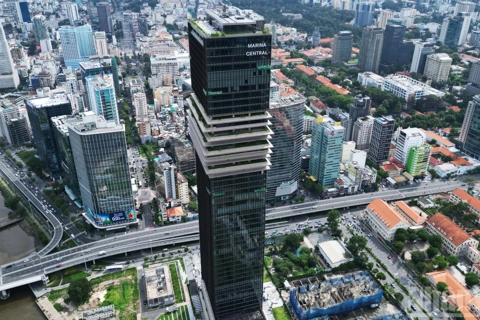
UOB Bank plans to raise its charter capital to VND10 trillion (US$400 million) and is developing its UOB Plaza headquarters at the International Financial Center in Ho Chi Minh City.
THE HANOI TIMES — Singapore’s United Overseas Bank (UOB) will soon break ground on its UOB Headquarters building in the International Financial Center in Ho Chi Minh City, becoming the first foreign bank to establish a presence at the center.
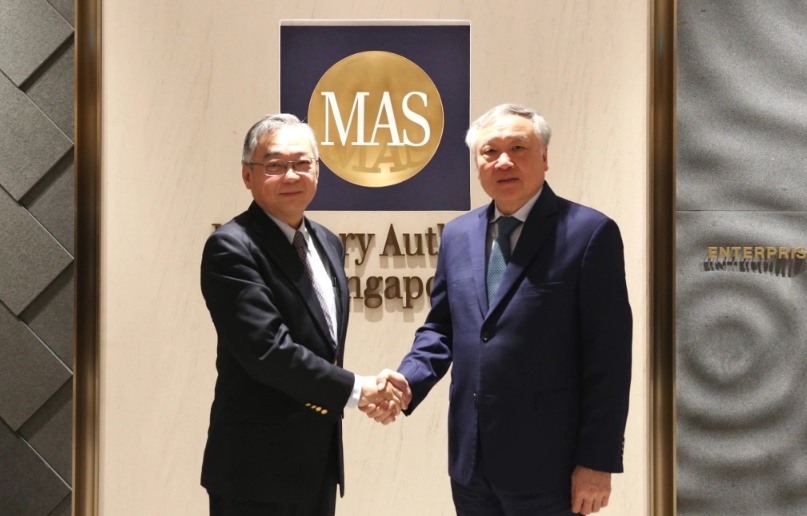
Vietnam's Standing Deputy Prime Minister Nguyen Hoa Binh (r) and Singapore's Deputy Prime Minister Gan Kim Yong. Photos: VGP
The information was shared during a meeting between Vietnam's Standing Deputy Prime Minister Nguyen Hoa Binh and Singapore Deputy Prime Minister Gan Kim Yong on January 12 during the former’s visit to Singapore.
At the meeting, Binh said Vietnam has recently established an International Financial Center to mobilize high-quality resources for the country’s next development phase.
He noted that UOB will soon begin construction of its headquarters within the International Financial Center in Ho Chi Minh City. UOB was the first Singaporean bank to open a representative office in Vietnam in 1992 and later established a wholly foreign-owned branch in Ho Chi Minh City in 1995.
With this move, UOB will become the first foreign bank to enter Vietnam’s International Financial Center.
At the meeting with Binh on January 11, Wee Ee Cheong, Deputy Chairman and Chief Executive Officer of UOB, said the bank plans to raise its charter capital to VND10 trillion (US$400 million) and is in the process of developing the UOB Plaza headquarters at the International Financial Center in Ho Chi Minh City.
UOB leaders said the capital increase aims to strengthen the bank’s financial capacity, expand operations and enhance its ability to deliver high-quality financial products and services to customers in Vietnam.
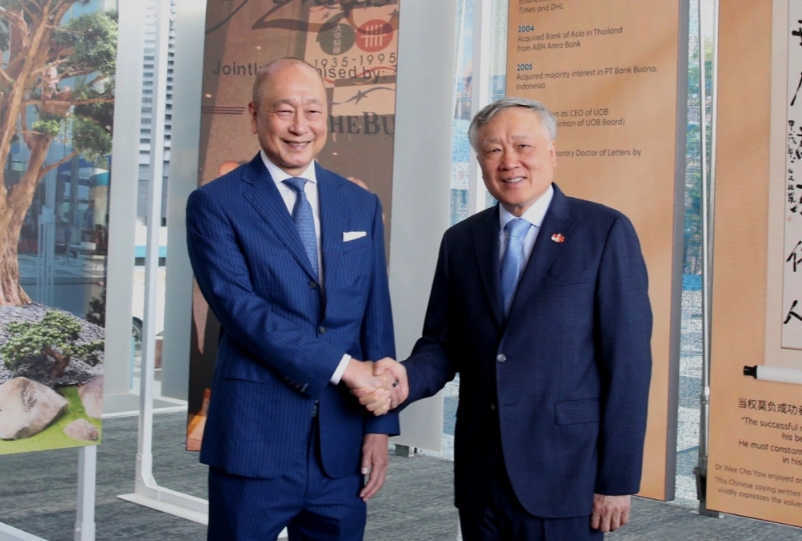
The Vietnamese senior official and Deputy Chairman and Chief Executive Officer of UOB Wee Ee Cheong.
Cheong reaffirmed that UOB continues to view Vietnam as a strategic market in Southeast Asia and is ready to engage more deeply in the development of Vietnam’s International Financial Center.
“UOB’s participation goes beyond providing capital. We also act as a strategic partner by sharing experience in bank governance, risk management, capital market development and international capital connectivity,” he said.
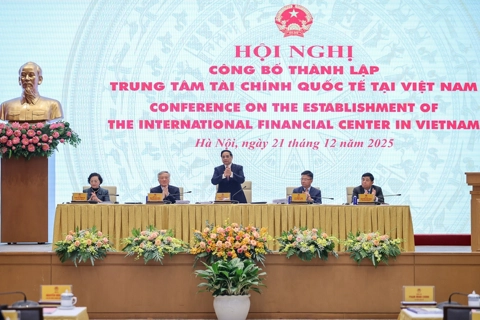
Vietnam’s International Financial Center was established under a resolution passed by the National Assembly on June 27. On December 18, the government issued Decree 323 on the establishment of the International Financial Center, which will operate under a “one center, two destinations” model in Ho Chi Minh City and Danang.
Previously, Ho Chi Minh City held discussions with more than 50 investors and founding partners to identify potential participants for the initial phase of the center. At a conference in late December, the city said several banks and financial institutions would join, including Vietnamese MB Bank, Vietcombank and VietinBank.
For the Danang site, authorities have issued approvals in principle to five banks, including Vietcombank and VietinBank.
Beyond these institutions, government leaders encouraged Singaporean enterprises, banks and financial funds to expand investment and operations at Vietnam’s International Financial Center.
Deputy Prime Minister Binh also expressed hope that Singapore would share experience in institutional design, operating mechanisms and supervision and oversight practices.
In response, the Singaporean counterpart Gan Kim Yong said the establishment of the International Financial Center is a timely and well-judged decision by Vietnam.
He affirmed Singapore’s readiness to support Vietnam by sharing operational experience and promoting financial linkages between the financial centers of Singapore and Vietnam.
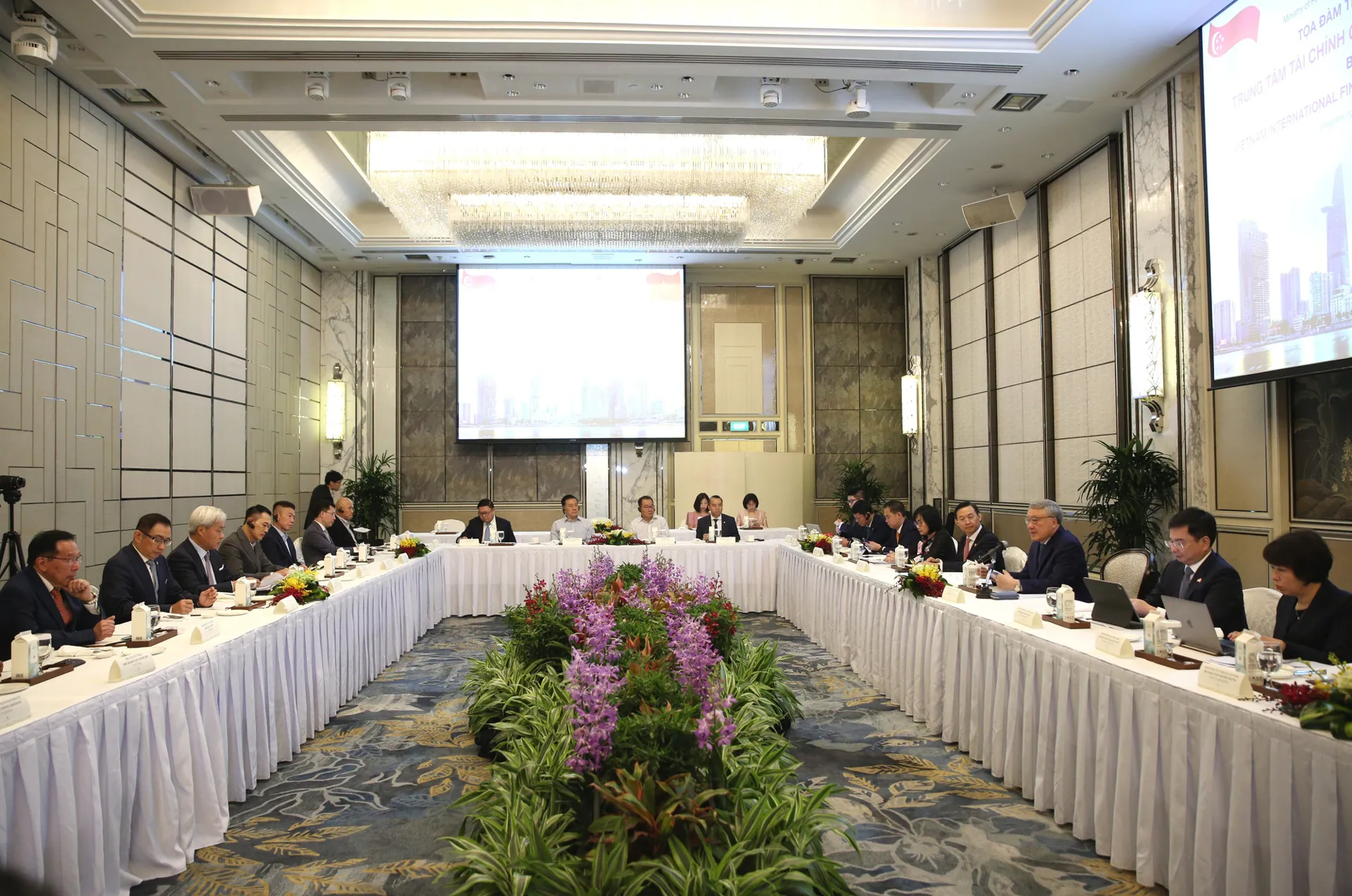
Deputy Prime Minister Nguyen Hoa Binh during a roundtable with 20 Singaporean enterprises, investment funds and banks.
According to Yong, the development of an international financial center must ensure the central role of the central bank and domestic banks.
At the same time, regulators should build cooperative networks with foreign banks and financial institutions. He added that authorities need to develop progressive yet robust legal frameworks and place strong emphasis on building a highly skilled domestic and international workforce.
On the same day, Binh also attended a roundtable with nearly 20 leading Singaporean enterprises, investment funds and banks. Investors recommended that Vietnam ensure policy stability and accelerate completion of the legal framework for digital assets and financial technology in the coming period.
The Vietnamese senior official called on Singaporean investors to continue expanding investment in Vietnam’s International Financial Center, particularly in areas where Singapore has strengths and Vietnam has strong demand, such as green finance, sustainable finance, financial technology and digital assets.
Singapore is currently the largest investor in ASEAN and ranks second among 153 countries and territories investing in Vietnam. Singaporean investors have around 4,400 active projects in Vietnam with total registered capital exceeding $90 billion. The Vietnam-Singapore Industrial Park (VSIP) network now comprises 21 locations across 14 provinces and cities.
Vietnam and Singapore are also strengthening economic and investment cooperation, especially in emerging and high-potential sectors such as agriculture, energy, next-generation VSIP 2.0 development, carbon credits and digital technology.