Forever the Triumphant Song: A living tribute to Hanoi’s courage and soul
The exhibition honors the day Hanoi’s streets blossomed with hope and resilience, marking a rebirth of the city’s spirit and freedom.
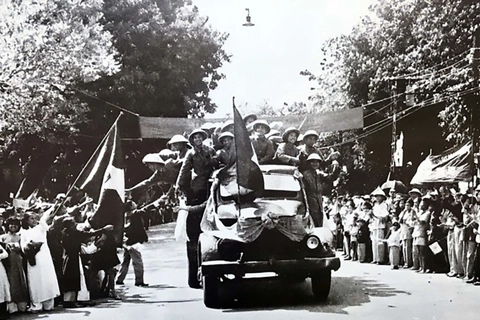
THE HANOI TIMES — Golden light and gentle breezes signal the return of autumn in Hanoi, stirring memories deeply cherished by its residents. On October 10, 1954, the entire city stood still, overwhelmed with pride, tears and hope, as the Liberation Army triumphantly entered the capital.
From that historic day, Hanoians embraced true peace, marking the official end of Vietnam’s long and arduous resistance against French colonial rule (1945 - 1954).
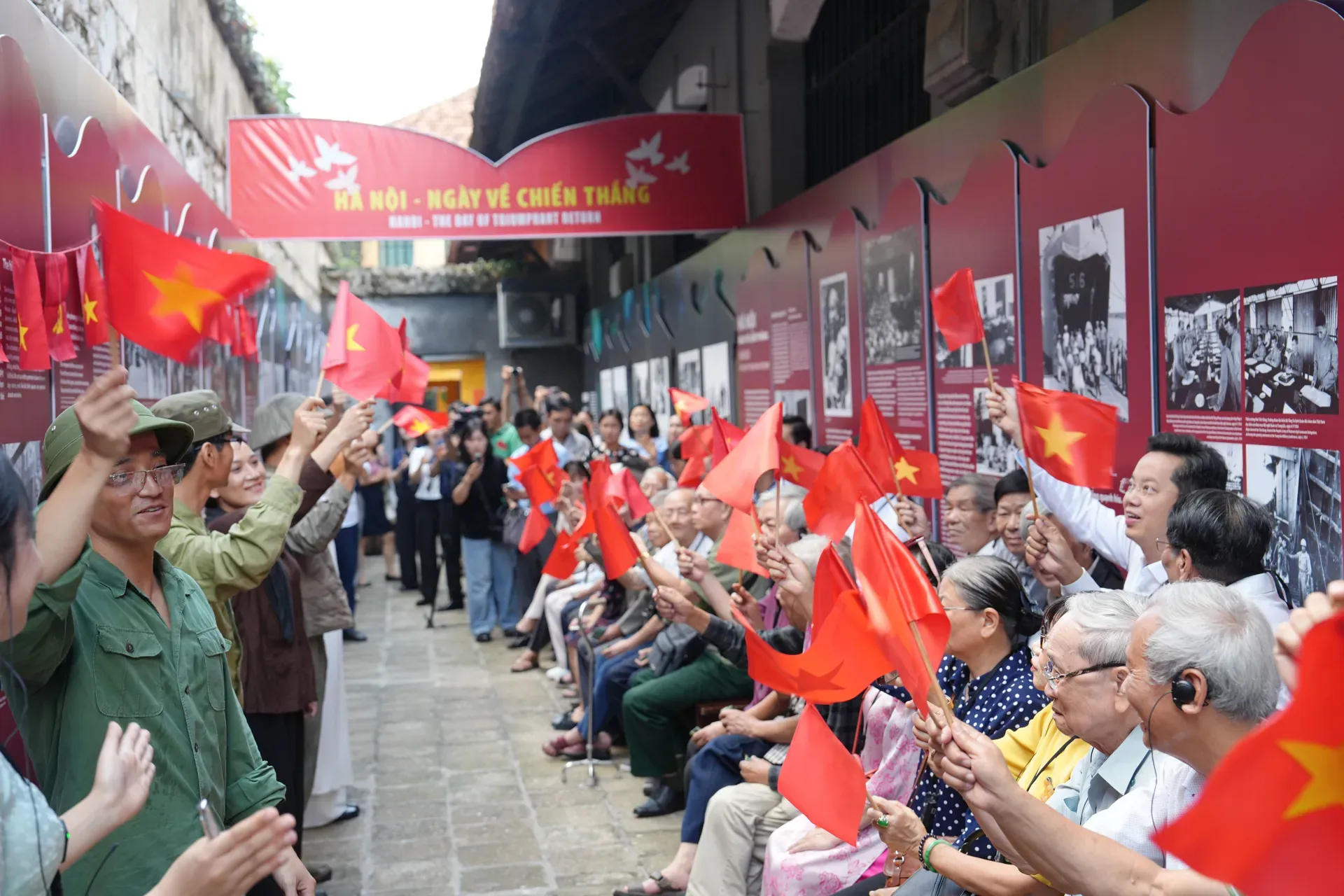
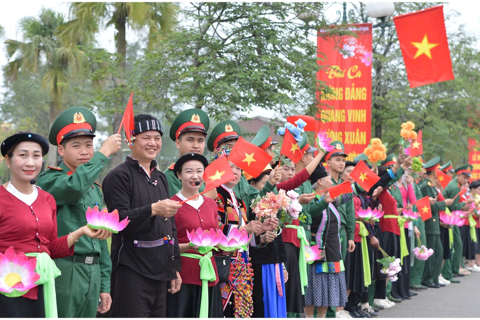
Recreated scene capturing the atmosphere of Hanoi’s streets on October 10, 1954, as the city welcomed its liberation.
To honor this milestone, the Hoa Lo Prison Relic Site in Cua Nam Ward, Hanoi, is hosting its annual special exhibition, “Forever the Triumphant Song,” open to the public until November 6.
The exhibition is a living memory, tenderly brought to life through stories, artifacts, and reimagined scenes that rekindle the unyielding spirit and longing for peace among Hanoians.
The triumphant song echoed
It was an October morning like no other. The ancient streets of Hang Ngang, Hang Dao and Dong Xuan Market, once marked by the harsh rhythms of wartime, suddenly erupted in joy. Red flags with golden stars fluttered from balconies, storefronts and bicycles. Laughter mingled with tears, and on every face was the same dream: peace had finally arrived.
That dream is revived each year at Hoa Lo Prison Relic through the re-enactment of “Forever the Triumphant Song”. The heartfelt performance, filled with respect, love, and duty, echoes the emotions of the generation who lived through that historic day.

Historical witnesses and visitors attend the opening ceremony of the Forever the Triumphant Song exhibition, held October 2 at Hoa Lo Prison Relic Site, Cua Nam Ward, Hanoi.
Among the visitors to the exhibition is Do Dinh Long, a former Hanoi Party Committee official who once had a direct hand in preparing for the city’s liberation. His eyes, misted with memories, reflect the weight of what he witnessed.
“Back then, the streets were alive. People bought red cloth, sewing flags by hand. Every home and shop prepared for what we had only dreamed of,” said Long.
“They hung flags on doorways and street corners, joyfully raising them to welcome the liberation troops. I had never seen our people more united, more alive,” he added.

A moving reenactment of Hanoi’s streets as the Liberation Army returned on October 10, 1954.
At the exhibition, another witness stands quietly before a display case is Nguyen Dinh Tan, 91, who has lived his entire life at 50 Hang Bai Street in Hanoi’s Old Quarter. As he gazes at old photos and yellowed papers, time seems to fold.
"That day, everyone was on the streets singing and waving flags and flowers. Some brought violins and accordions. It was joy, not shouted, but the kind that fills your chest until it spills over," Tan recalled.
His voice falters as he speaks of his brother, Nguyen Sy Van, a former Chu Van An student who once swam to Turtle Tower in Hoan Kiem Lake to plant the national flag on May 18, 1948. He was later imprisoned at Hoa Lo and exiled to Tien Yen, where he died for the cause he believed in.
“The exhibition reminds us of what was lost and what was gained. It helps the youth understand peace is not given but earned, kept and carried forward.”
Remembering through three living themes

Walking through the exhibition, visitors are guided along three emotional paths that together portray Hanoi’s journey to liberation.
The first, “Perseverance and Resistance,” recalls the darkest days of winter 1946. When President Ho Chi Minh called for resistance against French rule, Hanoians, armed with little more than homemade weapons and fierce hearts, stood their ground. House by house, street by street, they fought. Some rushed tanks with handmade bombs. Many never returned. Others were captured and shackled in Hoa Lo Prison.
Yet even behind bars, their spirit endured. They trained in secret, organized uprisings and held fast to a future free from chains.
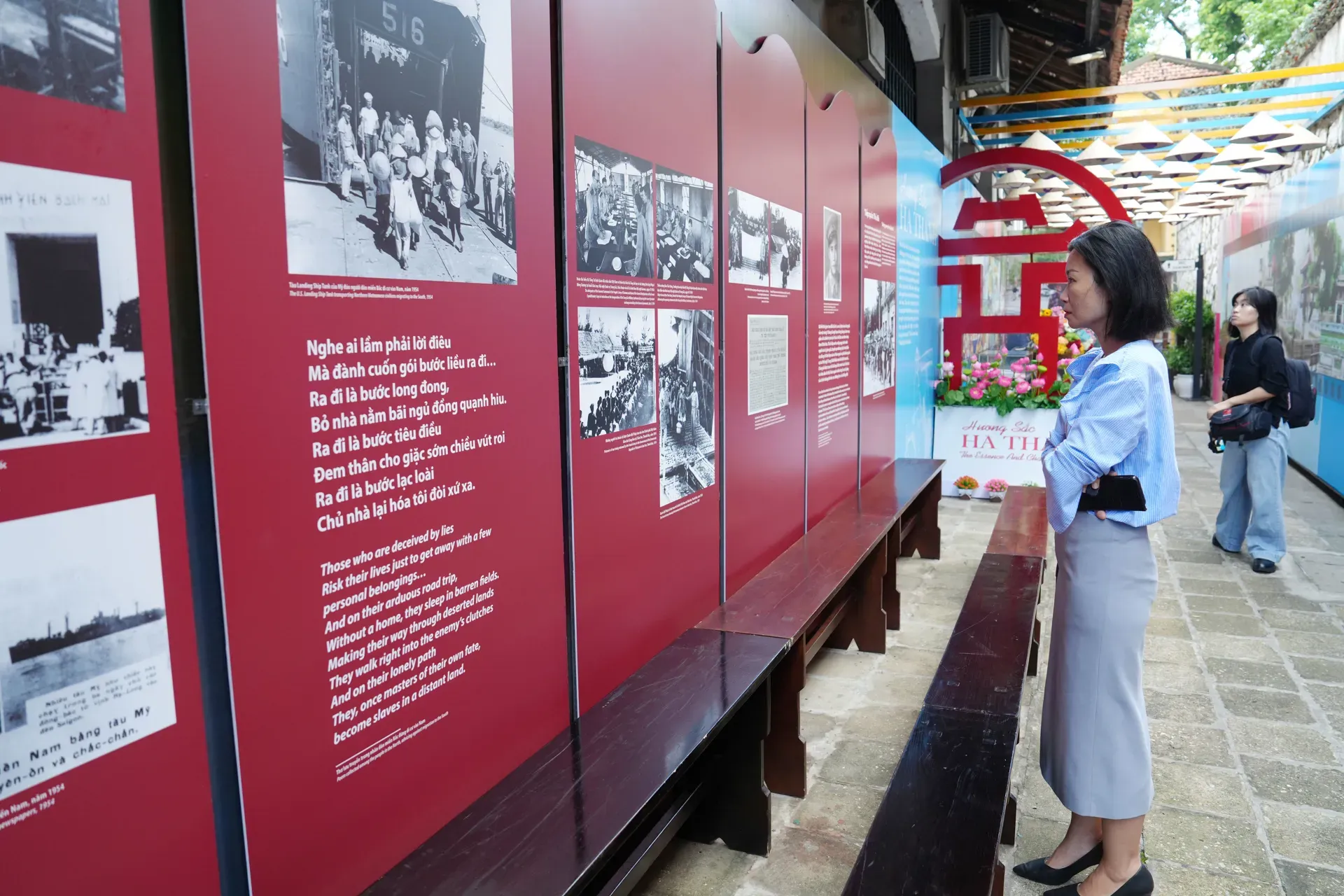
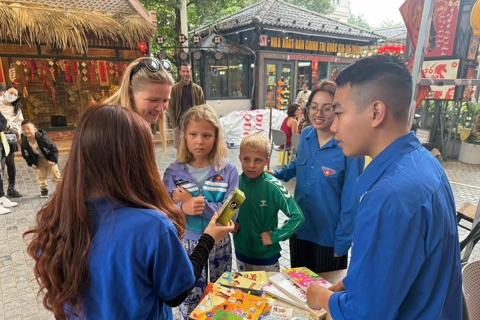
Visitors to the exhibition of Forever the Triumphant Song exhibition at Hoa Lo Prison Relic.
The next theme “Hanoi - The Day of Victory” reflects the days leading up to liberation. After the signing of the Geneva Agreement, the French prepared to withdraw, but not quietly. They sowed disruption, tried to lure people south, sabotaged infrastructure. But Hanoi held fast.
Under the guidance of President Ho Chi Minh and the Capital Takeover Committee, the people and soldiers worked hand in hand to safeguard factories, schools and hospitals.
Then came October 10, 1954, the day the oath was fulfilled: “Leaving with a promise to return one day. Ba Dinh is still here, and so are we.” The Liberation Army returned to the warm embrace of Hanoians amidst a sea of flags, music and joyful tears. It was not just a victory march but a homecoming.
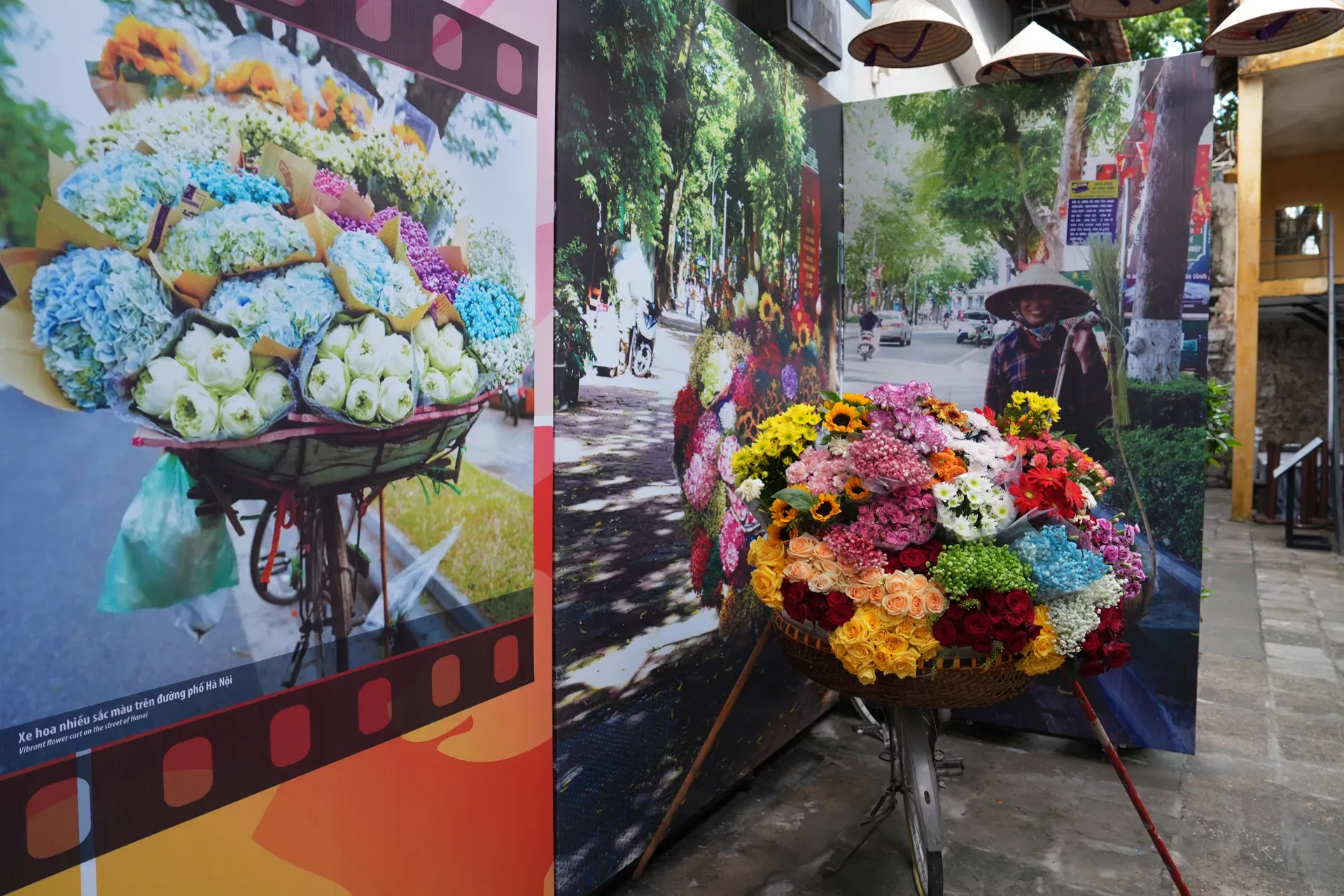
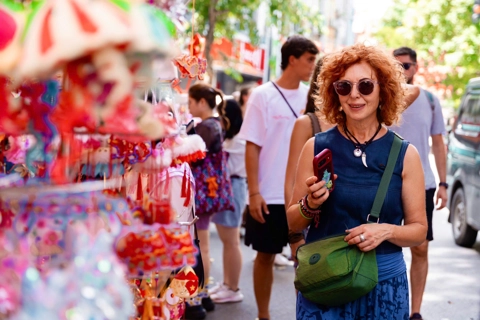
A familiar and charming scene in contemporary Hanoi with flower bikes drifting through the streets, carrying the city’s color and soul.
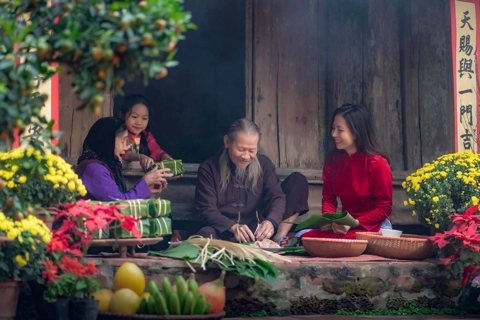
Finally, “The Scent and Color of Hanoi” reminds us that a city is full of memory, culture and soul. Through images of street vendors gliding through the misty morning, steaming bowls of pho, the sweet fragrance of com Lang Vong (young sticky rice from Vong Village), the exhibition evokes the Hanoi we love and live in today.
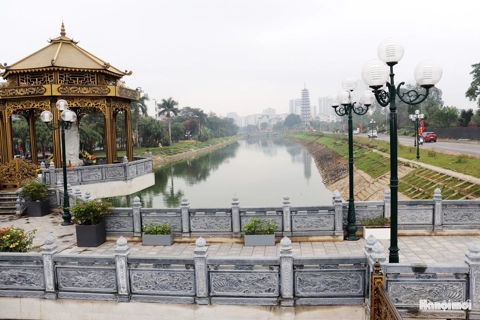
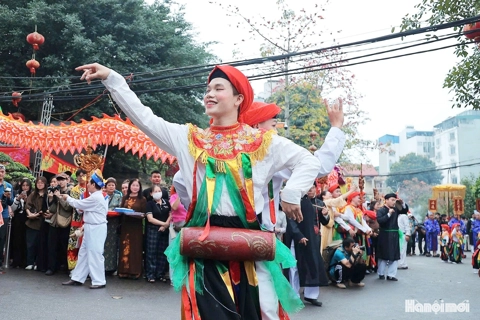
Hanoi today is a city where history and modern life coexist, adapting to change while preserving its identity. This peace is the dream of past generations and the duty of the present to safeguard.