Four competitive pillars shape HCMC-based international financial center vision
Currently ranked 95th out of 120 cities in the Global Financial Centres Index, Ho Chi Minh City aims to reach the top 75 by 2035 and the top 50 by 2045.
THE HANOI TIMES — Ho Chi Minh City-based international financial center is expected to develop four core product groups, including the international capital market, trade finance, fintech and niche financial services.
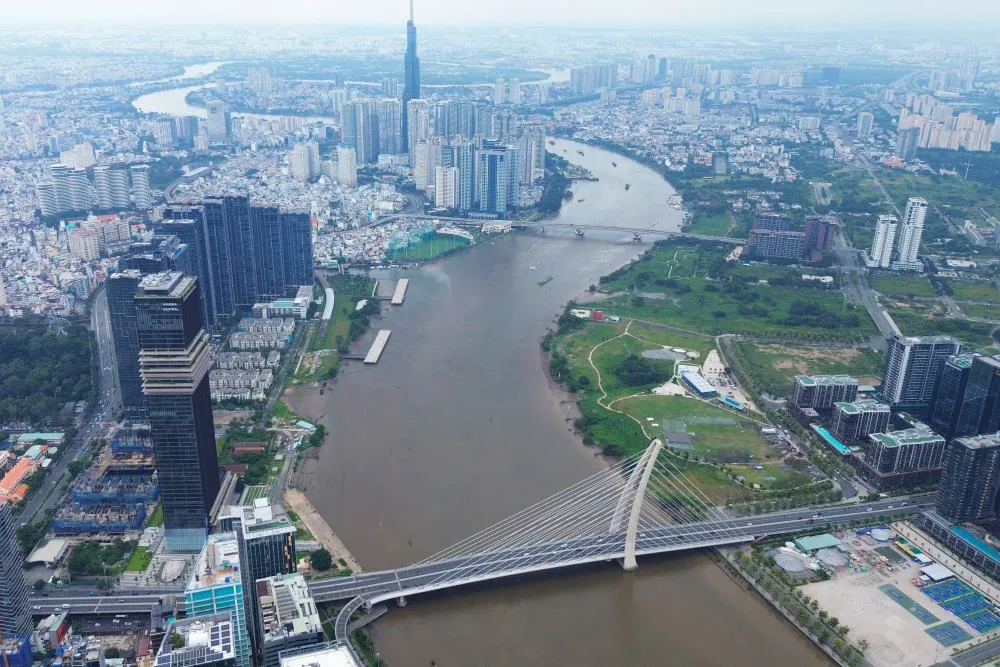
A view of the Saigon Marina IFC financial center along the Saigon River. Photo: Anh Tu/Lao Dong
The information is outlined in the draft Strategy for the Development of Vietnam’s International Financial Center in Ho Chi Minh City (VIFC-HCMC), which is being developed by the VIFC-HCMC Operating Authority with advisory support from Boston Consulting Group (BCG).
The identification of the four product groups reflects government direction alongside an assessment of the city’s comparative advantages, existing capabilities and potential client base.
Over the next 12 to 18 months, VIFC-HCMC is expected to focus on developing specific products within each group. In the international capital market, priority areas include corporate and local government bonds, initial public offerings and specialized supporting services.
For trade finance, the focus will be on promoting trade credit and supply chain finance. The digital banking group will prioritize fintech solutions, digital asset sandbox mechanisms and cross-border payments using stablecoin or crypto-based technologies. In niche markets, initial targets include agricultural commodity trading and carbon credit transactions.
At the workshop titled “Strategy for the Development of Vietnam’s International Financial Center in Ho Chi Minh City,” organized by the Ho Chi Minh City Institute for Development Studies on January 28, Ginolin, Managing Director of BCG Vietnam, recommended prioritizing the development of international debt and equity capital markets.
He noted that in theory, Vietnamese enterprises can access international capital markets, but in practice, they face barriers related to costs and intermediary processes. Developing this product group would help lower these barriers and deliver tangible benefits to Vietnam’s economy.
The US-based consultancy also supported positioning international trade finance as a key pillar, given global trade shifts and ASEAN’s growing role as a beneficiary. In addition, a high-quality digital workforce and competitive costs provide favorable prospects for fintech development.
Can Van Luc, Chief Economist of BIDV and a member of the advisory council for the development of VIFC-HCMC, agreed with the four core product groups and proposed distinguishing between products that can be implemented immediately and those requiring a longer roadmap.
In the near term, traditional financial services such as banking, securities and investment funds could be consolidated early within the financial center. He also emphasized the need to further develop venture capital funds and green finance. More innovative products that require phased implementation include supply chain and free trade zone financing, commodity derivatives and a gold exchange.
Nguyen Huyen Dieu, Deputy Director General of the Monetary Policy Department at the State Bank of Vietnam, stressed that the four product groups must closely align with National Assembly Resolution 222 on special mechanisms and eight relevant government decrees.
She noted that the use of stablecoins for remittances or tourism payments currently lacks a legal basis and could exceed the scope of Resolution 222. Under Vietnamese law, stablecoins are not recognized as a means of payment and would need to be proposed under the framework of digital or tokenized assets.
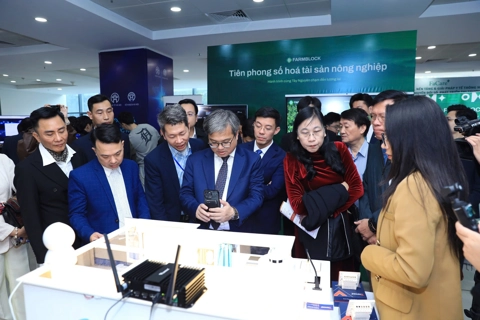
Several businesses have expressed interest in participating in the product groups planned by VIFC-HCMC. Vu Quoc Anh, Chief Executive Officer of Galaxy Pay under Sovico Group, said the company is establishing a Fintech Hub in the Saigon Marina IFC building, which falls within the VIFC-HCMC area. The hub aims to attract fintech projects and investment funds.
Hoang Duc Trung, Deputy Chief Executive Officer of VinaCapital, proposed the establishment of a Ho Chi Minh City venture capital company, with the state holding a 40% stake to play a guiding role and the remaining 60% mobilized from private organizations and enterprises. Pham Quoc Long, Deputy Chief Executive Officer of Gemadept, proposed setting up a Ho Chi Minh City maritime finance center linked to VIFC-HCMC.
Ho Chi Minh City is currently ranked 95th out of 120 cities in the Global Financial Centres Index. The city aims to reach the top 75 by 2035 and the top 50 by 2045, according to Nguyen Huu Huan, Vice Chairman of the VIFC-HCMC Operating Authority.
Nguyen Van Dung, Vice Chairman of the Ho Chi Minh City People’s Committee, said the city is accelerating the completion of the operating regulations for the international financial center, which will apply to both Ho Chi Minh City and Danang. At the same time, authorities are finalizing the draft development strategy for VIFC-HCMC.