French artist Dorothée Hannequin: Inspired by Vietnamese classic music
For French singer-songwriter Dorothée Hannequin, the residency and music tour in Vietnam is special as her half-Vietnamese family allows her to imagine what life was like for them.
French singer-songwriter Dorothée Hannequin (The Rodeo) will kick off a six-week tour in Vietnam starting on June 16 in HCM City, then in Da Lat, Danang, Hue, and Hanoi.
Apart from her worldwide tour to the US, Canada, Brazil, Korea, and the EU, this time has inspiration and emotions as she performs in her mother's country.
She told The Hanoi Times about this special tour.
How do you feel coming back to Vietnam and performing in five cities?
I'm very happy to come back to Vietnam for this tour. All the cities were chosen by the French Institute in Vietnam (IFV). The first time I came, I could only go to HCM City, so I'm looking forward to performing in these great venues!
| French singer/songwriter Dorothée Hannequin will have six weeks to perform and compose music in Vietnam. Photo: IFV |
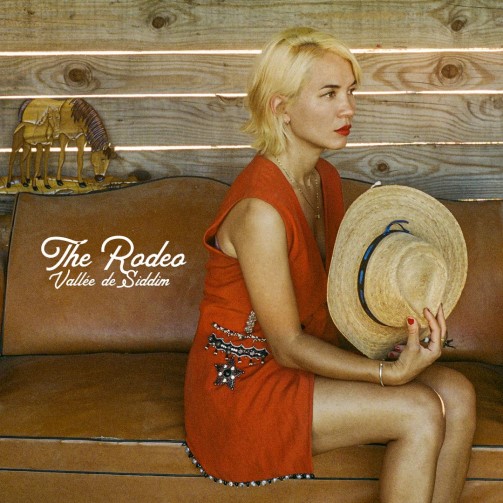
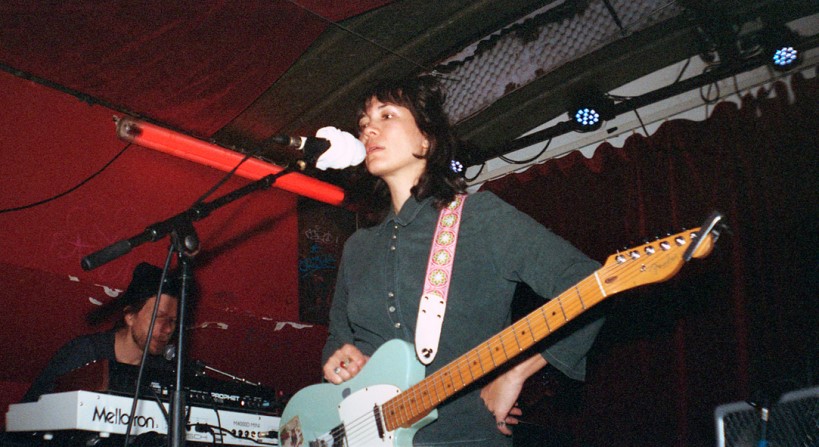
In 2023 I will spend six weeks in Vietnam as one of the winners of the Villa Saigon residency program of the IFV. This is also an opportunity for me to collaborate with local musicians and organize concerts to introduce the new album Arlequine. I will be performing with other artists consist of Mathieu Geghre (keyboards), Jérôme Sedrati (bass), Antoine Kerninon Le Corre (drums), and Dorothée Hannequin (guitar and vocals).
The event is part of activities in celebration of the 50th anniversary of the establishment of diplomatic relations between Vietnam and France.
The Rodeo will be performed at the IDECAF in Ho Chi Minh City on June 16, before moving to the Hoa Binh Theater in the central highland city of Da Lat on June 18, the Trung Vuong Theater in the central coastal city of Danang on June 22, and ending the tour at the Hue Music Academy in the imperial city of Hue on June 23.
A special music night will be held at Polygon Music, Complex 01 in Hanoi on June 21, featuring local bands Mac and The Odd Stones.
What does the album stand for, and what does the harlequin represent you?
Arlequine is an album I thought of as a series of portraits of women, mixing reality and fiction. I feminized the name Arlequin, which, by the way, sounds like my last name (Hannequin). Beyond the character, as we know her, entertainer and jester, she is a figure with many facets. She is a colorful personality with many aspects. She represents a record I thought of as a series of portraits of women, mixing truth and fiction.
Some things are inspired by my life, and others are entirely invented, like other possible selves. For example, the song La coupe est plein is about a very jealous woman, which is the opposite of my personality. The women described in this record are sometimes melancholy, strong, or in love: all of them could be the same person.
| Dorothée Hannequin in a performance. Photo: IFV |
How did you work on the recording?
As far as the French song is concerned, it is inspired by the music of the 1960s and 1970s, with quite warm arrangements, lots of strings, and brass in the continuity of the two previous albums. There is also a Brazilian inspiration in a track like Praia Vermelha.
There's also a slight touch of 1980s music, with electro sounds that we weren't used to hearing in my music, and very frontal lyrics. There are quite tricky songs and others that are much more in tune. It's a bit of a rollercoaster, with very different emotions: flights, lulls, moments of power, all mixed together on a 35-minute disc, quite short but also very dense.
How did you become a singer/songwriter?
I came to music a little bit by accident. I don't come from a family of musicians. But I was always inclined to show, I danced when I was little. When I was a teenager, my uncle gave me a guitar lying around in his attic, which was a revelation. I learned to play by myself, and I became very fond of music, I went to concerts a lot, telling myself that one day it would be me on stage. I started joining bands in high school, which allowed me to come out of my shell because I was very shy.
One thing led to another, I had a first group that released records but had a little trouble getting out of anonymity. Before, I started a solo project under The Rodeo and had the chance to sign with a record company.
Love for sounds of ordinary life in Vietnam
Since you were born in France, how do you know about Vietnam from your mother's story or other sources?
My mother is Vietnamese. She left Vietnam when she was 10 years old. Later, my grandparents left Vietnam and moved to France to retire. My grandmother didn't speak French very well. She was a great cook and I can definitely say that she spoke to us through her food. Recently, I started practicing a Vietnamese martial art called Viet Vo Dao. I practice a little Vietnamese every day now, but it's pretty hard!
Other than having Vietnamese blood, what makes you feel connected to Vietnam?
Like many Vietnamese, I'm a very discreet person. Most of the time, I try not to argue with people. Also, being Vietnamese, food has a special place in my everyday life.
As for music, I was very interested in the music of the 60s in Vietnam. A mixture of psychedelic, soul and rock music. Even though the music today has changed completely, it still has a part of melancholy and silky arrangements. This is something I appreciate in music.
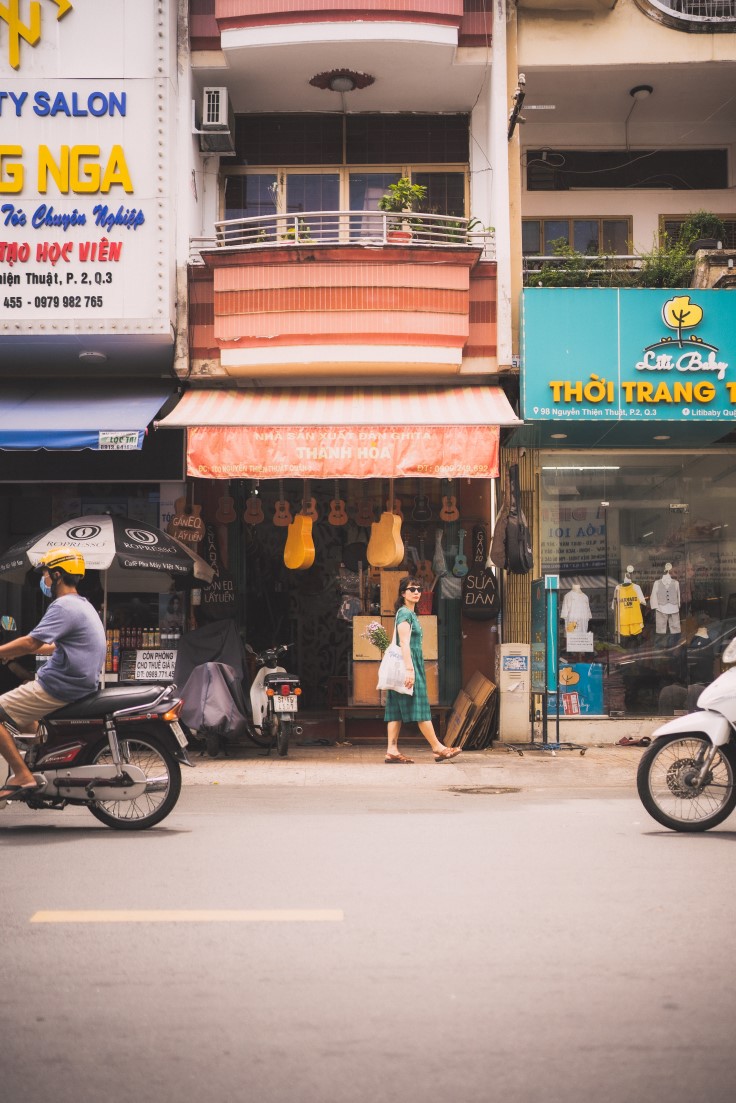
| Dorothée Hannequin is seen on HCM City street. Photo: IFV |
Is there anything in your music related to Vietnam, anything about Vietnam that inspires you to compose and sing?
I'm very attracted to Vietnamese ballads. I want to compose a song like that and use some traditional instruments! During my trip, I've also been influenced by the sounds around me (prayers in temples, birds and cicadas, karaoke singers...).
Which place in the world makes the biggest impression on you and why?
Well, I would say Brazil and Vietnam for three reasons. First of all, these two countries are very connected to music. You can hear it everywhere, compared to big European cities where people complain about the noise...
Second, I love the way nature and the city live together in perfect harmony. And finally, I'm amazed by the variety of landscapes in these two countries.
How often have you returned to Vietnam in recent years? What do you like most about Vietnam?
This is my second time here, but I'm sure I'll come back more often. Of course, food is one of my favorite things in Vietnam. It reminds me of my grandmother, who was an incredible cook. As for the culture, I've noticed that Vietnam has changed quite a bit. There are still a lot of traditions, but Vietnam is also looking to the future. As a film lover, I was very happy that Pham Thien An won the "Camera d'or" at the Cannes Film Festival this year! I'm sure we will soon discover many hidden Vietnamese artists.
As a versatile artist who is active in many fields of art, do you want to introduce and promote Vietnam through this?
I want to promote Vietnam by collaborating with local artists from different fields (film, music, dance, fashion...) I always tell myself that nothing is impossible!
I want to tell people that Vietnam is a beautiful, warm, and interesting country to explore!
Thank you for the interview!