From ancient villages to herbal retreats, community tourism gives Hanoi fresh appeal
The capital city is drawing on its rural outskirts to add new depth to its tourism profile.
THE HANOI TIMES — Hanoi is looking beyond its bustling streets and historic landmarks to its rural outskirts, where ancient villages, craft traditions and ethnic communities are offering a new kind of travel experience.
Community-based tourism is taking root, allowing visitors to live like locals while giving villagers new ways to earn a livelihood and preserve their heritage.
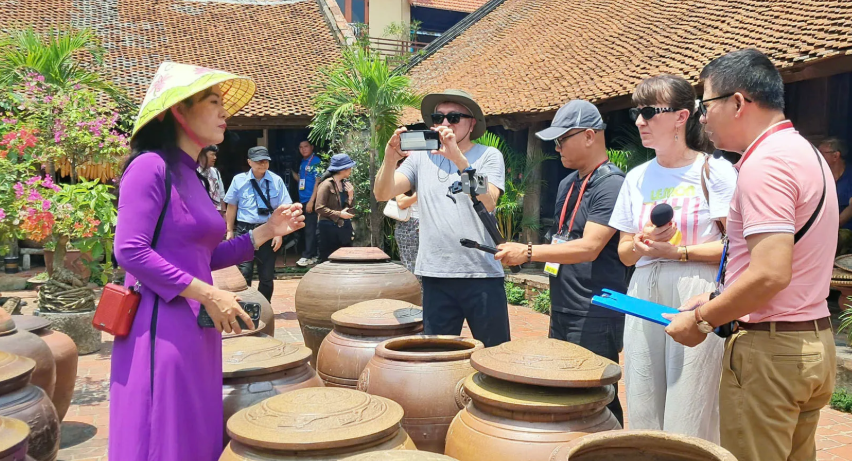
Just over an hour from downtown Hanoi, Duong Lam Ancient Village offers a rare glimpse into northern Vietnam’s rural past.
With mossy stone alleys, centuries-old houses and village gates unchanged for generations, the village has become a leading destination for travelers seeking authenticity.
Thanks to joint efforts by residents and authorities, most traditional homes still retain their original design with wooden beams, tiled roofs and courtyards typical of Red River Delta life.
Today, visitors to the village can enjoy homestays, farm-style meals and hands-on workshops organized by local households.
The locals also open their ancient houses for tours, serve local specialties such as che lam (sticky rice candy) and tuong ban (fermented soybean paste), and invite visitors to join in seasonal farmwork.
These experiences turn tourism into an exchange of cultures rather than a staged performance.
Duong Lam’s dedication to preservation has earned it numerous awards, including recognition from UNESCO.
The attention has further raised its profile, drawing both domestic and international travelers eager to step into Vietnam’s rural traditions.
Other craft villages are also stepping into the spotlight. Bat Trang, Hanoi’s famous ceramics hub, invites guests to mold clay on spinning wheels and decorate their own pottery.
In Dao Thuc, villagers bring age-old water puppetry to life in communal ponds, turning an art once reserved for festivals into a regular attraction.
Further afield in Ba Vi Commune, the Dao ethnic community has pioneered wellness retreats rooted in herbal medicine.
Visitors can wander through medicinal gardens, learn to prepare remedies, and enjoy herbal baths, skincare treatments, and massages using forest-grown ingredients. Here, culture and health intertwine to give Hanoi tourism a unique edge.
These villages show how heritage and creativity can transform tourism from passive sightseeing into active participation, offering experiences that linger long after the trip ends.
Officials emphasize that community-based tourism is more than an economic opportunity.
“It creates jobs, improves incomes and preserves cultural heritage and agricultural products,” said Tran Trung Hieu, Deputy Director of the Hanoi Department of Tourism.
Hanoi is home to 1,350 craft villages, each with its own identity, from bronze casting and silk weaving to wood carving and conical hat making.
With such resources, the potential for expansion is enormous. Developing old-time villages into tourism destinations can revive traditional crafts, instill pride in local culture, and encourage younger generations to carry on family trades.
To unlock this potential, experts say, Hanoi must ensure both quality and sustainability. Phung Quang Thang, Chairman of the Hanoi Travel Association, urged the city to expand local accommodation to meet rising demand for longer stays.
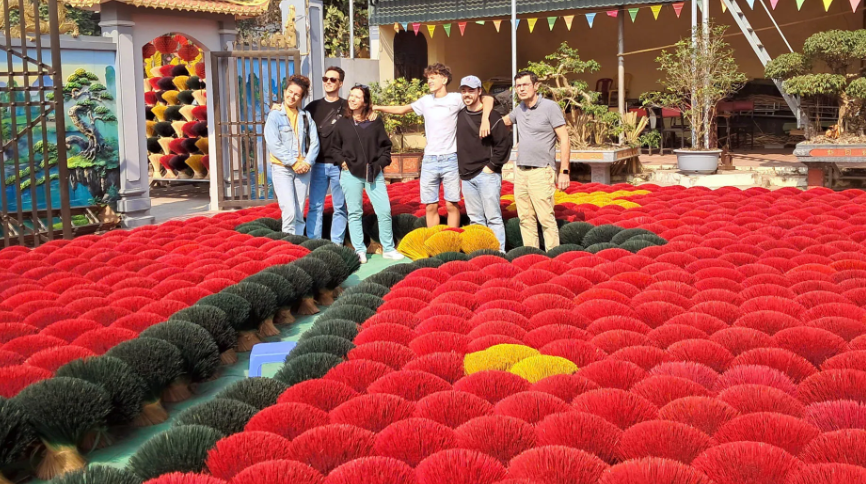
Tourists visit Quang Phu Cau incense village in Ung Thien Commune
Nguyen Van Tai, Director of VietSense Travel, called for more professional support so that “community-based products and services become well-developed, well-planned and well-managed.”
Academics stress preparation and training. “Community-based tourism requires planning and creative ideas. Products must be distinctive and suited to local realities,” said Pham Hong Long, senior lecturer at Vietnam National University’s Faculty of Tourism Studies.
Vu An Dan, a lecturer at Hanoi Open University, highlighted the human factor: residents must be trained in hospitality and communication to move beyond informal operations.
“Communities should define what makes them unique, whether food, rituals or cultural spaces, and preserve these as the foundation for sustainable growth,” added Nguyen Anh Tuan, Director of the Institute for Tourism Development Research.
Laying the groundwork
Experts also call for greater investment in infrastructure, education, and long-term business chains.
Stronger links with tour operators will be vital to ensure that villages are not left on their own to market and manage tourism. Training in customer service, environmental awareness, and hospitality standards can further enhance the visitor experience.
The Hanoi Department of Tourism has already begun working with travel agencies to design products ready for domestic and international markets.
“We aim to build professional products that highlight Hanoi’s heritage and meet the expectations of global travelers,” said Department Director Dang Huong Giang.
She noted that investment will be guided by principles of sustainability and respect for local traditions.
Vietnam’s National Tourism Development Strategy to 2030 has identified community-based tourism as a priority, and Hanoi is set to be a key player.
By shifting from passive sightseeing to active participation, the capital is offering visitors more meaningful experiences while helping residents protect their identity and secure better livelihoods.
Community-based tourism in Hanoi is still taking shape, but the changes are visible. A stroll through Duong Lam’s ancient courtyards, an afternoon at a Bat Trang pottery wheel, or a herbal bath in Ba Vi already shows how travel can be both cultural discovery and community development.
For Hanoi, the future of tourism lies not only in skyscrapers and modern resorts but also in the quiet lanes of its villages, where history, craft, and daily life come together.