From waste to watts: Biogas power reshapes Vietnam’s livestock farms
The model shows how a large pig farm converts waste into clean energy through biogas technology, reducing costs and emissions while offering a scalable model for circular agriculture supported by international partnerships.
THE HANOI TIMES — Tran Xuan Phong’s farm in Pho Yen Commune of the northern province of Thai Nguyen appears calm, orderly and carefully balanced, presenting a sweeping landscape of green fruit orchards and still fish ponds spread across a gentle hillside.
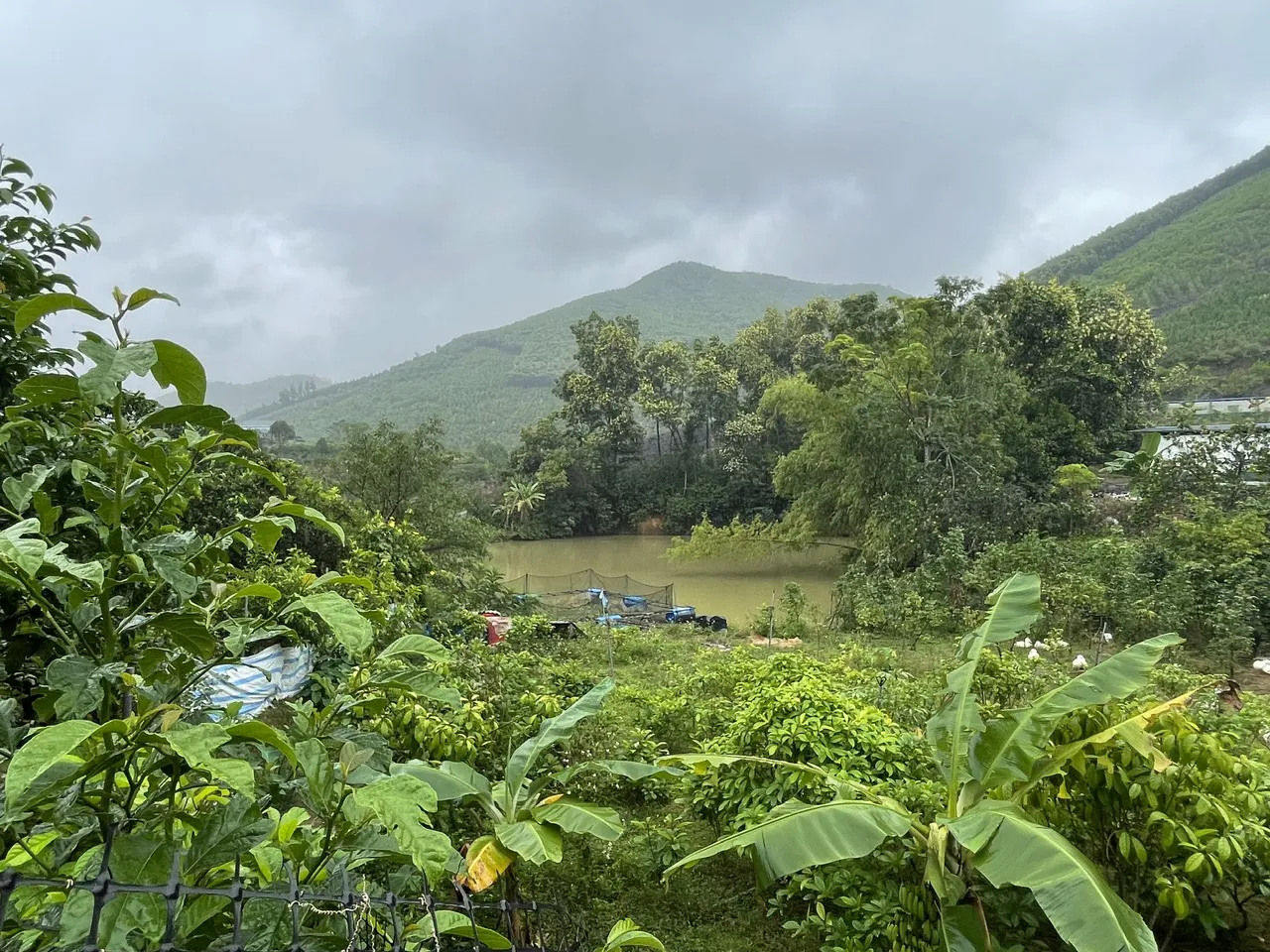
Tran Xuan Phong's farm thats creates a broad landscape of green fruit orchards and still fish ponds stretching across a gentle hillside. Photos: Linh Pham/The Hanoi Times
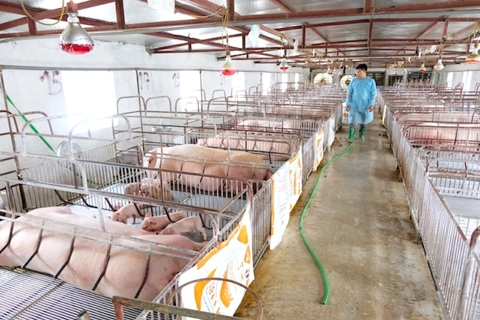
The scene contrasts sharply with common images of a 4,000-head pig farm, with none of the clutter, odor, or heavy industrial feel often associated with large-scale livestock operations.
Covering about six hectares near the upper reaches of the Cong River, it follows a closed-loop garden - pond - livestock model, where waste is recycled within the system and becomes part of a sustainable green production chain rather than an environmental burden.
Phong raises 4,000 pigs per batch, with two production cycles a year, producing around 1,000 tons of pork annually.
Since establishing the farm in 2018, his biggest challenge has been managing waste and odors from large-scale livestock production. Previously, waste was discharged directly into the environment, or methane was flared to control odors, creating risks of pollution and greenhouse gas emissions.
A turning point came in early 2024, when the farm began using a biogas-powered generator that converts gas from pig waste digesters into electricity on site. Energy that was once wasted is now used directly for lighting, ventilation and machinery.
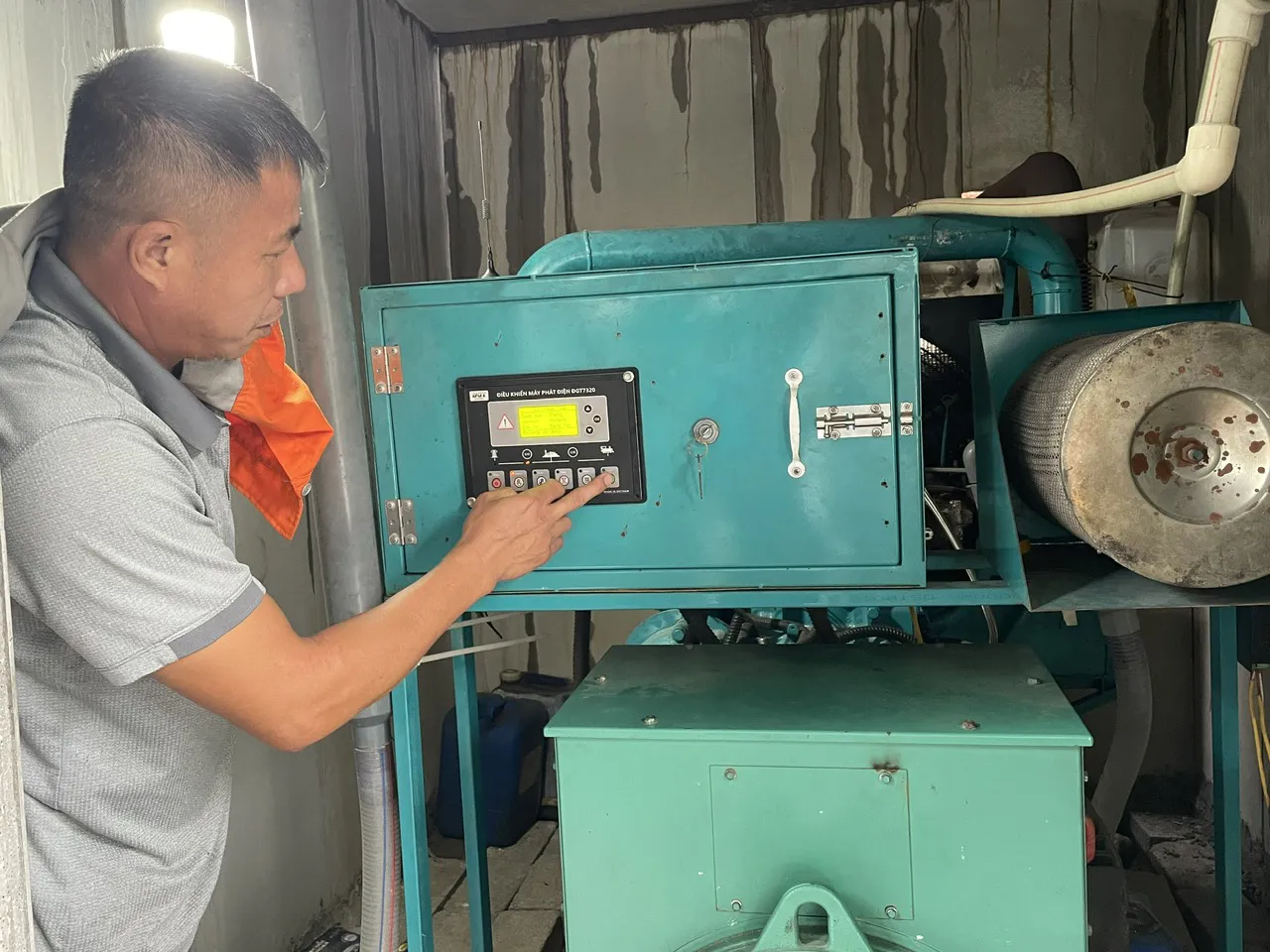
“The biggest change is that odors are almost eliminated and electricity costs have fallen,” Phong said.
He estimates that monthly electricity expenses have dropped by about 50%, from over VND50 million (US$1,900) to around VND20 million, thanks to biogas-generated power.
The system currently supplies around 60%-80% of the farm’s electricity needs, depending on herd size and gas output. When waste volumes are high, the generator can run for up to 18 hours a day. At other times, the farm supplements its power supply from the national grid during off-peak hours.
Apart from electricity saving, waste is reused after gas production, with solid residues turned into fertilizer and treated wastewater used for crops, fish ponds and ducks, creating a lush and productive farm based on circular economy principles.
International partnership helps
The biogas generator was developed and installed by Chinh Phat Company under the Business Partnerships Platform (BPP), funded by the Australian Government, with the Netherlands Development Organisation (SNV) as the implementing partner.
The program is based on a rental model, where companies invest in and operate the systems, then sell electricity to farms at prices lower than the national grid, eliminating high upfront costs for farmers.
Nguyen Thi Quynh Huong, Project Manager of SNV in Vietnam, said the Bio-energy for Circular Agriculture (BeCA) project was launched to deploy biogas power generators at livestock farms nationwide to target three major challenges facing the sector: reducing greenhouse gas emissions, lowering energy costs and removing investment barriers for farmers.
Instead of selling equipment outright, the project applies an Energy Service Company model, under which enterprises own and operate the generators while providing electricity and maintenance services, allowing farmers to avoid initial capital investment, reduce financial risks and benefit from professional operation.
By the end of December 2024, the program had installed 120 biogas generators at 98 farms across 24 provinces and cities. Together, the systems process more than 3.2 million tons of livestock waste each year and generate over 16,800 megawatt-hours of clean electricity.
Participating farms now benefit from more stable power supplies, lower emissions and energy cost savings of up to 25%, while also creating additional jobs and income for local workers.
Huong noted that the project has achieved Gold Standard Design Certification, making it Vietnam’s first livestock biogas carbon credit project using biogas-to-energy technology.
She added that the Energy Service Company model was chosen after many farms had lost confidence in biogas systems due to low-quality generators and unstable operations in the past. Therefore, support from the Australian Government through the BPP has enabled SNV and its partners to restore trust in the technology while delivering environmental and economic benefits.
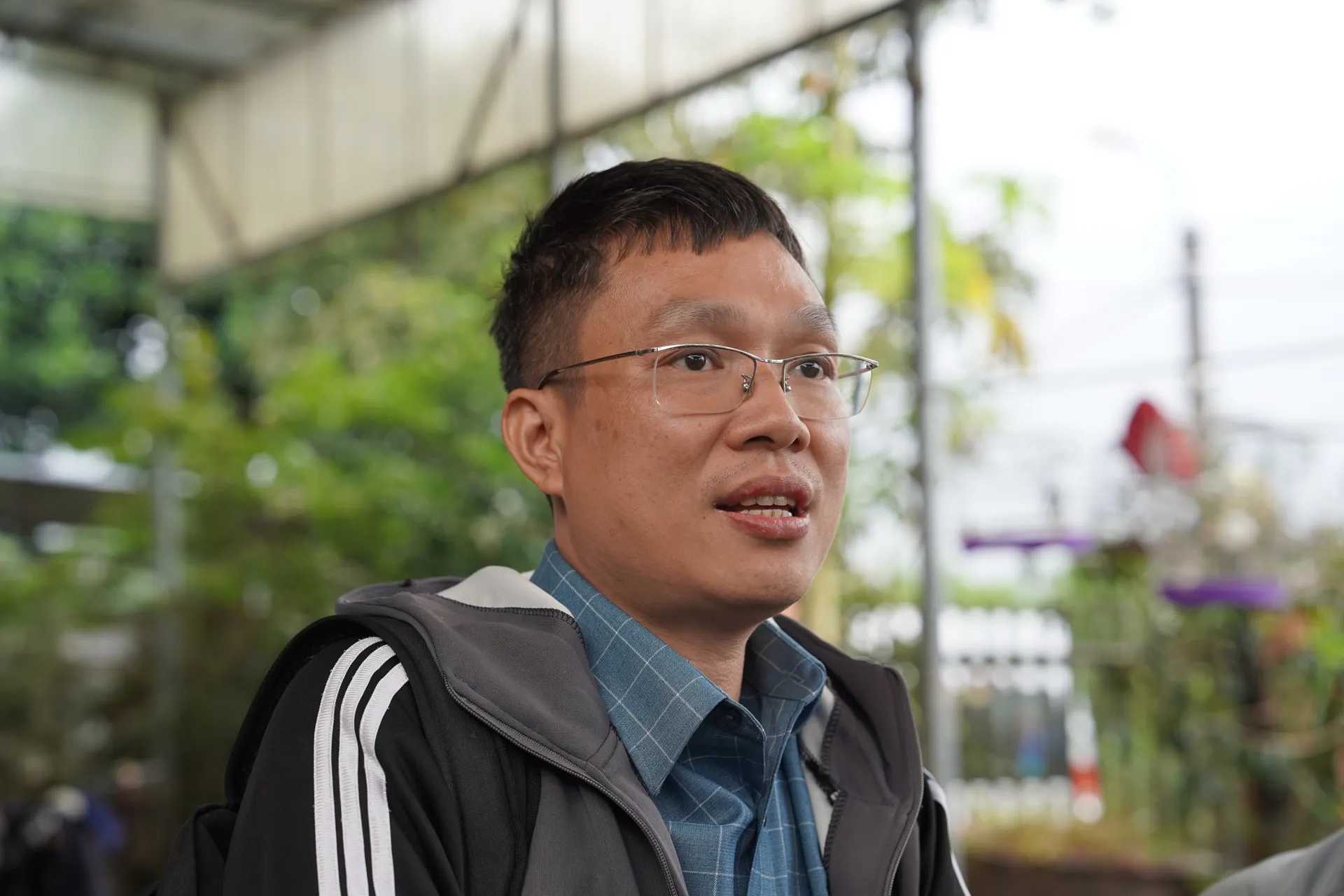
Tong Xuan Chinh, CEO of Chinh Phat Company.
Tong Xuan Chinh, CEO of Chinh Phat Company, said funding from the Australian Government-supported project allowed the company to develop biogas generators locally and reshape Vietnam’s domestic market as more livestock farms adopted the technology.
“Biogas power generation was previously dominated by Europe and the United States, but the project enabled Vietnamese universities and enterprises to jointly develop the technology at home,” Chinh said.
Biogas solutions now account for about 70% of Chinh Phat’s revenue, with around 150 systems installed nationwide. The company has also integrated biogas with solar and wind power to provide more stable electricity for large-scale farms.
Through the program, Chinh Phat has gradually mastered key technologies, including remote monitoring and control systems, and aims to transfer technology and expand into Southeast Asia.
According to Chinh, cooperation under the BPP has transformed Vietnam’s biogas market by reducing upfront investment barriers through equipment leasing and direct electricity sales, accelerating adoption across the livestock sector.
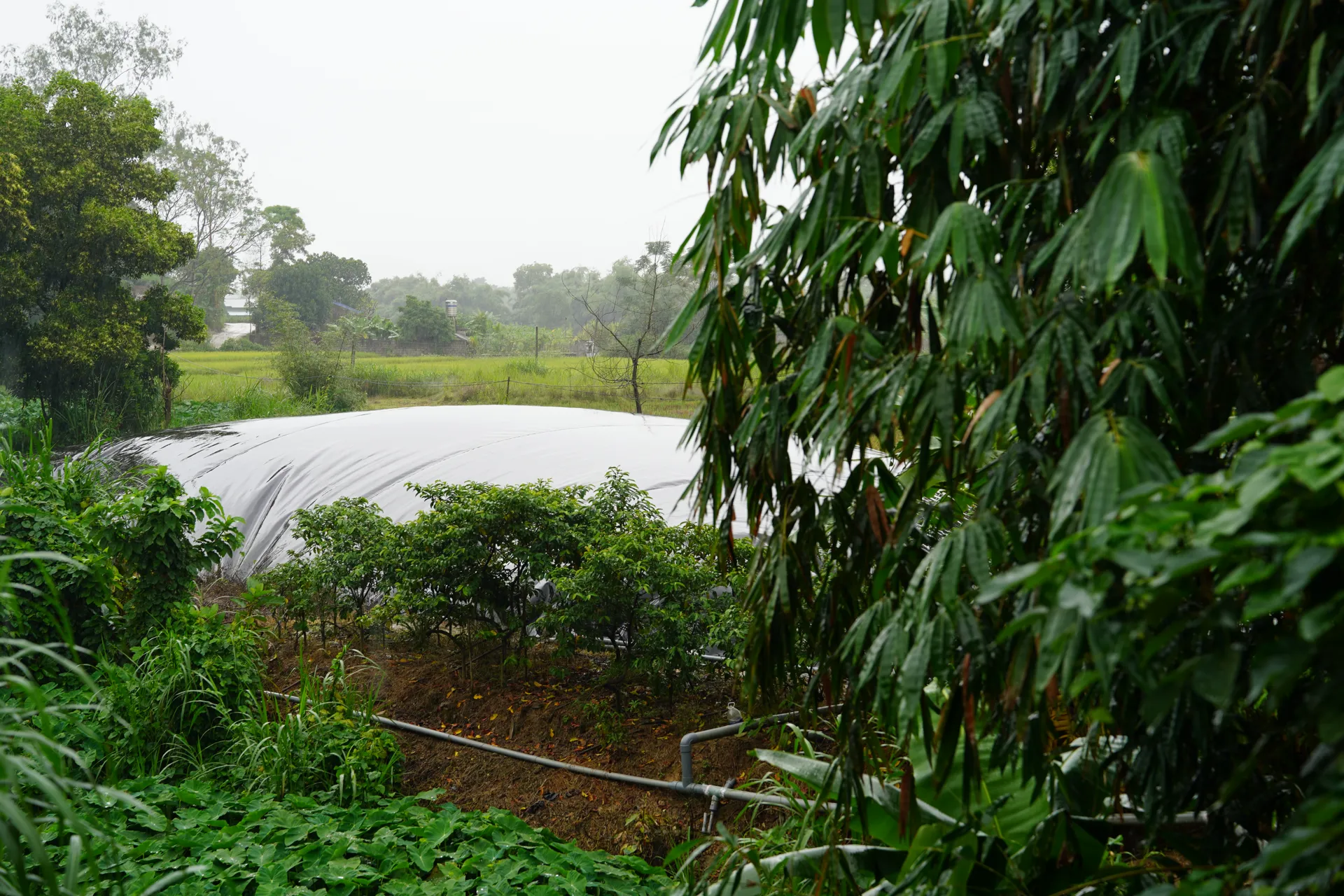
Anaerobic digester at Tran Xuan Phong's pig farm covered in lush green.
Australian Ambassador to Vietnam Gillian Bird said the partnership is one of many ways Australia is supporting Vietnam’s green energy transition and more sustainable agriculture.
She noted that both countries share a commitment to achieving net-zero emissions by 2050 and welcomed the partnership’s role in cutting emissions, lowering energy costs and creating new income streams for farmers.
Since 2016, the Australian Government has invested AUD9.4 million (US$6.3 million) through the Business Partnerships Platform in Vietnam, supporting 16 private-sector partnerships focused on climate action, sustainable carbon markets and inclusive livelihoods.
These initiatives have mobilized an additional AUD13.6 million (US$9 million) in private-sector co-funding, cut more than 193,000 tons of carbon dioxide emissions and created thousands of jobs, particularly for women and people with disabilities.
Under the Green Recovery round, the bioenergy partnership supported Vietnam’s pig farms nationwide to turn excess biogas into affordable renewable electricity from 2021 to 2024, installing 120 generators, treating millions of tons of manure each year, generating clean power and creating over 500 jobs.
Cooperation among the partners continues after the program’s conclusion.
Phong’s farm leaves an impression of green orchards, still ponds and a biogas generator quietly running behind the barns, where waste has been turned from a challenge into a source of clean energy supporting a resilient agricultural ecosystem.
![[Longform] How do Vietnamese farmers tap bioenergy for circular agriculture?](https://cdn-media.hanoitimes.vn/2023/12/20/Cover.jpg?w=480&h=320&q=100)