Pharmaceuticals drive new momentum in Vietnam-Russia ties
Results in 2025 show that Vietnam-Russia pharmaceutical and healthcare cooperation has moved from policy orientation to concrete projects and measurable outcomes, reinforcing its position as a key pillar of the Comprehensive Strategic Partnership.
THE HANOI TIMES — Pharmaceutical and healthcare cooperation has become one of the most dynamic and practical pillars of the Vietnam-Russia Comprehensive Strategic Partnership, recording notable progress in 2025, Russian Ambassador to Vietnam Gennady Bezdetko has said.
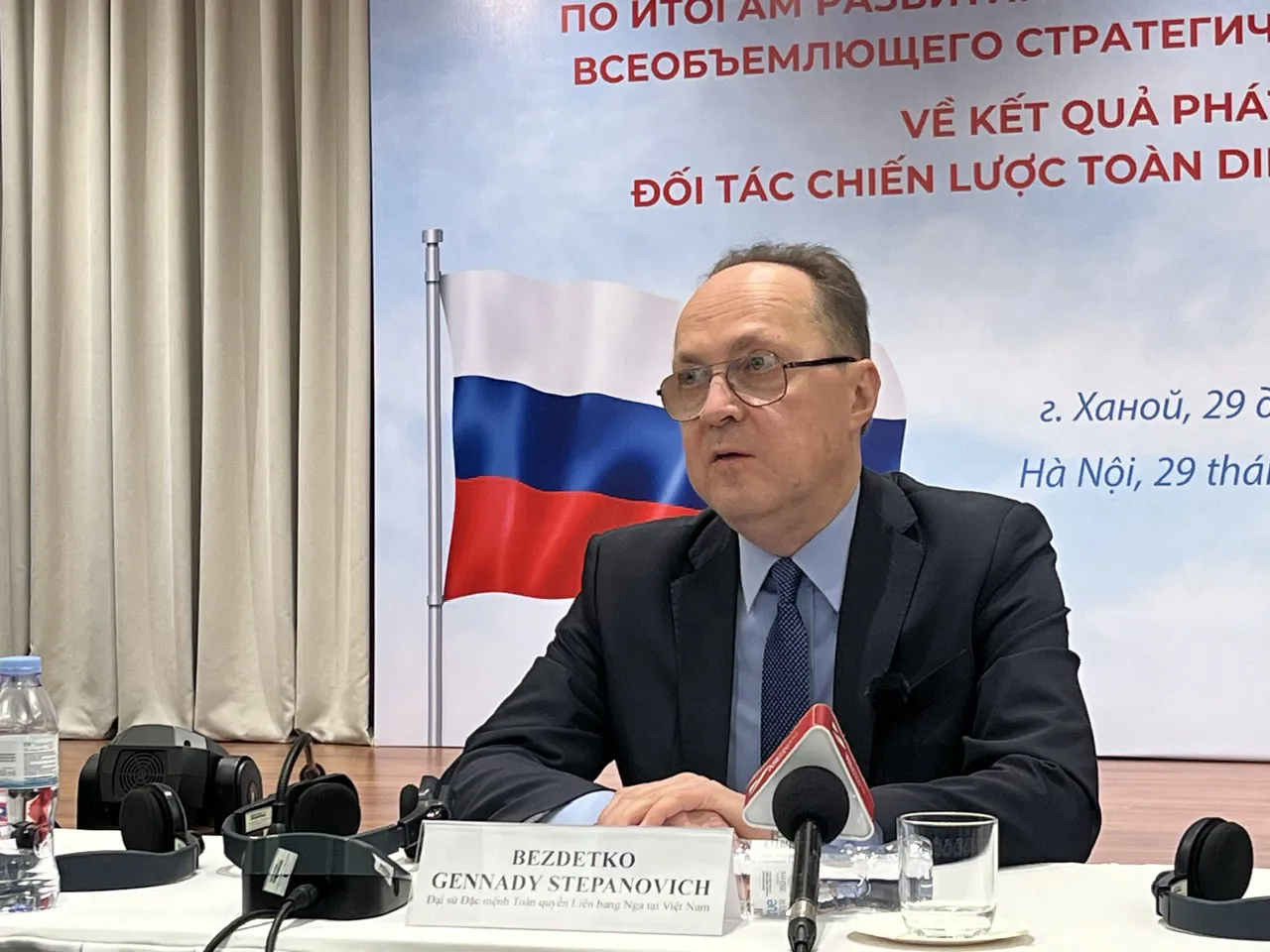
Russian Ambassador to Vietnam Gennady Bezdetko. Photo: Linh Pham/The Hanoi Times
Speaking with The Hanoi Times, Russian Ambassador to Vietnam Gennady Bezdetko said pharmaceuticals and biomedical technologies are among the priority areas of bilateral cooperation, reflecting both countries’ shared focus on technology transfer, healthcare security and people-centered development.
Within the broader Vietnam–Russia partnership, healthcare and pharmaceuticals are gaining prominence for their practical value, technological depth and direct impact on public health, particularly amid global supply chain disruptions. Over the years, the two sides have promoted technology transfer, localized production, research collaboration and the approval and application of advanced medicines and vaccines in Vietnam.
According to the ambassador, efforts to localize pharmaceutical production, combined with the expansion of local currency settlement mechanisms, are creating new space for economic cooperation while strengthening self-reliance and healthcare resilience.
Cooperation goes beyond manufacturing
A key milestone in 2025 was the technology transfer agreement signed in September in Hanoi between Russia’s Medsintez Pharmaceutical Company and Vietnam’s VNVC Vaccine and Biopharmaceutical Factory, witnessed by the health ministers of both countries.
Under the agreement, Russia will transfer comprehensive technologies for the research, production and development of next-generation biological medicines and vaccines in Vietnam. Planned products include recombinant insulin, diabetes treatments, anticoagulants, the antiviral drug Triazavirin, recombinant albumin, infertility treatment hormones, and both single-use and reusable injection devices.
The cooperation also covers clinical trials, the development of new vaccines and capacity building for domestic production, with an aim of reducing reliance on imports and gradually integrating Vietnamese-made products into regional supply chains, starting with the ASEAN market.
Notably, the two sides are discussing joint clinical research on Triazavirin for dengue fever, a disease that causes hundreds of thousands of cases annually in Vietnam and currently lacks a specific antiviral treatment. The ambassador described this cooperation as highly practical in strengthening disease prevention and response to emerging health challenges.
Under current plans, VNVC is expected to begin producing next-generation vaccines and high-tech biological medicines in Vietnam from late 2027, serving domestic demand and targeting export markets.
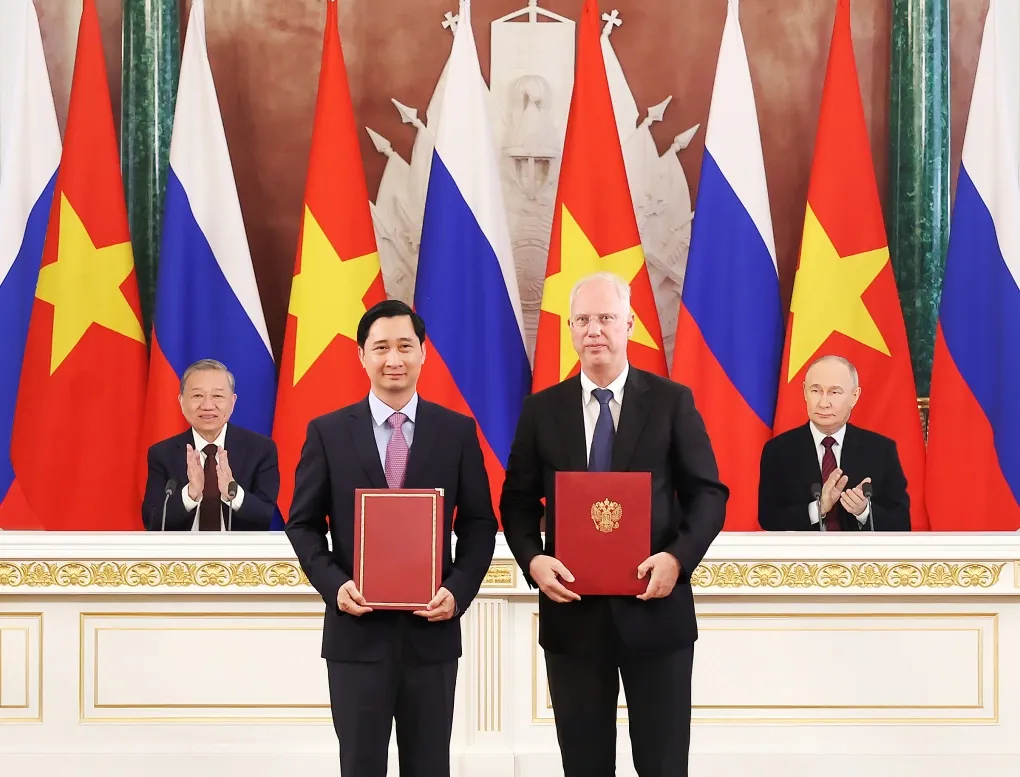
Kirill Dmitriev, Special Representative of the Russian President and Head of the Russian Direct Investment Fund (RDIF), exchange cooperation documents with Ngo Chi Dung, Chairman and General Director of Vietnam's VNVC Vaccine Company, in the presence of Russian President Putin and General Secretary To Lam in May 2025. Photo: Hoang Thong Nhat
Expanding advanced medical cooperation
Apart from pharmaceutical technology transfer, advanced medical cooperation continued to expand in 2025.
Vietnam’s Tam Anh General Hospital System signed cooperation agreements with leading Russian medical research centers to study and apply new technologies in diagnosis and treatment, particularly in oncology.
The cooperation focuses on technical transfer, specialist training and bringing advanced medical solutions into clinical practice in Vietnam to improve treatment quality and expand patient access to modern therapies.
Healthcare cooperation was advanced through working visits by Russian Minister of Health Mikhail Murashko in 2025, when the discussions covered expanded cooperation in medical supplies, vaccines, medical technologies and human resource training.
Russia reaffirmed its readiness to share experience and technology in oncology treatment, organ transplantation and modern healthcare system development.
Another notable step was Vietnam's approval of several Russian-made cancer drugs, including those containing pembrolizumab, an advanced immunotherapy widely used worldwide, helping diversify high-quality medicines for Vietnamese patients.
Comprehensive relations drive broader cooperation
Placing healthcare cooperation in a wider context, Ambassador Bezdetko said that 2025 marked a year of major milestones in Vietnam-Russia relations, including 75 years of diplomatic ties, 50 years of Vietnam’s national reunification, 80 years of victory in the Great Patriotic War and 80 years of Vietnam’s National Day.
He said this shared history and long-standing ties provide a strong political and spiritual foundation for stable dialogue at all levels, even amid complex global geopolitical developments.
A central event of the year was the visit to Russia in May 2025 by General Secretary of the Communist Party of Vietnam To Lam, resulting in the signing of nearly 20 cooperation documents in economics, science and human resource training.
Remarkably, the participation of Vietnamese People's Army soldiers in the Victory Day parade on Red Square was seen as a vivid symbol of shared historical perspectives and mutual respect.
The ambassador also highlighted mutual support in difficult times, including Russia’s delivery of 30 tons of humanitarian aid to central Vietnam after natural disasters in October 2025.
In terms of economics, bilateral trade reached US$4.3 billion in the first 11 months of 2025, up 3.7% year-on-year. Bilateral agricultural trade continued to grow steadily, surpassing $1 billion. Both sides are implementing the Master Plan for Cooperation Development to 2030, targeting bilateral trade of US$15 billion.
So far, some Russian investment projects have remained effective, notably the GAZ vehicle assembly plant in the central city of Danang, which has delivered around 3,000 vehicles to the market.
Meanwhile, Vietnamese companies also expanded investments in Russia in agriculture and food processing, including TH Group is one of the largest agricultural investors in Russia with more than $2.7 billion committed to high-tech dairy farming and processing.
The group operates large-scale farms and a processing plant with a capacity of 1,000 tons per day in Kaluga and Moscow oblasts, supplying fresh milk, yogurt and cheese to both domestic and export markets.
Ambassador Bezdetko said tourism saw a strong recovery following the resumption of direct flights. In the first 11 months of 2025, the number of Russian tourists to Vietnam rocketed 290% on year to 590,000. The figure is expected to exceed 650,000 by the year’s end, close to the pre-pandemic level.
Russia is focusing on structural projects in energy, industry, pharmaceuticals and high technology, while promoting localized production and expanding local currency settlements.
In energy, oil and gas cooperation continued with the participation of major Russian companies such as Zarubezhneft, Gazprom and NOVATEK alongside Petrovietnam.
Among the sectors, the ambassador said negotiations on the intergovernmental agreement for the Ninh Thuan 1 Nuclear Power Plant have entered the final stage, with about 98% consensus reached.
Remaining issues require high-level approval and could be completed within one to three months, paving the way for signing in early 2026.
At the same time, the Nuclear Science and Technology Center project in Vietnam’s southern province of Dong Nai is progressing smoothly, adding a new dimension to scientific cooperation.
He said education, science and people-to-people exchanges remain important pillars. Russia continues to offer about 1,000 scholarships annually to Vietnamese students. Meanwhile, it is promoting the transformation of the Pushkin Russian Language Institute in Hanoi into a regional Russian language center.
In 2025, cultural exchanges were vibrant, including Moscow Days in Hanoi, Vietnam Culture Days in Russia and performances by Russian ballet and symphony orchestras at Ho Guom Opera House in Hanoi. Another highlight was the handover of the research vessel Professor Gagarinsky to the Vietnam-Russia Tropical Center to help Vietnam enhance marine research capacity.
Looking ahead, Ambassador Bezdetko said Vietnam and Russia are preparing for high-level visits and will deepen cooperation in high-tech fields, including digital transformation, cybersecurity and the peaceful use of nuclear energy.