Cautious reform seeks to protect education quality
Rejecting one-size-fits-all solutions, Vietnam is advancing school restructuring that reflects local conditions and keeps student access at the center of reform.
THE HANOI TIMES — Vietnamese provinces are moving carefully to restructure school networks, with most emphasizing gradual adjustment and rejecting mechanical mergers that could disrupt learning.
The campaign has followed the operation of the nationwide two-tier local governrment model in early July 2025 while the number of provinces and cities in Vietnam was cut to 34 from 63.
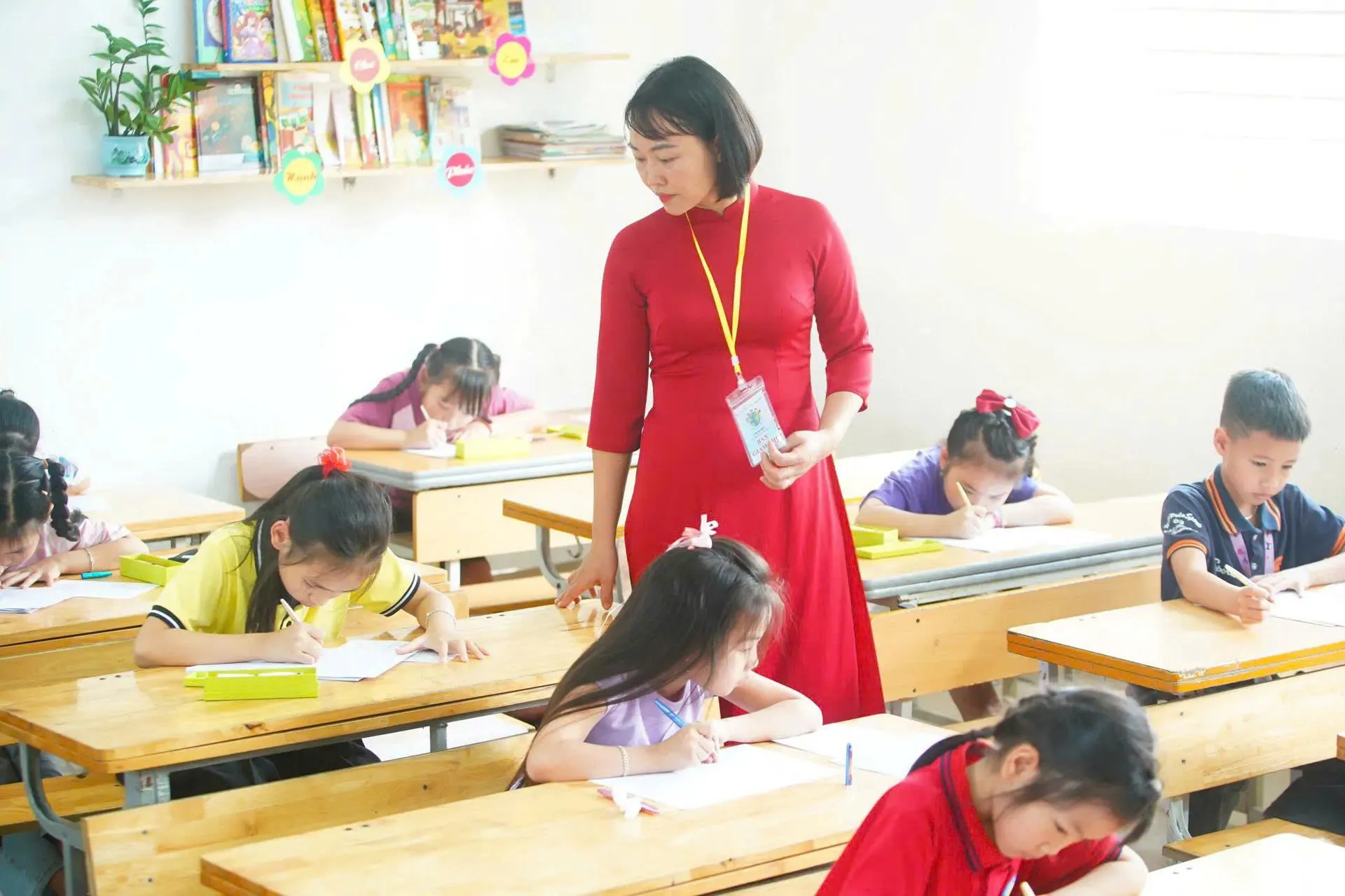
A classroom at the primary level in Hanoi. Photo: Nam Du/The Hanoi Times
As of December 28, reports from 23 of the country’s 34 provinces and centrally governed cities indicate that most localities will keep existing preschool, primary, lower secondary and upper secondary schools unchanged in 2025.
In other provinces and cities, local authorities plan to finalize restructuring roadmaps only after the 2025-2026 school year ends in June 2026.
At the preschool level, authorities have taken a restrained approach. Six provinces plan no changes, while 15 propose limited reductions ranging from 1.76% to under 10%. Only one province has completed mergers, resulting in a steep 45.83% reduction in preschool institutions.
General education follows a similar pattern. Seven provinces report no restructuring, while 15 plan modest reductions between 0.2% and under 10%. One locality has completed consolidation, recording a 42.57% decrease.
Continuing education shows the strongest consolidation trend, with many provinces planning cuts exceeding 30%.
Local solutions over one-size-fits-all
In the central province of Quang Tri, the Department of Education and Training has proposed reorganizing select public education units to streamline operations while ensuring learners’ access.
A key case involves Nguyen Huu Than High School, which operates only 10 classes and falls below minimum scale requirements.
Authorities are weighing two options for this school. One potential way is to merge it with a nearby lower secondary school to form a combined lower and upper secondary model. Another is to integrate the school into Trieu Phong High School.
Implementation is expected from the 2026-2027 school year, pending appraisal.
Quang Tri has nearly 900 public schools, most of which will remain stable, particularly schools that meet class-size standards, serve settled communities and benefit from convenient transport.
Restructuring will target small schools that lack minimum class numbers or operate multiple satellite campuses that complicate management, staffing and infrastructure investment.

Ha Yen Quyet Primary School in Cau Giay Ward holds the opening ceremony for the 2025 - 2026 school year. Photo: Nam Du/The Hanoi Times
In the northern province of Ninh Binh, local authorities will retain all 92 high schools and 20 vocational and continuing education centers. Some centers will merge and change names to improve efficiency.
At preschool, primary and lower secondary levels, the province will reorganize schools with substandard class sizes, ensuring post-merger scales remain within permitted limits. Twenty-nine schools fall under this plan.
Several other localities, including Ho Chi Minh City, Thanh Hoa, Phu Tho, Ha Tinh, Ca Mau and Cao Bang, have proposed restructuring aligned with the Government’s overall direction.
The northern coastal province of Quang Ninh has completed provincewide restructuring of commune- and ward-level school networks.
Strong efforts by local authorities have halved the number of schools from 520 to 255, allowing resources to concentrate on teaching quality.
Nationwide, Vietnam has more than 11,500 primary schools serving nearly 8.9 million students and over 8,400 lower secondary schools with about 6.7 million students.
While the system meets universal education targets, stark regional disparities persist.
Urban and industrial areas face overcrowded classrooms, while mountainous regions and the Central Highlands operate many small schools with average class sizes of about 18 students or rely on multi-grade teaching.
Quality as the guiding principle
Minister of Education and Training Nguyen Kim Son said restructuring must reflect local socio-economic conditions, population density, transport connectivity and regional characteristics, rather than a uniform national model.
Son stressed that the core goal is to improve teaching and management effectiveness. Decisions on restructuring or dissolution must rest on professional and educational criteria, not financial autonomy.
Nguyen Vinh Hung, Deputy Director of the Department of Education and Training in the central city of Hue, said the city prioritizes stability and will consider restructuring at the commune or ward level only when necessary.
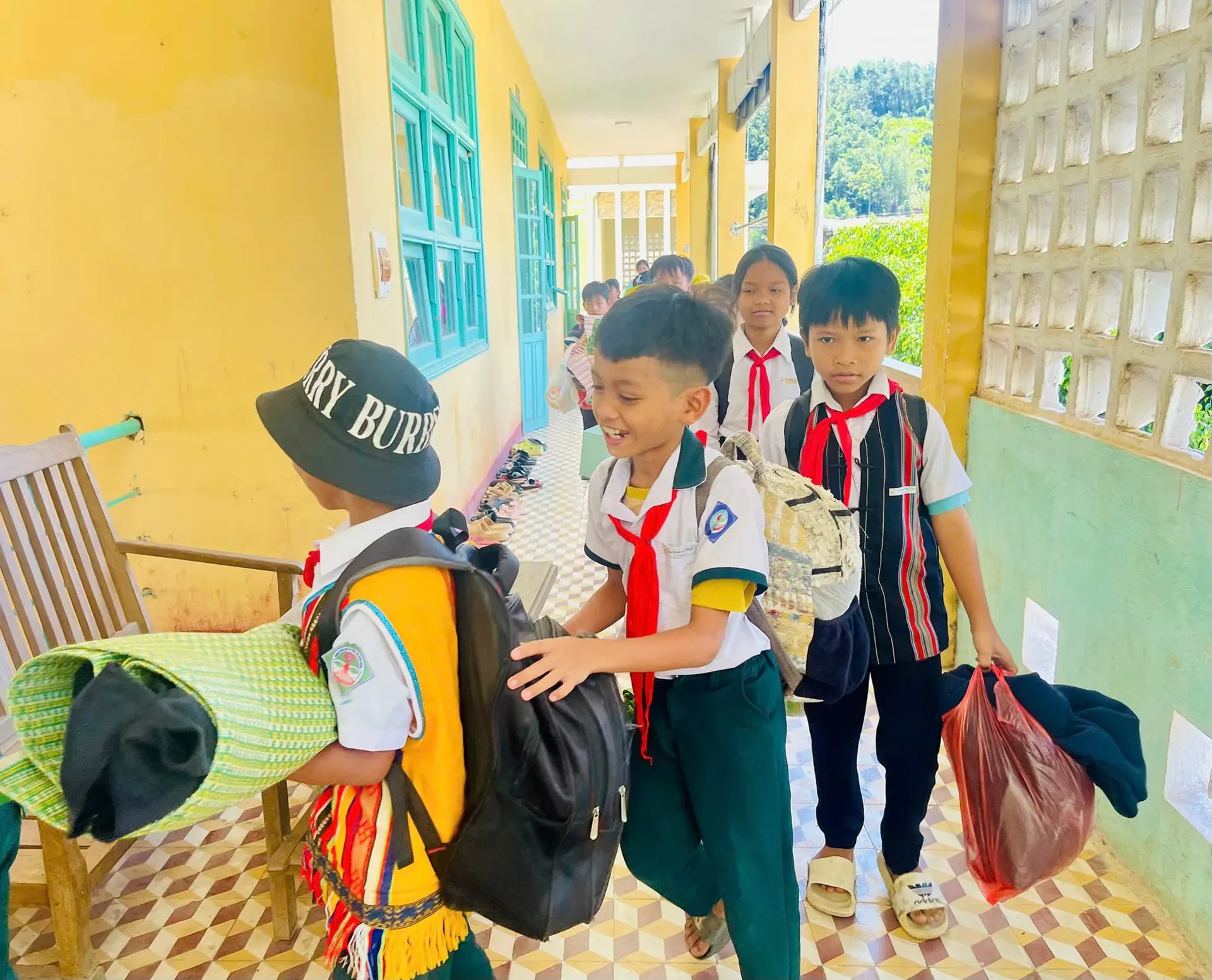
A boarding school in Quang Tri Province. Photo: VGP
Any changes must ensure safe travel for students, especially in disadvantaged and border areas and pair with investment in boarding and semi-boarding schools, he said.
In the northern mountain province of Tuyen Quang, Deputy Director of the provincial Department of Education and Training Bui Quang Tri said plans follow consultations with residents and grassroots Party committees and proceed in phases.
He called for clearer guidance on organizing boarding and semi-boarding schools in border areas.
Merger of schools across the country have sparked a controversial debate among education experts with many of them warning against symbolic consolidation.
Nguyen Tung Lam, Chairman of the School Council of Dinh Tien Hoang High School in Hanoi, said restructuring must raise quality while ensuring equity.
He noted that urban class sizes often exceed limits, reducing teachers’ ability to support individual students and cautioned that oversized merged schools can create unwieldy management structures.
The Ministry of Education and Training should continue to reject numerical targets for school reductions, insisting that restructuring must serve educational effectiveness, he said.
Deputy Minister Pham Ngoc Thuong said reviews must ensure sufficient schools, classrooms and teachers aligned with local realities.
“In densely populated areas, authorities should consider splitting oversized schools while investing in facilities and staff. In remote, border and island areas, restructuring must remain flexible to guarantee access,” he said. “No student should leave school because of distance or unsafe travel.”
The deputy minister said it is important to sustain investment in boarding and semi-boarding systems to provide stable, long-term learning environments in challenging regions.