Vietnam advances priorities to shape APEC 2027 agenda
Viewing APEC 2027 as both a great honor and a significant international responsibility, Vietnam aims to help shape an agenda that reflects inclusive Asia-Pacific economies while highlighting its own distinct contributions.
THE HANOI TIMES — Vietnam is moving steadily to shape the agenda for APEC 2027 with a proactive and substantive approach, aiming to contribute meaningfully to Asia-Pacific cooperation amid fast-changing and unpredictable regional and global dynamics.
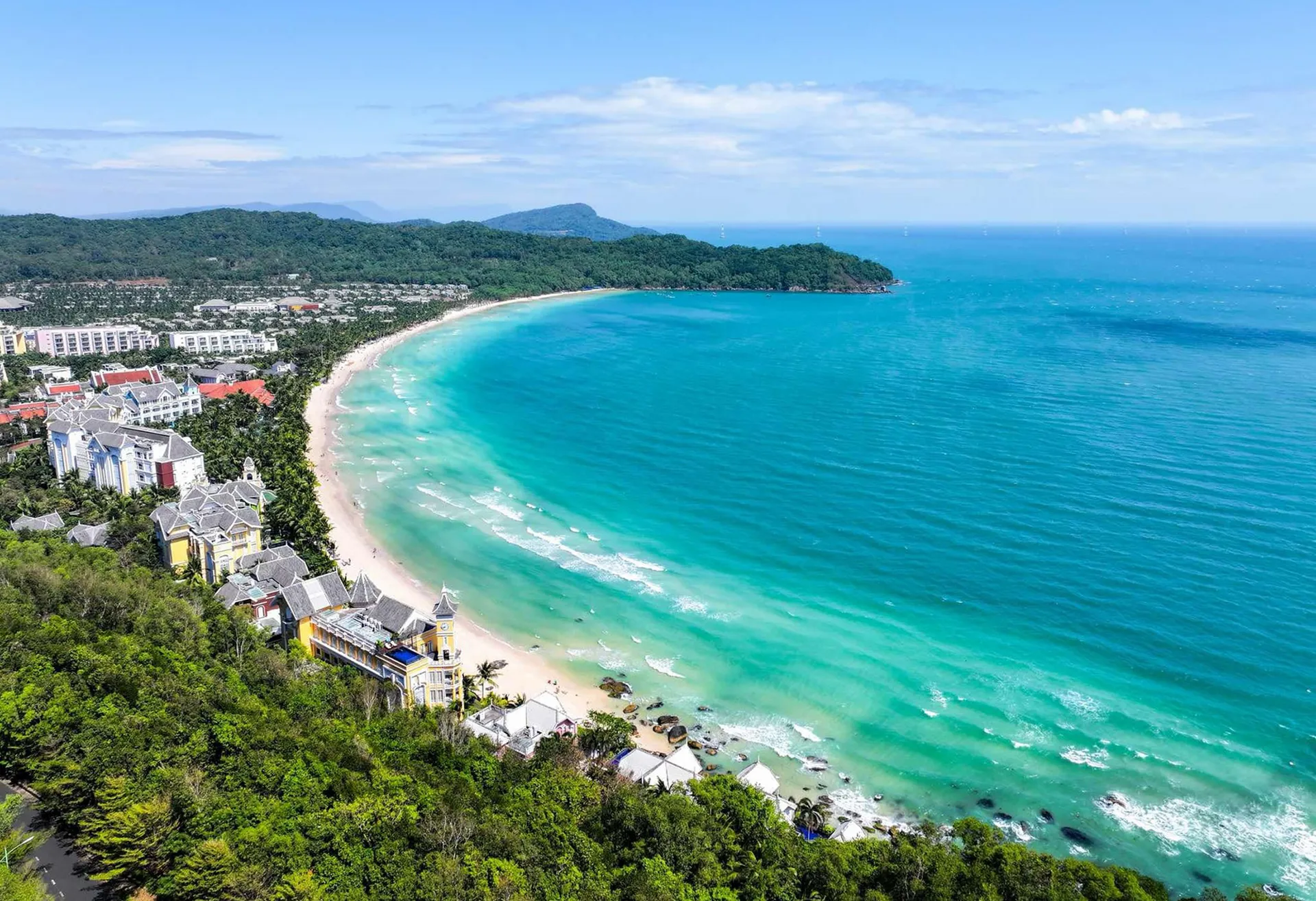
Phu Quoc Island, Vietnam's the biggest island and famous attraction. Photo: Angiang.gov.vn
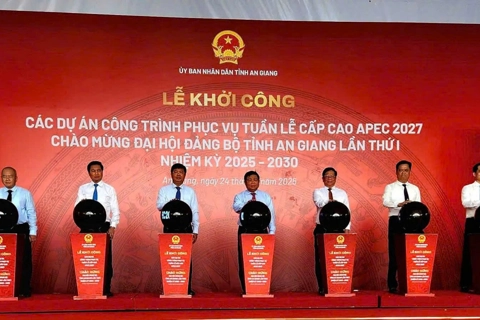
Since its admission to the Asia-Pacific Economic Cooperation (APEC) in 1998, Vietnam has hosted APEC twice, in 2006 in Hanoi and 2017 in the central city of Danang. Its third hosting for the forum themed “Connecting: Building Inclusive and Resilient Economies” is scheduled for 2027 in Phu Quoc, the country’s biggest island and world-class tourism destination.
Prime Minister Pham Minh Chinh said that hosting APEC 2027 is a great honor and a source of pride as well as a significant international responsibility for Vietnam. Therefore, the country will make efforts to make it more successful than the previous ones.
To prepare for the event, the government has established five subcommittees focusing on Content, facilities and logistics, security and healthcare, communications and culture, and protocol.
This agenda direction has guided a series of preparatory activities, policy consultations and exchanges with international partners, identifying cooperation priorities that reflect shared interests across APEC economies while aligning closely with Vietnam's development and integration goals in the new phase.
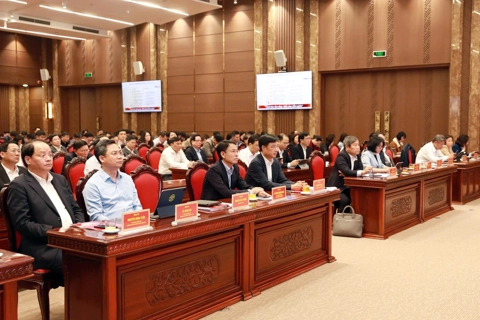
In this regard, on December 26, the first meeting of the Content Subcommittee under the National Committee for APEC 2027 was held, marking the official launch of the subcommittee's work, setting overall directions and coordination methods, with particular attention to 2026 as the pivotal year ahead of the event.
Speaking at the meeting, Deputy Foreign Minister Nguyen Minh Hang said hosting APEC 2027 will be one of Vietnam's most important multilateral diplomatic events following the 14th National Party Congress (scheduled for mid-January 2026).
She stressed that content preparation must go beyond ensuring well-organized meetings to reflect strategic thinking, long-term vision and Vietnam's responsibility in advancing an Asia-Pacific community that is peaceful, stable and prosperous.
She called for renewed thinking and more scientific and proactive approaches in preparing the agenda, with close and effective coordination among ministries and relevant agencies.
Meanwhile, Nguyen Sinh Nhat Tan highlighted the need to closely link the APEC 2027 agenda with Vietnam's economic development priorities and new integration requirements. He said cooperation themes should be practical and value-adding, address common concerns of APEC economies and leverage Vietnam's strengths and interests.
Participants discussed key preparations, including the 2026 work roadmap, the tentative schedule of meetings in 2027 and outcomes of thematic workshops that will inform the overall theme and cooperation priorities.
The discussions underlined the importance of continued coordination to ensure coherence, feasibility and a solid foundation for the APEC 2027 agenda.

AIDAstella, a Sphinx-class cruise ship visits Phu Quoc. Photo: Angiang.gov.vn
Expanding international consultations
Alongside domestic preparations, Vietnam has intensified consultations with international partners to shape a comprehensive and substantive APEC 2027 agenda.
Last week in Hanoi, the Ministry of Foreign Affairs and the APEC Secretariat co-hosted a hybrid workshop on building the agenda for APEC Vietnam 2027 attended by APEC Secretariat Executive Director Eduardo Pedrosa, APEC Policy Support Unit Director Carlos Kuriyama, APEC senior officials and representatives from ministries, research institutions and APEC member economies.
Deputy Foreign Minister Nguyen Manh Cuong highlighted the growing importance of APEC cooperation amid rapid global and regional change. He said the workshop offered a platform for Vietnam, APEC economies and the Secretariat to clarify strategic directions and identify shared priorities for APEC 2027.
Discussions reviewed APEC’s recent cooperation outcomes, emerging trends and future opportunities and challenges, in addition to views on trade, investment and economic integration, including progress toward the Free Trade Area of the Asia-Pacific, structural reform goals and connectivity.
The workshop also focused on science, technology and innovation, with emphasis on artificial intelligence, digital transformation and the digital economy, as well as technological innovation in energy and agriculture.
It also covered sustainable and inclusive development issues such as green growth, climate response, marine economy and food security.
Vietnamese officials said the inputs will be consolidated to refine the agenda, ensuring APEC Vietnam 2027 is both effective and substantive.

The show "Kiss of the Sea" in Phu Quoc. Photo: Angiang.gov.vn
Communication and culture take the lead
Along with policy content, communication and cultural programs have been identified as pioneering pillars to amplify Vietnam’s image and create a strong overall imprint for APEC 2027.
Hang said hosting APEC for the third time reflects the trust of APEC economies in Vietnam amid deeper integration. The event also offers opportunities to promote the country and host localities.
She emphasized that communication and culture play a leading role in presenting Vietnam as a dynamic, innovative and culturally rich country, reinforcing its image as a proactive and responsible member of the international community.
The subcommittee outlined a three-phase roadmap, starting with preparations in 2026, followed by peak communication campaigns during major meetings in 2027 and culminating in activities for the APEC Economic Leaders Week, including operation of the International Media Center and large-scale cultural events.
The subcommittee officials agreed to strengthen coordination, draw on experience from APEC 2006 and 2017 and adopt new approaches to ensure communication and cultural activities are coherent and effective.
Hang called on the subcommittee to promptly translate the roadmap into concrete plans within their agencies and work closely with the Ministry of Foreign Affairs to ensure communication and cultural efforts stay one step ahead, contributing to the overall success of APEC Vietnam 2027.
Regarding the hosting, Prof. Dr Andreas Stoffers from Germany-based FOM University of Applied Sciences for Economics and Management, said Vietnam is entering APEC 2025 with a confident and proactive posture as the forum’s priorities align closely with the country’s development strategy.
Green recovery, digital transformation, AI, energy, semiconductors, human capital and comprehensive cooperation are all areas where Vietnam has set clear national goals and built policy momentum.
APEC 2025 gives Vietnam a platform to deepen cooperation on energy security, digital transition, AI and semiconductors while upgrading workforce quality and joining practical regional alliances. Steady growth, a wide free trade agreement (FTA) network and recent reform resolutions show Vietnam is ready to play a more active role.
However, key challenges remain in policy execution and international communication, requiring faster rollout of the Digital Technology Industry Law, stronger energy investment, workforce development and clearer external messaging.
By using APEC 2025 to advance green finance, energy cooperation, skills training and startups, Vietnam can move faster and position itself as a contributor to regional leadership, not just a participant, stressed Dr Andreas Stoffers.