Gender equality in Vietnam: H’Mong ethnic women operate tourism businesses
Thanks to the support of a program, ethnic minority women in Vietnam have gained control of their own lives and contributed to the local economy.
The H’Mong ethnic women in Moc Chau District, of the northwest mountains province of Son La, are now striving to improve their lives and assert their place in the family by opening homestays for tourists.
Chance for a better life
| Sung Y Hoa cleans her homestay to welcome guests. Photo: Hoang Nam |
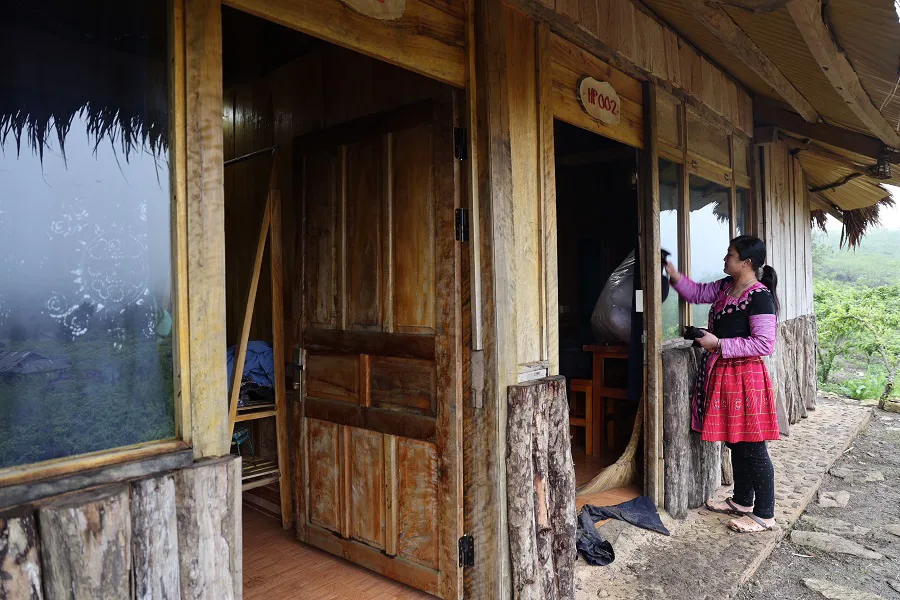
Carefully dusting off a white bed sheet in her guest room, 30-year-old Sung Y Hoa, adds some final touches to the tidy room in preparation for guests who have booked to stay for a few weeks.
Putting some wildflowers in a vase by the window, she looks at the lush plum trees down the valley. She feels happy. She sings little low tunes of a folk song. Cool gusts of wind blow through the window and shake the flowers gently.
Cleaning guest rooms has been her morning routine since her family began offering a homestay service in 2021. Her family was among the first to become involved in a community-based homestay business in Ta So No2 Village, Chieng Hac Commune, and Moc Chau District in Son La Province.
The village sits at approximately 1,050m above sea level, 180km northwest of Hanoi, and on a fertile terrain, with a temperate climate, picturesque landscapes, and a diverse ecosystem. It is home to 130 H’Mong ethnic group families.
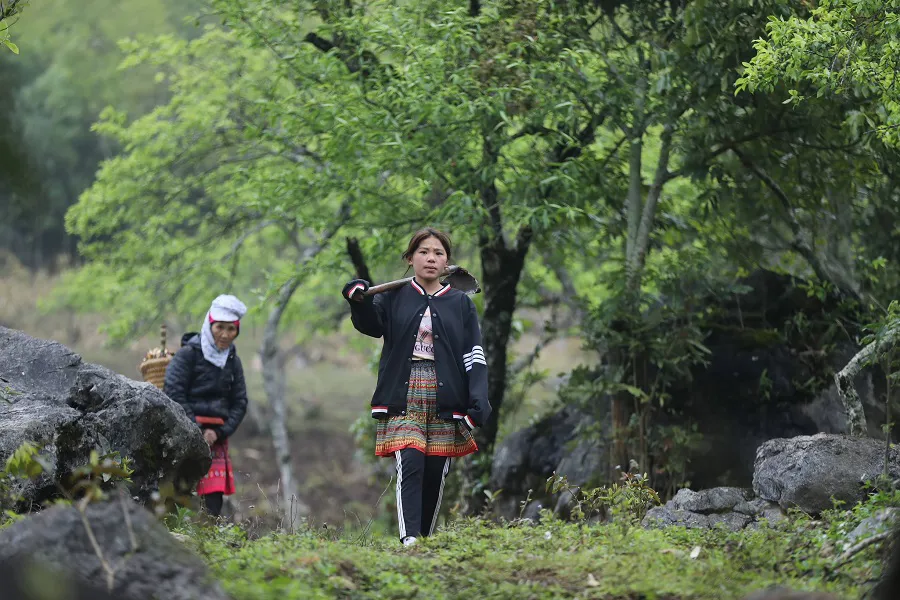
| The simple yet charming path that leads to Hoa's homestay on a hill. Photo: Hoang Nam |
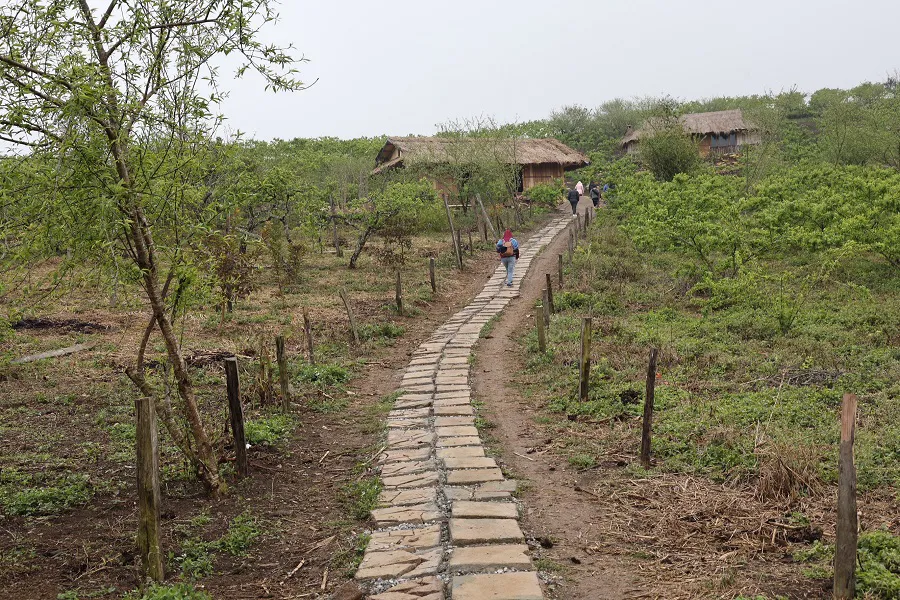
“Before, we just lived by planting fruit trees like plums and peaches and raising chickens, cows and buffalo,” she said. “My family learned about the homestay service from neighboring villages and we decided to invest in a homestay named Hoa Phong, which means flower and wind, as up here in the hills it is windy and there are flowers blooming throughout the year.”
With a loan worth VND100 million or US$4,400 from a bank, she built a two-room bungalow. Her husband, Mua A Hang designed the wooden architecture and their neighbors helped them to build it.
Visitor Nguyen Phuong Mai from Hanoi, who has been to Ta So Village twice, recognized the changes in tourism service in Ta So Village.
“Last time I came two years ago, there was scarcely any homestay service here,” she said. “We had to sleep in the town nearby and just came here in the daytime. This time we can rent a room and stay in the village. The service is good and the locals are so friendly. We will return as we love the tranquility here,” she told The Hanoi Times.
The great support
| The wonderful scenery and ethnic people in Ta So 2 Village, Chieng Hac Commune, Moc Chau District in Son La Province. Photo: Hoang Nam |
Hoa and Hang are among the women who received support to run a tourism business from the Gender Responsive Equitable Agriculture and Tourism (GREAT) program, funded by the Australian government.
“GREAT helped us to get access to the loan. They opened training courses on hospitality, where we learned skills to run a homestay and cook according to guests’ taste,” Hoa said.
Once a shy woman who used to stay at home, farm and take care of the children, Hoa has become more confident when dealing with guests.
“I still remember how nervous I was when receiving the first guests. I did not know what to say or how to cook for them,” she recalled.
“Now I know a lot more. I’m totally capable of talking with guests and pleasing them. I even prepare a menu, from which guests can order food. I now know how to make different dishes from the available ingredients in our garden. Vietnamese guests like grilled pork, chicken, and vegetable dishes while foreigners prefer noodles and grilled pork,” she said.
Hoa said she and Hang have joined gender courses offered by the program and local authorities, where they met a lot of people and exchanged ideas.
| Sung Y Hoa received a lot of support from her husband on the housework now. Photo: Hoang Nam |
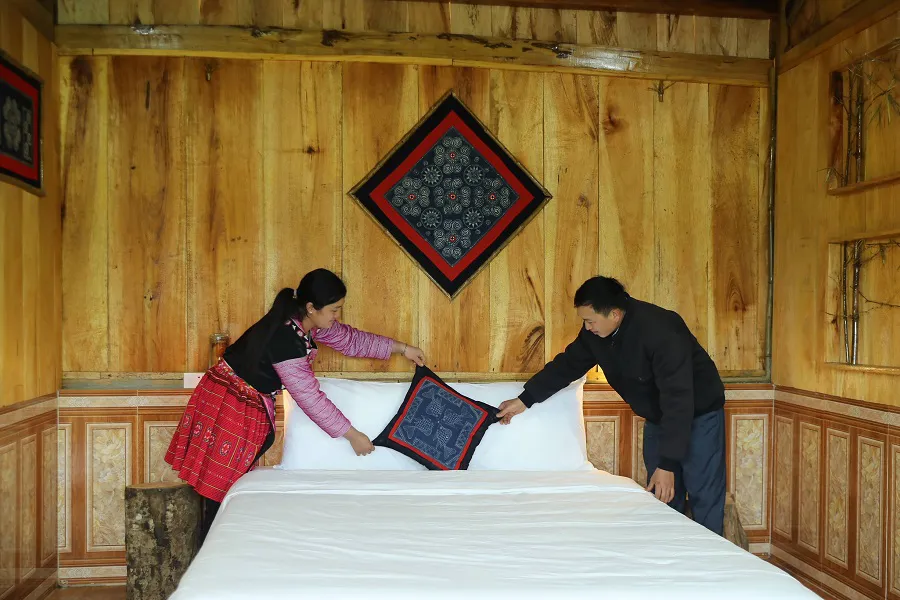
“My husband and I have more to talk about now. We are much busier but quite happy,” she said.
The mother of two now sometimes travels to attend training courses and activities hosted by GREAT.
The homestay service has brought in additional income for Hoa and Hang, besides plums, peaches, and galangal cultivation.
In a month they can earn up to VND10 million or around $450 from two groups of tourists. This is five to ten times higher than what they earn per month working in agriculture.
“I now want to get more experience to be able to offer a better service,” Hoa said.
The couple plan to build a dormitory that can host up to 20 people. They also plan to add a fireplace to their homestay.
Dinh Thi Huong, Head of the Culture and Information Section of Moc Chau District, expressed her appreciation for the effectiveness of the GREAT program, particularly for women.
“The GREAT program has helped develop not only agriculture, community tourism, and handicrafts such as making wooden toothpick boxes, knives, and lipstick from Sachi seeds, it has improved people’s awareness in various fields. Women are now more respected than before as they can earn money. They can raise their voices in social affairs, and make decisions at home together with their husbands.”
Huong said the local authorities will make policies on granting cheaper loans to people who invest in developing community tourism.
“We will also expand the successful community-based tourism models to other villages in the district,” she said.
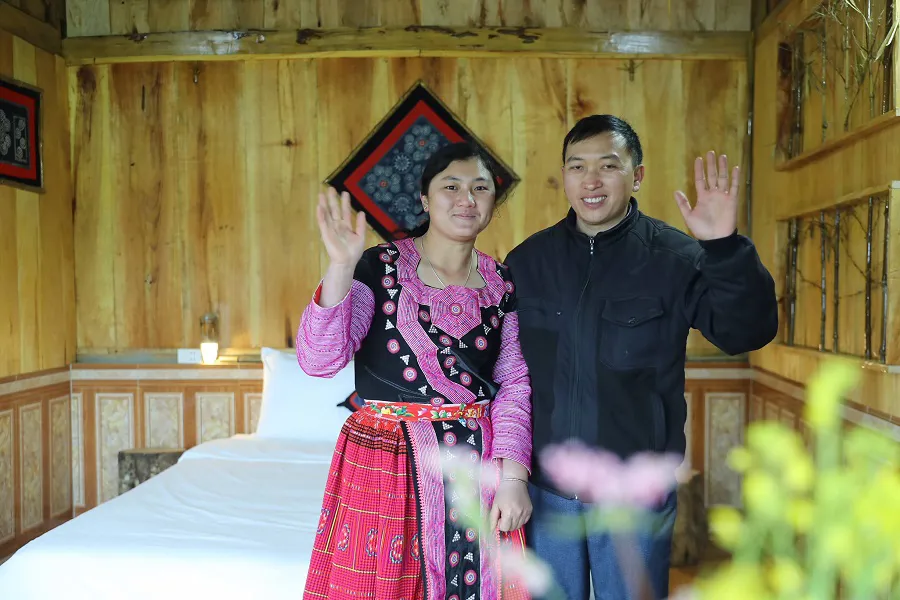
| The H'Mong ethnic couple also takes care of their homestay together. Photo: Hoang Nam |
Cao Dai Hung, a Tourism Advisor with the GREAT Programme, said they helped ethnic women get loans from the local Bank for Social Policies to upgrade their homestay services, and set up service groups to share profits. The program also hosts training classes on tourism skills and gender equality.
Hung said GREAT also planned to multiply the community-based tourism model to other villages and support locals in developing other tourism products to diversify the tourism experience in the Moc Chau plateau.
The GREAT Program is an AUD 33.7 million (equivalent to VND600 billion) initiative that promotes gender equality and women’s economic empowerment, with a focus on the ethnically diverse provinces of Son La and Lao Cai in Vietnam's northwest.
Funded by the Australian Government and delivered in partnership with the Government of Vietnam, the five-year program (2017-2022) GREAT works with the private sector, government agencies, and NGOs to create opportunities for women in the agriculture and tourism sectors. These sectors have demonstrated strong economic growth and the potential to increase the economic participation of ethnic minority women.
The second phase of the program is planned to last until 2027.