Germany, India send warships to South China Sea: Vietnam upholds free navigation
Vietnam said it advocates maritime activities that comply with international law and the UN Convention on the Law of the Sea (UNCLOS) 1982.
Spokesperson Le Thi Thu Hang of the Ministry of Foreign Affairs (MoFA) said operations at sea need to comply with international law and contribute to regional stability and security when she was reached for comments on the upcoming arrival of German and Indian warships to the South China Sea (called East Sea by Vietnam).
| Spokesperson Le Thi Thu Hang of the Ministry of Foreign Affairs. Photo: MoFA |

“I think that the reception of foreign military ships is a normal operation on the basis of bilateral cooperation between Vietnam and other countries and is in line with Vietnamese law,” Hang told local media Thursday [August 5].
Hang said that Vietnam’s consistent policy is to advocate the compliance by maritime activities of countries inside and outside the region with the United Nations Convention on the Law of the Sea (UNCLOS) 1982. Those activities contribute to maintaining peace, stability, security, safety, and maritime cooperation based on common interests and in line with regional countries’ aspirations and the international community.
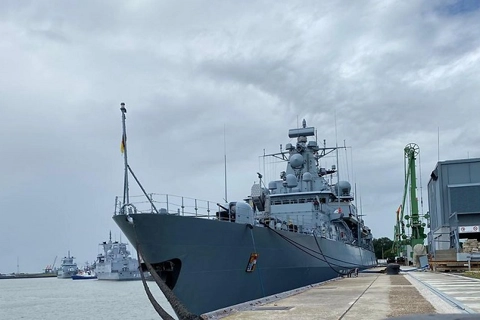
| Bayern frigate at Germany's Wilhelmshaven port before departure. Photo: The German Federal Foreign Office |
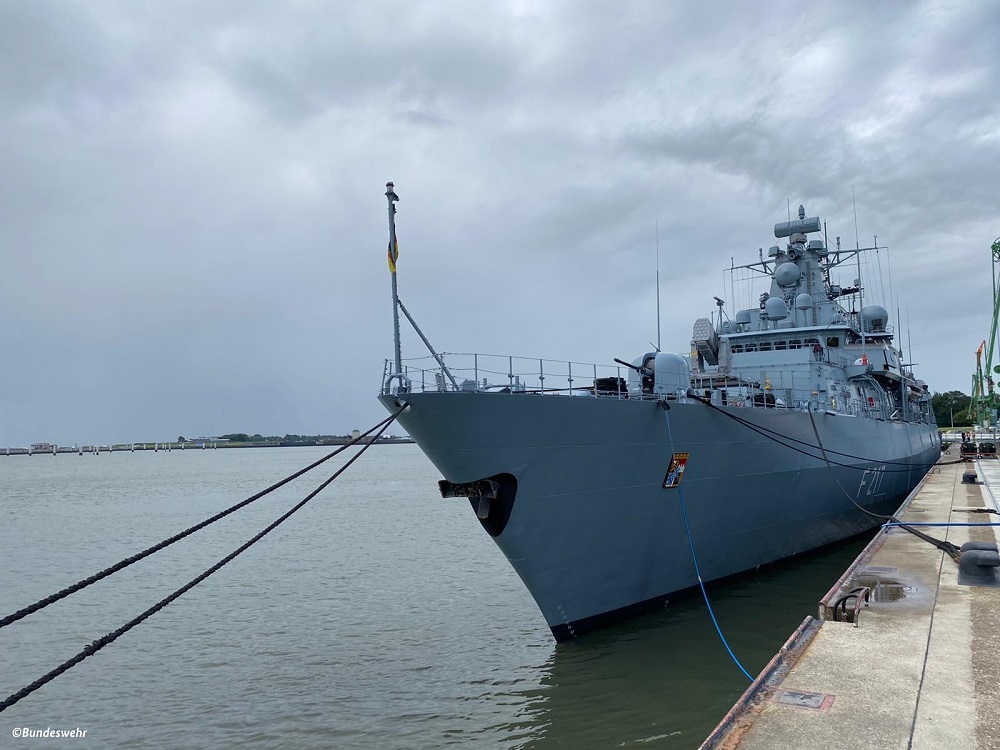
On August 2, the German Federal Foreign Office announced that a German Bayern frigate with 230 crew members on board left the northwest German port of Wilhelmshaven for a six-month Indo-Pacific tour, including a passage to the South China Sea.
It becomes the first German warship to sail the contested sea for almost two decades.
The journey is aimed at strengthening security policy cooperation with partners in the Indo-Pacific region and upholding the rules-based international order, German Foreign Minister Heiko Maas commented on the frigate’s departure.
It shows Germany’s strategy on the diversification of economic partnerships and the strengthening of international law following its Policy Guidelines on the Indo-Pacific adopted in September 2020.
| A frigate in India's task group will visit the South China Sea. Photo: India's Ministry of Defense |
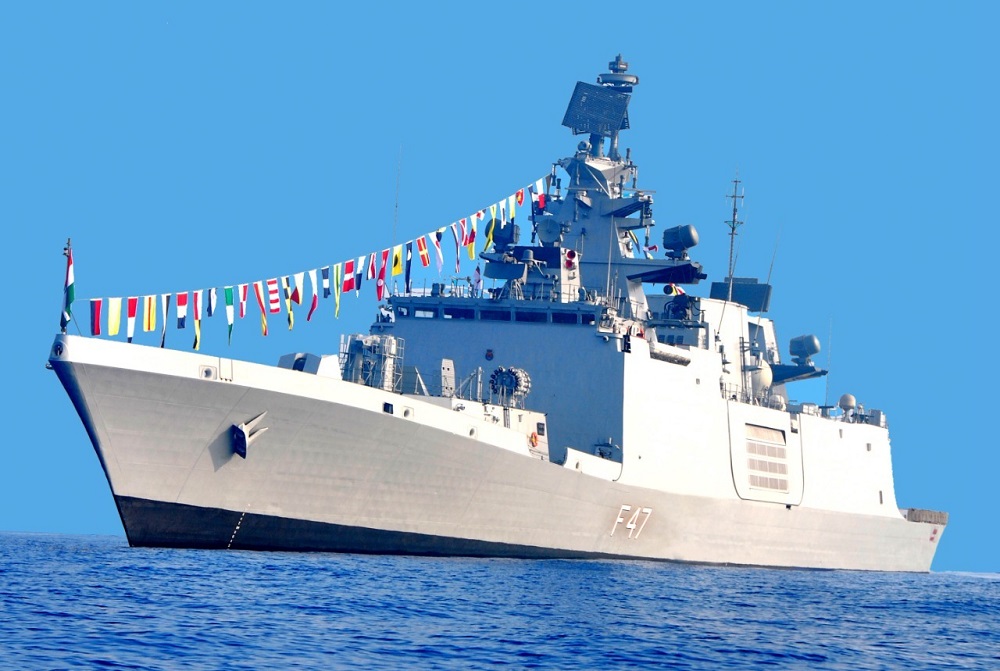
On August 2, Indian announced the Navy’s two-month overseas deployment including in the South China Sea of the task group includes Guided Missile Destroyer INS Ranvijay, Guided -Missile Frigate INS Shivalik, Anti-Submarine Corvette INS Kadmatt, and Guided Missile Corvette INS Kora.
The Indian Navy ships’ deployment seeks to “underscore the operational reach, peaceful presence, and solidarity with friendly countries towards ensuring good order in the maritime domain and to strengthen existing bonds between India and countries of the Indo Pacific,” according to the Indian Ministry of Defense.
The journey is in pursuit of India’s ‘Act East’ policy and to enhance military cooperation with friendly countries, it said.
The ships are scheduled to participate in bilateral exercises with the navies of Vietnam, the Philippines, Singapore, Indonesia, and Australia. Furthermore, they would also participate in multilateral exercise MALABAR-21 alongside the Japanese Maritime Self Defense Force, Royal Australian Navy, and the US Navy in Western Pacific.
On the occasion of the 11th East Asia Summit (EAS) Foreign Ministers Meeting on August 4, India’s External Affairs Minister Dr. S. Jaishankar tweeted that the Code of Conduct (COC) on the South China Sea should be fully consistent with UNCLOS 1982 and should not prejudice legitimate rights and interests of nations not a party to discussions.
Over 50% of India’s global trade and more than US$5 trillion global trade passes through the South China Sea region, according to the Economic Times.