14TH NATIONAL CONGRESS OF THE COMMUNIST PARTY OF VIETNAM
Log in
Vietnam

German warship sails for South China Sea after two decades

The journey shows Germany’s strategy on the diversification of economic partnerships and the strengthening of international law.

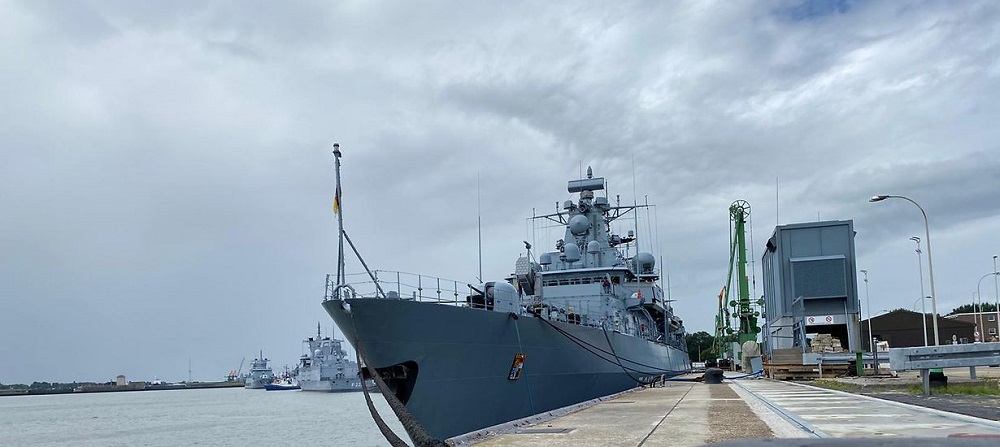
German frigate Bayern August 2 set sail for a six-month Indo-Pacific tour, including a passage to the South China Sea (called East Sea by Vietnam), becoming the first German warship to sail the contested sea since 2002.

 Bayern frigate set to leave Wilhelmshaven port. The photo was taken on August 2 by the German Federal Foreign Office

Bayern frigate with 230 crew members onboard will leave the north-west German port of Wilhelmshaven to join patrol and training mission, dock at ports in partner countries, and take part in multilateral activities.

German Foreign Minister Heiko Maas said the tour is strengthening security policy cooperation with partners in the Indo-Pacific region

The Indo-Pacific is where the international order of the future will be decided so Germany wants to help shape it and to take on responsibility for upholding the rules-based international order. In addition, the country wants to expand its partnerships and involvement in the region, including through the EU’s Strategic Partnership with ASEAN and consultations on security policy with Japan and Australia, Heiko Maas commented on the frigate’s departure.

The German Federal Foreign Office (Auswärtiges Amt) said that Germany regularly underlines the significance of the UN Convention on the Law of the Sea (UNCLOS) as a comprehensive, universally recognized legal framework, particularly its provisions on freedom of navigation in international waters, as well as the obligatory mechanisms for the settlement of disputes.

The deployment amounts to a heavy lift for the German sea service, according to Sebastian Bruns, German naval analyst and guest lecturer at the US Naval Academy.

“Operationally, it’s an important contribution, although at the price of gutting the fleet,” he said, noting ship maintenance plans and crew training schedules had to be significantly altered to make the trip possible. “Politically, it’s even more significant, towards allies both in Europe and in the region, and towards China.”

In September 2020, the Federal Government approved new policy guidelines on the Indo-Pacific in order to strengthen Germany’s presence in the region. The strategy sets two pillars on the diversification of economic partnerships and the strengthening of international law, multilateral cooperation and security policy collaboration in the region.

In December 2020, during Germany’s Presidency of the EU Council, the EU and ASEAN upgraded their relations to a Strategic Partnership. Germany is also advocating a European Indo-Pacific Strategy.
Reactions:
Share:
Trending
Most Viewed
Related news
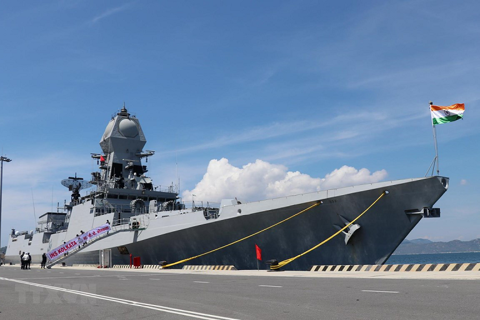
India warship visits Vietnam

India warship visits Vietnam

24 Dec, 08:31

Defense cooperation is a key pillar in the comprehensive strategic partnership that was upgraded in 2016.

Young generation steps up to power climate action

Young generation steps up to power climate action

As climate risks intensify across Southeast Asia, young people are being called upon to move from awareness to action, harnessing technology, creativity and policy engagement to accelerate environmental solutions.

Hanoi positions itself at forefront of implementing key Party resolutions

Hanoi positions itself at forefront of implementing key Party resolutions

The three resolutions on education, healthcare reform and cultural development are closely interconnected and mutually reinforcing, all directed toward building a capital that is cultured, civilized, modern and happy.

Party Chief urges stronger state economy and cultural drive

Party Chief urges stronger state economy and cultural drive

Developing the state economy and Vietnamese culture forms the twin pillars of a unified development strategy, one strengthening material capacity, the other reinforcing cultural and social resilience.

Putting people first: Making happiness Hanoi’s measure of success

Putting people first: Making happiness Hanoi’s measure of success

A central message of the 14th National Party Congress and the 18th Congress of the Hanoi Party Organization (2025-2030) is that people’s happiness must be at the core of development. All policies be grounded in citizens’ legitimate rights and interests, with public satisfaction serving as the ultimate measure of success. 

The flavors of Vietnamese Tet linger around the world

The flavors of Vietnamese Tet linger around the world

From Osaka in Japan to Lorient in France, Vietnamese communities are spreading the spirit of Tet through vibrant cultural celebrations.

Vietnam pledges to enhance tax reforms after EU listing decision

Vietnam pledges to enhance tax reforms after EU listing decision

Vietnam has reaffirmed its strong commitment to meeting international standards on tax transparency and information exchange following the European Union's adding Vietnam to its list of non-cooperative tax jurisdictions.

Tet at the mission: Peach blossoms bloom in Africa

Tet at the mission: Peach blossoms bloom in Africa

Under the dry winds and red dust of Abyei and Bentiu, mission compounds glow with paper blossoms and steaming banh chung, as each square rice cake carries from Vietnam to Africa a message of solidarity, compassion and enduring cultural identity.

Planting a tree means planting hope for the future: General Secretary To Lam

Planting a tree means planting hope for the future: General Secretary To Lam

The Party chief has called for a more substantive and sustained tree-planting drive, urging Hanoi to lead the nation in expanding green space and safeguarding the environment as part of its long-term urban development strategy.