Hanoi advances circular farming for green agriculture
Circular farming reduces emissions and builds sustainable value chains for long-term agricultural resilience and environmental protection.
THE HANOI TIMES — Vietnam’s Ministry of Agriculture and Environment has launched a national plan to promote the application of technology and the circular economy in agriculture by 2030.
The plan sets ambitious goals, such as collecting and reusing 80% of rice straw, 50% of agricultural byproducts, and 60% of livestock waste.
In Hanoi, many cooperatives and production facilities had already adopted circular practices long before the national plan was issued.
The Dong Thap Gerbera Cooperative in Dan Phuong Commune has reused discarded flower stems and leaves as organic fertilizer, significantly reducing input costs.
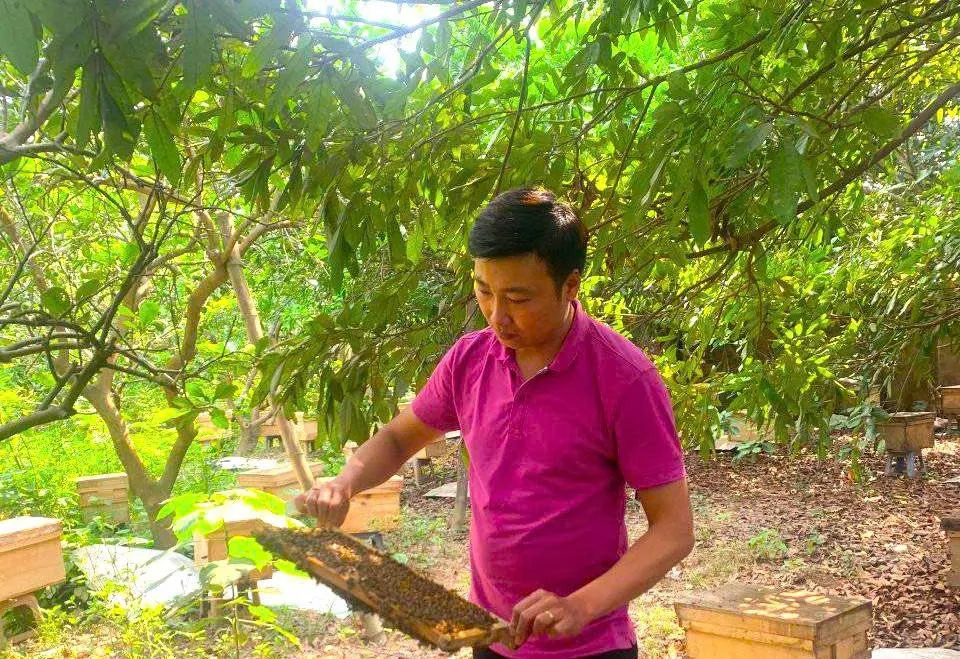
Tuan Minh Bee Cooperative in Dan Phuong Commune recycles old beeswax into scented candles and other products. Photo: Lao Dong Thu Do Newspaper
“The circular economy is no longer unfamiliar to farmers, helping us save money and improve soil quality,” the cooperative's director Bui Van Kha told the Lao Dong Thu Do Newspaper.
However, he called for more technical training and better access to equipment, as the high initial investment remains a major barrier to adopting the circular economy.
In Dan Phuong, the Tuan Minh Bee Cooperative recycles old beeswax into scented candles and other products.
Director Tran Tuan Minh stated that combining traditional knowledge with modern technology could make circular farming a powerful driver of sustainable agriculture. He hoped to see more technology transfer programs and support for building value chains from secondary products.
In O Dien Commune, the Long Truong Tuu traditional liquor facility uses leftover distiller’s grains as microbial fermenting agents or animal feed to minimize environmental discharge.
"This is the only way traditional winemaking can survive in the modern era without causing pollution," said Director Nguyen Van Long. However, he admitted that limited access to information hinders replication.
The Sinh Phat Black Grape Cooperative, a joint venture between Trung Chau and Phuong Dinh communes, has built a closed-loop organic ecosystem. They ferment grape leaves and branches into bio-fertilizer and process unsellable grapes into syrup and handmade wine.
Circular agriculture is more than just a passing trend. It provides a realistic path toward sustainable development amid shrinking resources, intensifying climate challenges, and rising demand for clean food.
To facilitate this shift, the Hanoi authorities introduced Plan No. 358/KH-UBND, which aims to implement the national strategy at the local level by 2030.
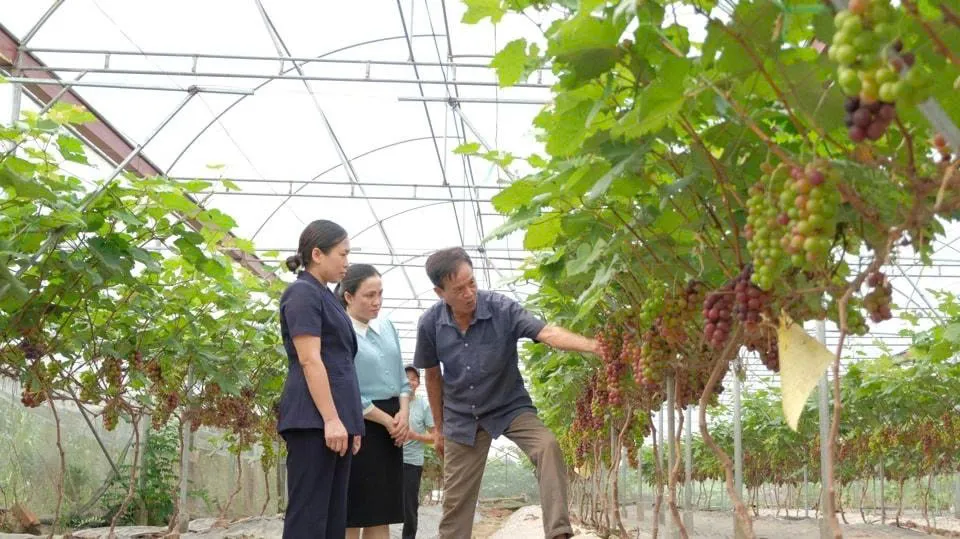
Developing a circular economy that promotes green and sustainable agriculture. Photo: Hanoimoi
By that time, the city plans to dedicate at least 20% of its agricultural science and technology efforts to circular practices.
To accelerate this transformation, the Hanoi authorities issued Plan No. 358/KH-UBND to implement the national strategy locally by 2030.
The plan outlines five key areas: enhancing research and innovation; supporting technology transfer for cooperatives and businesses; expanding stable markets; fostering domestic and international cooperation; and raising public awareness through communication.
Organic material zoning needed
Ha Van Thang, Chairman of the Vietnam Agricultural Business Council (VCAC), shared with Kinh te & Do thi Newspaper that the circular economy in agriculture remains fragmented and is hindered by insufficient incentive mechanisms, weak linkages, and limited capacity among enterprises.
He identified six key policy areas to accelerate the transition: green finance, tax incentives, infrastructure, circular production clusters, standardization, and policy improvement.
At the recent 2025 Agriculture Forum, Bui Thi Hanh Hieu, CEO of Bao Minh Agricultural Processing Company, stressed that businesses cannot pursue green transformation alone.
She introduced the "7-party model," which involves the state, scientists, businesses, farmers, consumers, banks, and the media, to establish a sustainable value chain for circular agriculture.
Hieu also emphasized the need to designate regions for organic materials according to international standards between 2025 and 2030, as well as the need for synchronized infrastructure and specialized supervision teams.
She called for intensive training programs and stable, long-term policies to retain skilled labor and support farmers in sustainable farming practices.
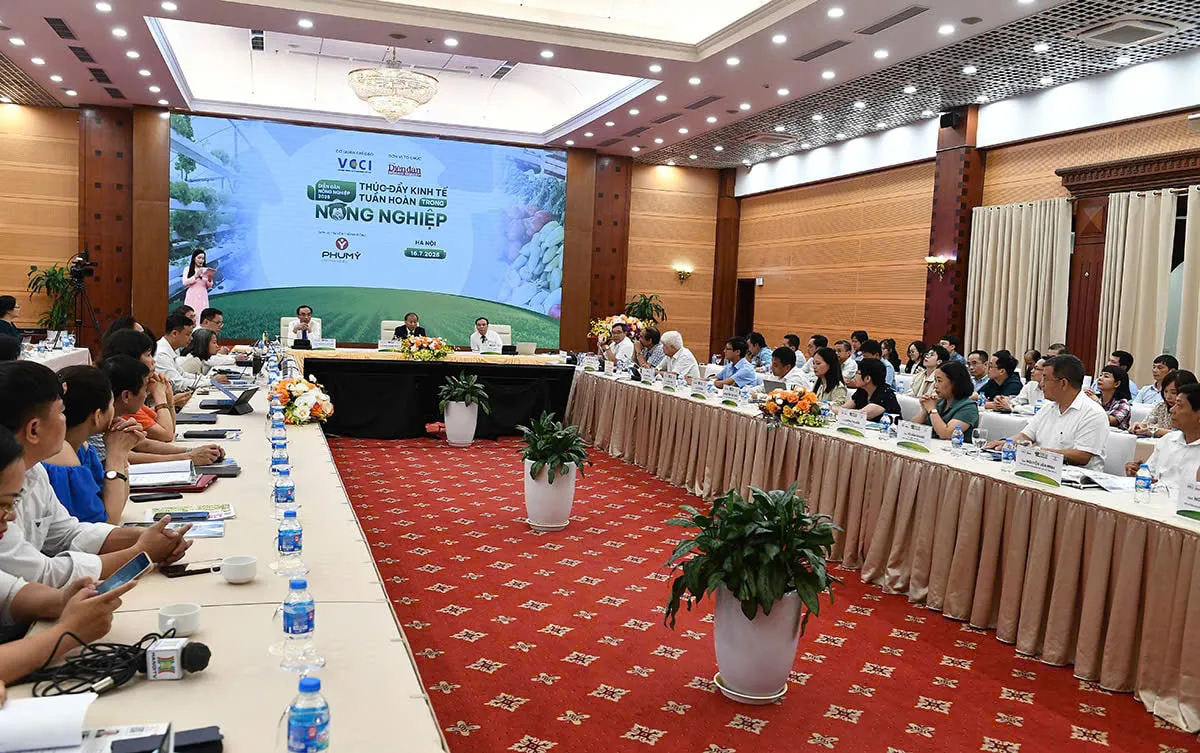
An overview of the 2025 Agriculture Forum. Photo: Hanoimoi
From the perspective of small and medium-sized enterprises, Nguyen Thi Thu Trang, Director of GreenU, advised start-ups to apply circular design thinking from the beginning.
This approach helps optimize costs and resources while creating opportunities to sell to high-standard markets like the EU and the US.
Hoang Quang Phong, Vice President of VCCI, said circular farming is essential for increasing value and reducing emissions, proposing green credit pilots involving banks, enterprises, and cooperatives to boost coordination.
Le Duc Thinh, Director of the Department of Cooperative Economy and Rural Development, noted that Vietnam needs to transition to a circular economy, as it produces over 156 million tons of agricultural byproducts annually. However, recycling rates remain under 35%, primarily due to small-scale operations.
He recommended developing a national strategy for circular agriculture as well as an innovation ecosystem with clear standards, labeling, and certification.
Tran Manh Bao, Chairman of ThaiBinh Seed, proposed solutions for circular rice farming, including developing suitable varieties, improving infrastructure and credit access, transferring by-product processing technologies, building closed-loop chains, and involving enterprises in raw material zone planning.
Experts believe that Hanoi’s strong commitment, combined with practical proposals from businesses and cooperatives, could lead to significant opportunities for building a green, sustainable, and competitive agricultural sector in the coming years.