Hanoi authorities pledges reform for seamless communication with business community
To create a business-focused ecosystem, the city is accelerating reforms related to investment promotion and incorporating input from associations that serve as essential conduits between the business community and the government.
THE HANOI TIMES — Hanoi has pledged to improve investment environment, boost competitiveness, and attract resources for sustainable development.
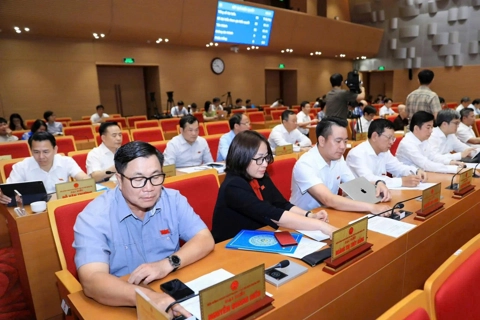
Le Trung Hieu, Deputy Director of the Hanoi Department of Finance, reaffirmed this during a dialogue with business associations on July 30 when solutions discussed for an integrated investment promotion ecosystem to support firms.

Le Trung Hieu, Deputy Director of the Hanoi Department of Finance, speaks at a dialogue with business associations on July 30. Photo: VGP
"We will work closely with departments, agencies, and communal authorities to streamline administrative reforms and optimize investment procedures," Hieu stated. "All administrative procedures will be digitized and more transparent for investors."
Specifically, the city will soon host a major investment promotion event themed “Hanoi 2025: Connect and Grow” to unveil project priorities and gather input for targeted initiatives.
Hanoi is also building a friendly, efficient, and transparent investment environment with streamlined procedures and is targeting 8% growth in 2025.
Ecosystem reforms proposed

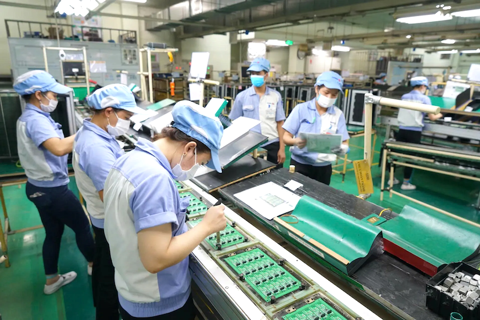
Kalotec Vietnam Co., Ltd's production line at Hanoi's Quang Minh Industrial Park. Photo: Pham Hung/The Hanoi Times
At the meeting, experts and association representatives offered recommendations for developing a robust and inclusive investment promotion ecosystem.
Tran Thi Phuong Lan, former Acting Director of the Hanoi Department of Industry and Trade, emphasized the need to review overlapping and frequently amended investment and trade promotion policies to ensure transparency and stability for businesses.
Lan also urged the Hanoi Investment and Business Support Center to expand cooperation with new markets, especially ones where Vietnam has signed free trade agreements.
She called for support mechanisms that would enable small and micro enterprises and household businesses to access clean, sustainable, and well-designed production locations.
Regarding industrial clusters, Lan called on the city to accelerate infrastructure development, particularly in craft villages, to boost processing capabilities and enhance the value of local products.
Ha Thi Vinh, Chairwoman of the Hanoi Handicraft and Craft Village Association, shared these concerns and recommended stronger planning and investment in craft village industrial clusters to address long-standing land access issues.
According to Vinh, Hanoi has around 1,300 craft villages that contribute significantly to rural economic development while preserving traditional cultural identities.
However, many export-focused enterprises, especially those working with bamboo, rattan, and ceramics, face barriers due to land constraints, outdated zoning regulations, and height restrictions on buildings within the clusters.
She proposed flexible use of space and building higher in these clusters to attract investment in modern machinery and technology and policies to support land rentals.
Vinh noted that the association is implementing the Bat Trang Ecological Museum project and requested city support to establish a design and innovation hub for the ceramics sector, which would enhance product value and promote Vietnamese handicraft brands.
Meanwhile, Nguyen Van, Vice Chairman of the Hanoi Supporting Industries Business Association (HANSIBA), called for the strengthening of domestic and international investment promotion activities for Hanoi-based companies.
Tran Van Minh, Vice Chairman and Secretary-General of the Hanoi Young Entrepreneurs Association, advocated for promotional support to encourage investment inflows, product commercialization, and market expansion.
He urged the city to review the impact of existing business support policies and recommended streamlining administrative, credit, land, and workforce procedures.
Minh also expressed his association’s interest in joining the government's 10,000 CEO Training Program and emphasized their preparedness in terms of teaching staff and training infrastructure.
He proposed improving the way authorities gather business feedback to make enterprises encouraged to give honest opinions about regulations.
A representative from the Hanoi Association of Women-Owned Small and Medium Enterprises (HAWA SME) suggested setting up a fund to support women-led SMEs, as well as policies that provide women-led businesses with access to finance, land, consulting, and training. The representative urged the early release of Hanoi’s promotion plans to allow for better coordination.
|
According to the Hanoi Department of Finance, the city has reaffirmed its position as one of the most attractive investment destinations in Vietnam. Its consistent efforts to improve the business climate have enhanced its competitiveness and appeal. Thanks to these reforms, Hanoi garnered over US$3.67 billion in foreign direct investment (FDI) during the first half of 2025, rocketing 216% from the same period last year and placing it at the pinnacle of national rankings. |