Hanoi, Chongqing target future cooperation deal in transport, people, high-tech and culture
From metro lines to green energy, Hanoi is setting its sights on a cleaner, smarter future and finding valuable lessons from China’s mountainous megacity Chongqing.
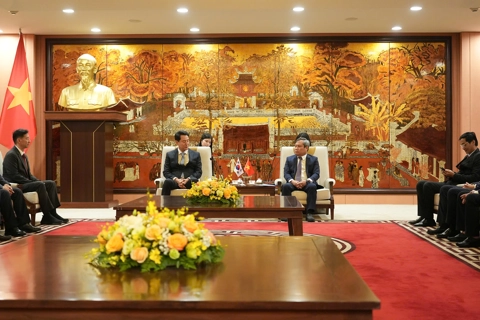
THE HANOI TIMES — Hanoi and Chongqing aim to establish official friendship ties soon to boost cooperation in urban railways, green development and high technology, heard a meeting between the two cities’ vice mayors today (October 24).
According to Vice Chairman of the Hanoi People’s Committee Nguyen Manh Quyen, Hanoi is entering a crucial phase of urban transformation.
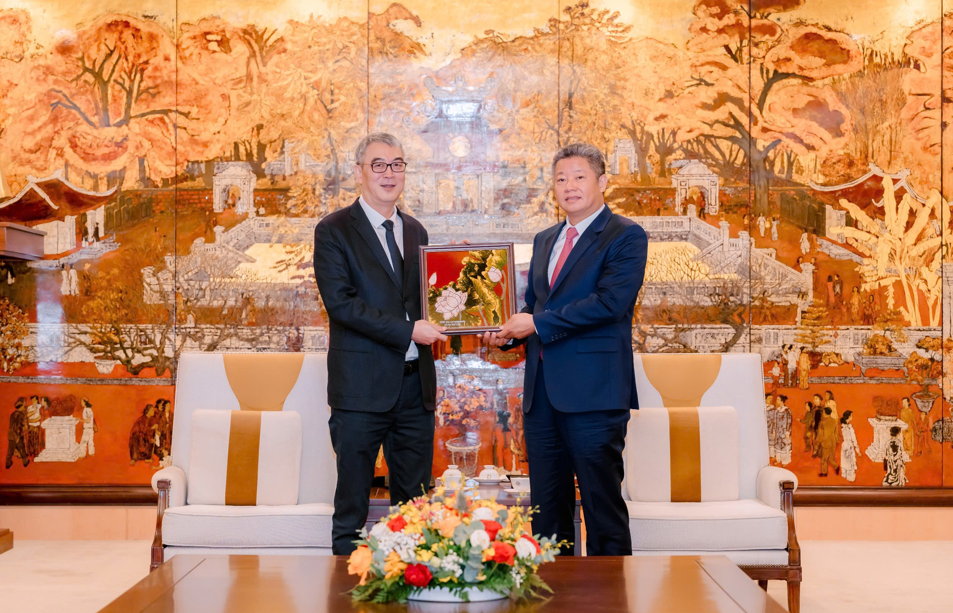
Vice Chairman of the Hanoi People’s Committee Nguyen Manh Quyen and Vice Mayor of Chongqing Xu Jian. Photo: Nathan Nguyen
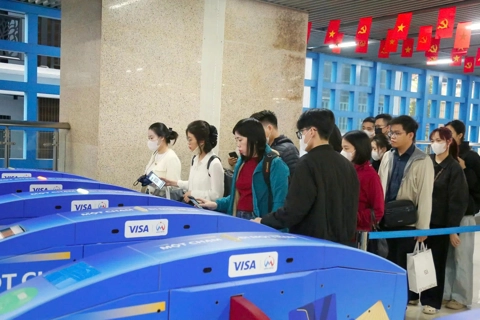
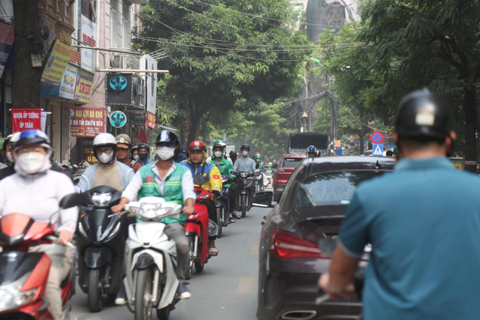
The city is prioritizing public transport as the backbone of sustainable mobility, with a goal to complete 14 metro lines by 2035. Major ring roads, river crossings and regional links are also being developed to ease congestion and improve connectivity.
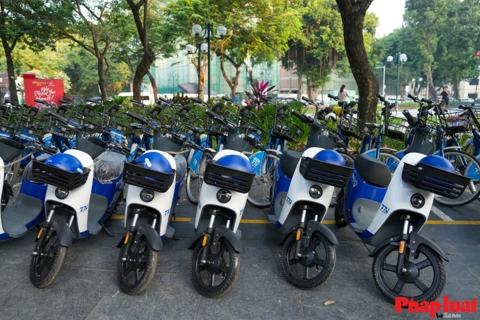
Hanoi has set long-term goals to reduce emissions and promote electric vehicles, renewable energy and eco-friendly infrastructure. The city also focuses on flood control, environmental improvement, traditional craft village preservation, tourism promotion and social welfare.
“International cooperation plays an important role in realizing these ambitions,” Vice Chairman Quyen said.
He noted that Hanoi and Chongqing share many similarities in urban development, especially in transport, industry and high technology. Hanoi hopes to enhance exchanges and share experience with Chongqing in metro development, green transition and urban management.
The Hanoi official invited Chongqing-based enterprises to invest in the Hoa Lac Hi-Tech Park and share expertise in metro technology, digital management and energy efficiency.
He also suggested expanding people-to-people exchanges, tourism and trade toward establishing formal friendship relations between the two cities.
Vice Mayor Xu Jian said that Chongqing, one of China’s four centrally governed cities, has a population of over 32 million people and a regional GDP exceeding 3.2 trillion yuan (US$449 billion).
Chongqing’s mountainous terrain and two major rivers have shaped its monorail and metro systems, which now serve as models for integrating transport into complex urban landscapes, according to the Chinese official.
The city is developing modern manufacturing clusters focused on smart vehicles, next-generation networks, electronics and advanced materials.
Chongqing’s auto industry is China’s largest, producing 2.54 million vehicles in 2024, including 953,000 new energy vehicles (NEVs). The city also accounts for one-third of China’s computer production.
Xu said that Chongqing is willingness to enhance cooperation with Hanoi in metro development, trade and tourism. He invited Hanoi authorities and businesses to attend the Chongqing International Fair scheduled for April 2026.
He said both cities share a vision of green, inclusive and technology-driven growth and agreed with Vice Chairman Quyen on signing a cooperation agreement between the two cities.
The meeting concluded with an agreement to strengthen communication among departments, promote business cooperation and expand cultural exchanges.
Both leaders affirmed that relations between the two neighboring countries are growing stronger and more comprehensive, as shown by recent high-level visits.
In April 2025, Party General Secretary To Lam and General Secretary and President of China Xi Jinping issued a joint statement to enhance cooperation in key areas, including resource management and sustainable development.
Both sides expressed their hope to turn dialogue into concrete projects that support the shared goal of building sustainable, modern cities.