Hanoi’s cultural renaissance: shaping a “Civilized, Distinctive and Creative” city for the future
Hanoi is rising to affirm its position as a creative leader, a convergence point and a source of cultural vitality reflecting Vietnam’s thousand-year heritage.
THE HANOI TIMES — Nguyen Viet Chuc, Vice Chairman of the Advisory Council on Culture and Society under the Vietnam Fatherland Front Central Committee, speaks with The Hanoi Times about Hanoi’s new cultural direction as outlined at the 18th Congress of the Hanoi Party Committee.
How do you assess the spirit, substance and outcomes of the 18th Congress of the Hanoi Party Committee, particularly in concretizing the vision of building a “Civilized - Distinctive - Creative” capital as directed by Party General Secretary To Lam?
Hanoi enters the new phase of implementing the cultural development resolutions adopted at the 18th Congress with a renewed sense of confidence and determination, built upon its remarkable progress and pioneering initiatives in recent years.
The Congress, in my view, demonstrated a strong political will and a clear strategic vision to position culture and creativity as a core driving force of development. It was not merely about reaffirming Hanoi’s cultural heritage but about defining how those traditional values could intertwine with innovation and modernity to build a capital that is both timeless and forward-looking.
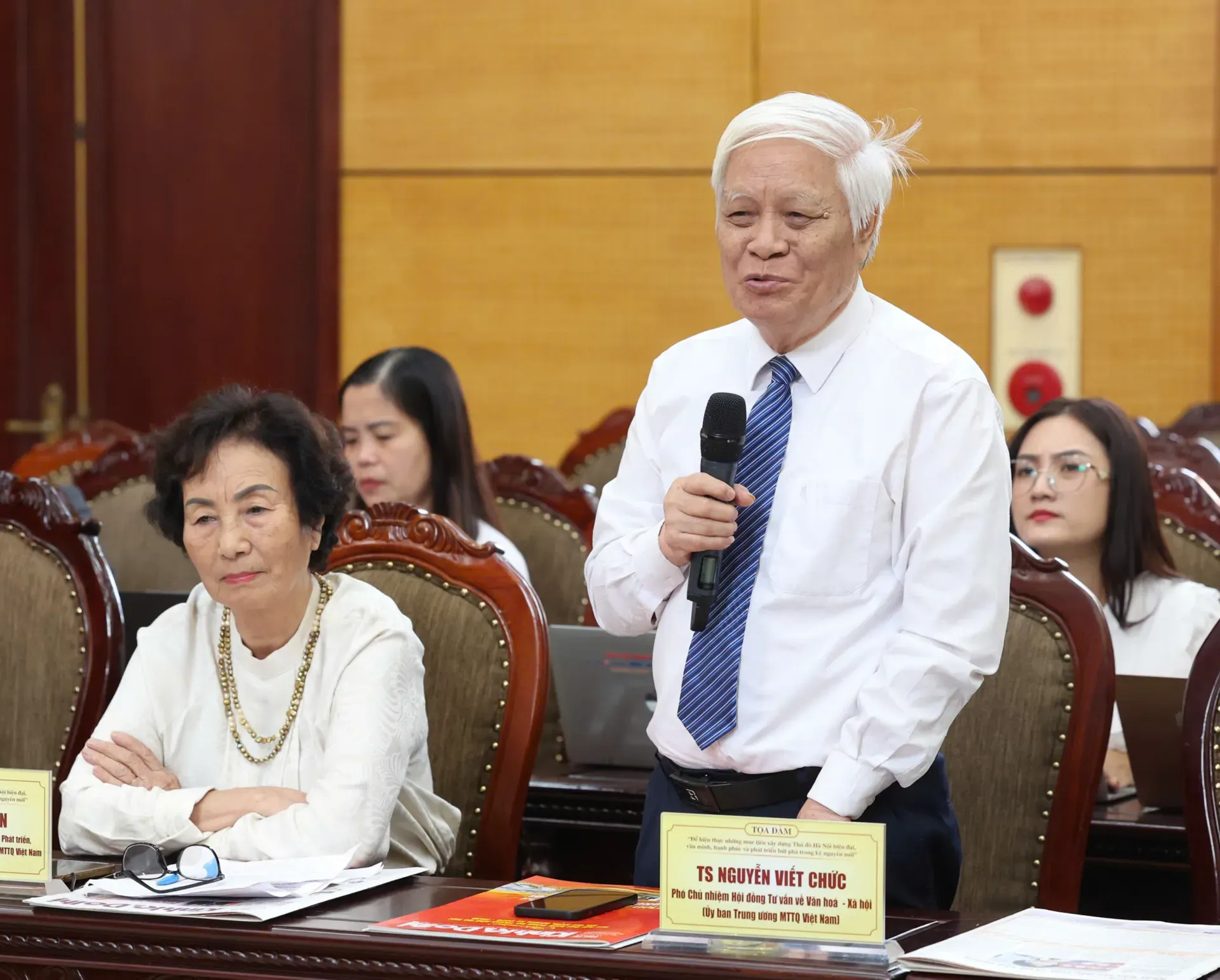
Dr. Nguyen Viet Chuc, Vice Chairman of the Advisory Council on Culture and Society under the Vietnam Fatherland Front. Photo: The Hanoi Times
Notably, Hanoi was the first locality in the country to issue a dedicated resolution on developing the cultural industries. Resolution No. 09-NQ/TU of the City Party Committee on “Developing the Cultural Industries in the Capital for 2021–2025, with orientation to 2030 and vision to 2045” stands as a milestone policy framework, helping the sector expand comprehensively in scale, product quality, services, and markets, ensuring sustainable growth.
This proactive approach reflects the city’s understanding that culture is not a passive legacy to be preserved, but an active resource to be developed.
Hanoi aims to enhance its residents’ spiritual well-being through diverse cultural activities while promoting the capital’s image to the world. At the same time, the city has accelerated the application of digital technologies in cultural management and creative production, laying the groundwork for a modern, smart, and culturally distinctive metropolis.
As a result, culture has become a spearhead economic sector with high growth rates and significant value creation - a true “soft power” asset contributing to Hanoi’s sustainable development. This is something no other locality in Vietnam has achieved so comprehensively.
For instance, cultural landmarks such as Hoa Lo Prison and the Temple of Literature have been revitalized. Beyond serving as symbols of the city’s rich heritage, they now embody the dynamic fusion of preservation and innovation, educating younger generations while also generating economic value through tourism and creative experiences.
However, as the thousand-year-old capital of Vietnam, Hanoi cannot “rest on its laurels.” On the contrary, it must continue to take bold and innovative steps to protect, reinterpret and breathe new life into its cultural assets, living up to its role as the nation’s cultural flagship and a city that truly embodies the spirit of being “Civilized - Distinctive - Creative.”
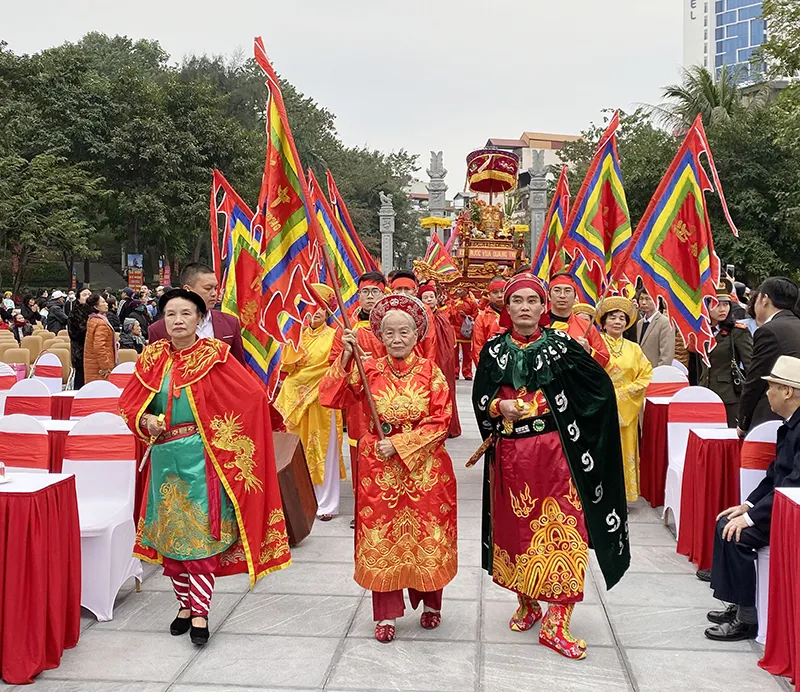
Colorful scenes from the Dong Da Mound Festival in Hanoi. Photo: Pham Hung/ The Hanoi Times
This Congress set a goal to develop culture on an equal footing with economics and politics. In your view, what breakthrough must Hanoi make for culture to truly become an endogenous resource and a driver of sustainable growth?
In the past, when living conditions were difficult, economic growth naturally took precedence as the city’s foremost priority. But today, as basic needs are largely met, it is both timely and forward-looking for Hanoi to elevate cultural development to the same strategic level as economic progress.
When people achieve material comfort, they also seek fulfillment in their spiritual and emotional lives. This evolution reflects a society reaching a higher level of development, where quality of life is measured not only by income, but also by cultural depth and collective identity. I believe this is a wise and necessary direction for the capital to take.
Hanoi has long been regarded as a “land of talented people and sacred traditions,” home to generations of scholars, researchers and cultural experts. It also hosts the nation’s most concentrated network of research institutes, universities and cultural institutions, forming a vibrant intellectual ecosystem. This gives Hanoi a unique advantage to lead the nation in defining how culture can power sustainable development.
Human resources are the decisive factor in the growth of Hanoi’s cultural industries. It is not only the responsibility of state agencies or cultural organizations. Every Hanoian, including artists, educators, entrepreneurs and citizens alike, must act with unity, creativity and civic pride to transform internal potential into collective strength.
Each individual is, in essence, a “cultural subject” with a distinct role and mission in shaping the city’s identity.
The breakthrough, therefore, lies in nurturing and mobilizing this human capital.
Hanoi should empower its young generation and place genuine trust in their intellect, innovation, and creative energy, while also valuing the wisdom and experience of cultural veterans and experts. When youthful creativity meets mature insight, it creates a synergy that can generate impactful cultural initiatives and high-quality creative products, ones that honor tradition while embracing modernity.
Ultimately, Hanoi’s path to making culture a true endogenous resource depends on people, on how the city inspires its citizens to live, think and create as bearers of the capital’s thousand-year-old spirit in a new era of global integration.
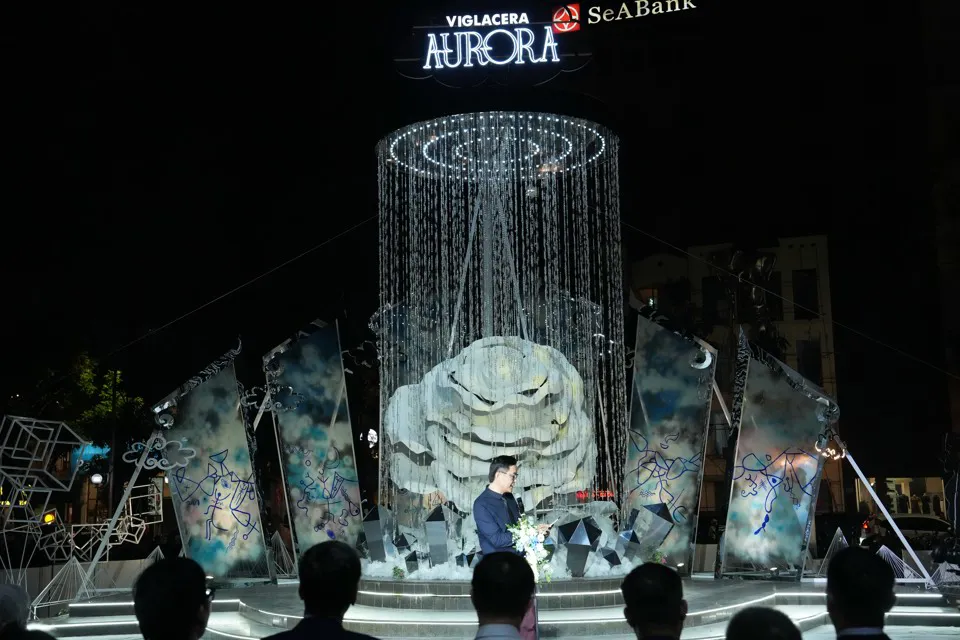
A stunning light installation at Hanoi’s 2024 Creative Design Festival. Photo: Lai Tan/ The Hanoi Times
In the context of digital transformation and deep international integration, how do you see the role of Hanoians’ behavior and values in shaping the image of “Hanoi – City for Peace” and “Hanoi – Creative City”?
The behavior, civility, and moral values of Hanoians are fundamental in defining and sustaining the image of the capital as both a “City for Peace” and a “Creative City” recognized by UNESCO.
Traditionally, Hanoians have been admired for their refined manners, calm demeanor and gracious way of life - traits that embody the city’s centuries-old cultural depth. Yet, under the fast-changing pressures of urbanization and social transformation, some of these qualities have faded, calling for a conscious effort to revive and renew them in contemporary life.
To address this, the city introduced two landmark Codes of Conduct: one for civil servants and public employees, and another for behavior in public spaces. These frameworks have provided both guidance and inspiration, gradually helping to redefine what it means to be a “cultured Hanoian” in the 21st century.
After seven years of consistent implementation, the spirit of elegance, respect and harmony in public behavior is gradually being restored, not as a nostalgic return to the past, but as a living value evolving with modern urban life.
Looking ahead, human development must remain at the heart of Hanoi’s cultural strategy. Family education, schools, communities and local authorities all play indispensable roles in shaping citizens who are not only well-mannered but also socially responsible and open to creativity.
Building “cultural citizens” means nurturing individuals who think globally yet act with the grace and empathy rooted in Hanoi’s thousand-year-old heritage. This balance between tradition and innovation will ensure that Hanoi continues to be recognized worldwide as a peaceful, creative and inspiring city, one where culture becomes a living force connecting the past and future.
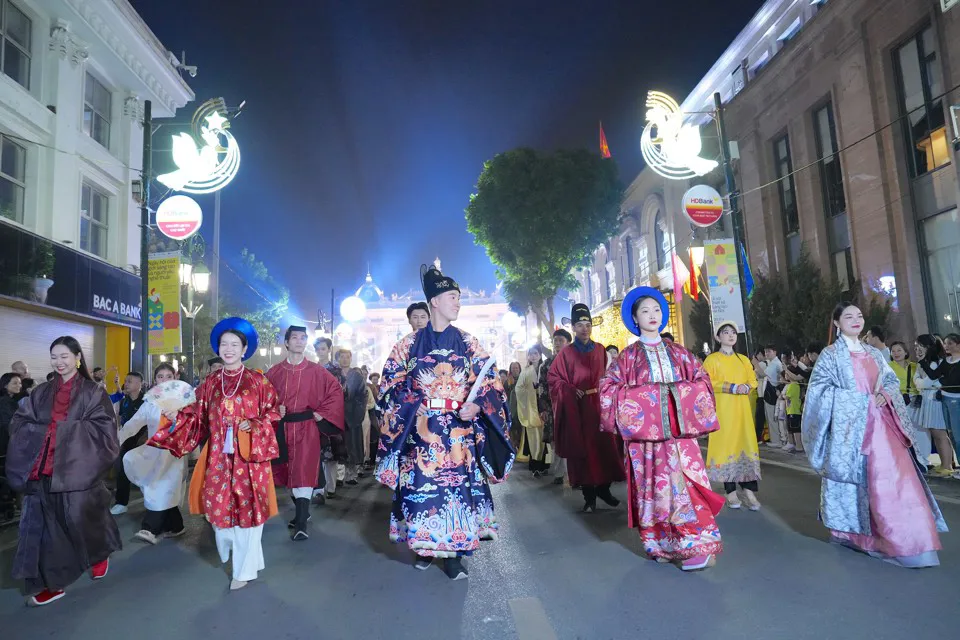
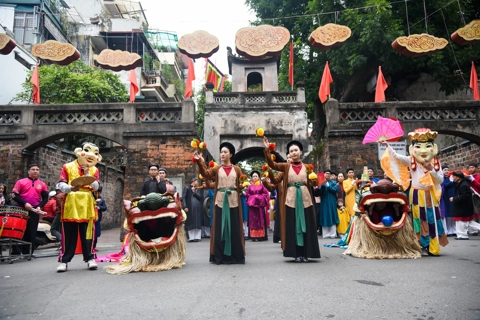
Parade at the Bach Hoa Bo Hanh event, with participants dressed in feudal-era royal costumes. Photo: Duy Khanh/ The Hanoi Times
What are your expectations for the new term of the Hanoi Party Committee, particularly in balancing urban development, heritage preservation, improved quality of life, and maintaining cultural identity?
Global integration brings both opportunities and challenges for Hanoi. On one hand, young people are increasingly exposed to diverse cultural influences that broaden horizons and inspire creativity. On the other hand, they face the risk of being swept into fleeting or superficial trends that may dilute authentic cultural values.
However, as the capital of a nation with a millennia-old civilization, Hanoi possesses a deep-rooted cultural resilience, an internal “immune system” that enables it to embrace the new while staying true to its identity. This resilience is nurtured by the city’s rich traditions, strong community spirit and unwavering pride in being the heart of Vietnam.
The recent A80 Celebration, marking the 80th anniversary of Vietnam’s National Day, vividly reflected this cultural strength. People gathered in the capital not merely to watch parades, but to share in a profound sense of unity, pride, and belonging, an expression of collective joy that transcended generations and backgrounds.
This spontaneous togetherness is, in itself, the living proof of Hanoi’s enduring vitality as a cultural and spiritual center.
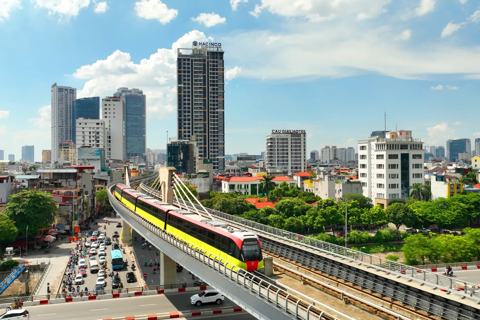
Looking ahead, I am confident that Hanoi will continue to prosper, not only economically but also in terms of social progress and cultural depth. The key lies in pursuing development that is both modern and humane, where skyscrapers rise alongside preserved heritage, and innovation coexists with the values of peace, intellect, and compassion.
By unlocking its intrinsic cultural resources and integrating them into every aspect of governance, urban planning, and education, Hanoi can sustain its momentum as a “Civilized, Distinctive, and Creative Capital” in a new era of development.
Thank you for your time!