Hanoi considers selecting 100 pillar firms to achieve 11% economic growth rate
Hanoi lawmakers called for breakthroughs in institutions, capital and human resources to lift the city’s economy and prepare for an ambitious 11% annual GRDP growth target beginning in 2026.
THE HANOI TIMES — Hanoi needs institutional, capital and human resource breakthroughs along with 100 leading enterprises to realize its target of an average GRDP growth of 11% from 2026 to 2030, Hanoi People’s Council deputy Pham Dinh Doan said on November 26.

Production at garment and textile producer Garco 10 Corporation. Photo: Hoai Nam/The Hanoi Times
Speaking at the 28th session of the Hanoi People’s Council on the city’s 2026 socio-economic development plan, Doan stressed that the 11% growth goal represents the capital’s development ambition.
On institutions, he proposed that Hanoi create the best business environment, apply special pilot mechanisms modeled on Singapore or Shanghai, accelerate project approvals, establish innovation sandboxes and strengthen decentralization.
“Publicizing application processing times and reducing informal costs are also key factors,” he said.
Regarding capital, he recommended positioning Hanoi as the financial center of northern Vietnam, unlocking private, FDI and international capital, developing investment funds, supporting SMEs and attracting high-quality FDI focused on R&D, clean technology, finance and international services.
In terms of human resources, Doan proposed talent programs, special incentives for experts, a professional civil service and training for a new generation of entrepreneurs.
He emphasized the need to select and support 100 core enterprises in technology, digital transformation, finance, services, logistics, smart cities, creative industries, healthcare, education, tourism and high-quality trade.
“The city must also promote corporate social responsibility,” he said.
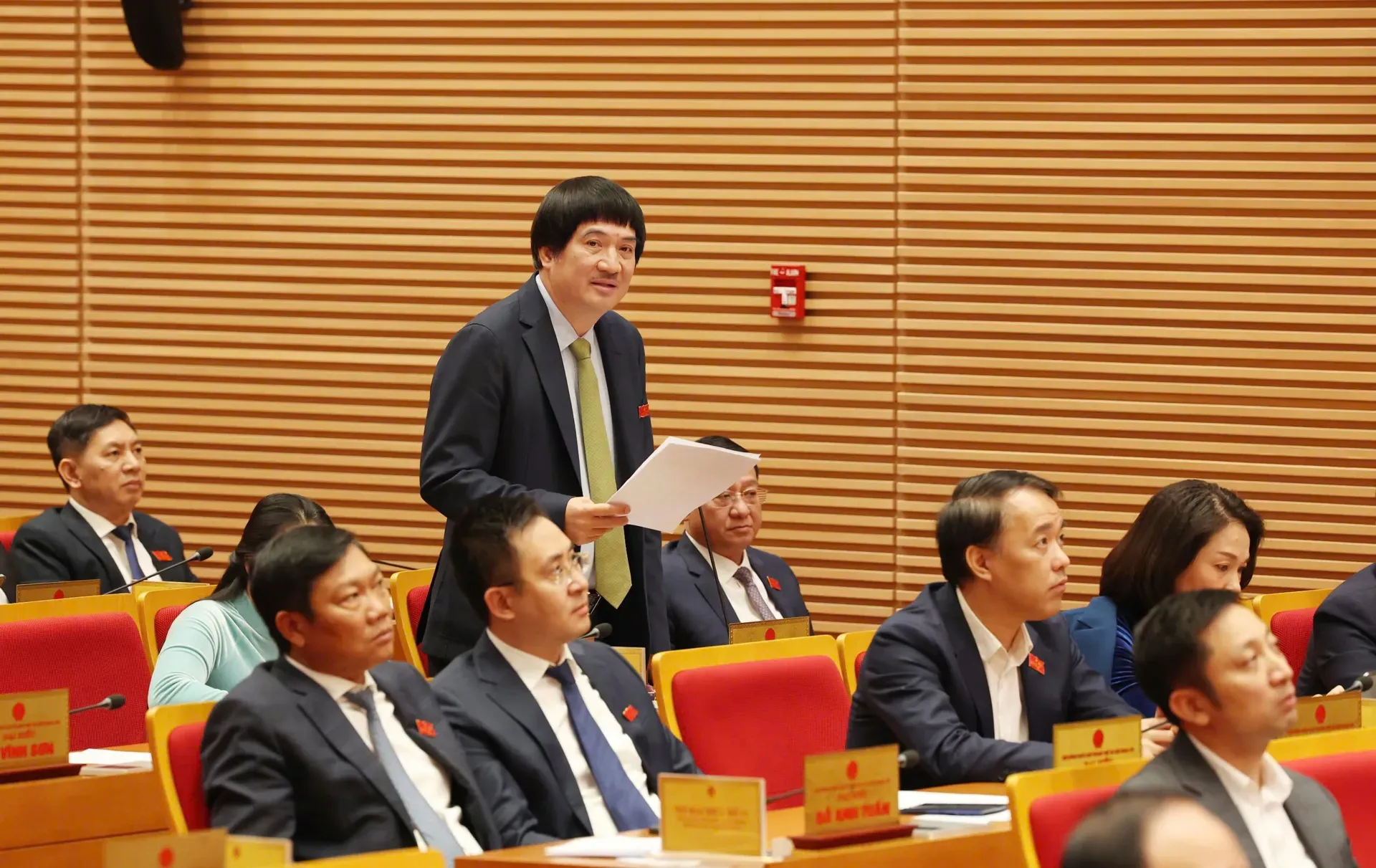
Deputy Pham Dinh Doan urges Hanoi to pick 100 key enterprises to lead its economic development. Photo: Thanh Hai/The Hanoi Times
Deputy Nguyen Thi Lan Huong highlighted Hanoi’s major opportunities under the Capital Law and strategic resolutions, enabling pilot mechanisms, technology sandboxes, international expert attraction and autonomous financial decision-making.
She proposed an Innovation Center built on three pillars: digital economy and AI, core technologies and talent development.
“The city should pilot sandboxes for biotechnology, high-tech agriculture and plant-based protein,” she said. “I also propose innovation vouchers for SMEs, with the city co-funding 50%–100% of research costs.”
Deputy Hoang Anh Tuan added that economic growth must align with breakthroughs in science and technology, especially in industrial parks, digital industries and bio-industries, to both grow and create jobs.
He urged faster disbursement of investment capital and solutions for clearance, land pricing and construction material mines to speed up project implementation.
Tuan proposed full decentralization and delegation for communes and wards, along with matching authority, funding and staffing, especially in green space management, drainage, street lighting and basic infrastructure.
He also called for increased local spending on security and defense.
Deputies agreed that Hanoi can achieve an average GRDP growth of 11% during 2026–2030 if institutional reforms, capital mobilization, human resource development and enterprise leadership advance together.
According to Vice Chairman of the Hanoi People’s Committee Nguyen Xuan Luu, the city’s budget revenue has surpassed VND600 trillion (US$22.7 billion) this year, reaching VND641.71 trillion (US$25.67 billion), or 124.9% of the estimate.
The capital’s GRDP is estimated to rise 8.5% for the year. Its economic scale has reached US$63.5 billion, accounting for about 12.5% of Vietnam’s GDP.
Foreign direct investment reached more than US$4.1 billion, a 1.5-fold increase from 2024. Export turnover rose to US$21.4 billion, up 11.6% year-on-year.
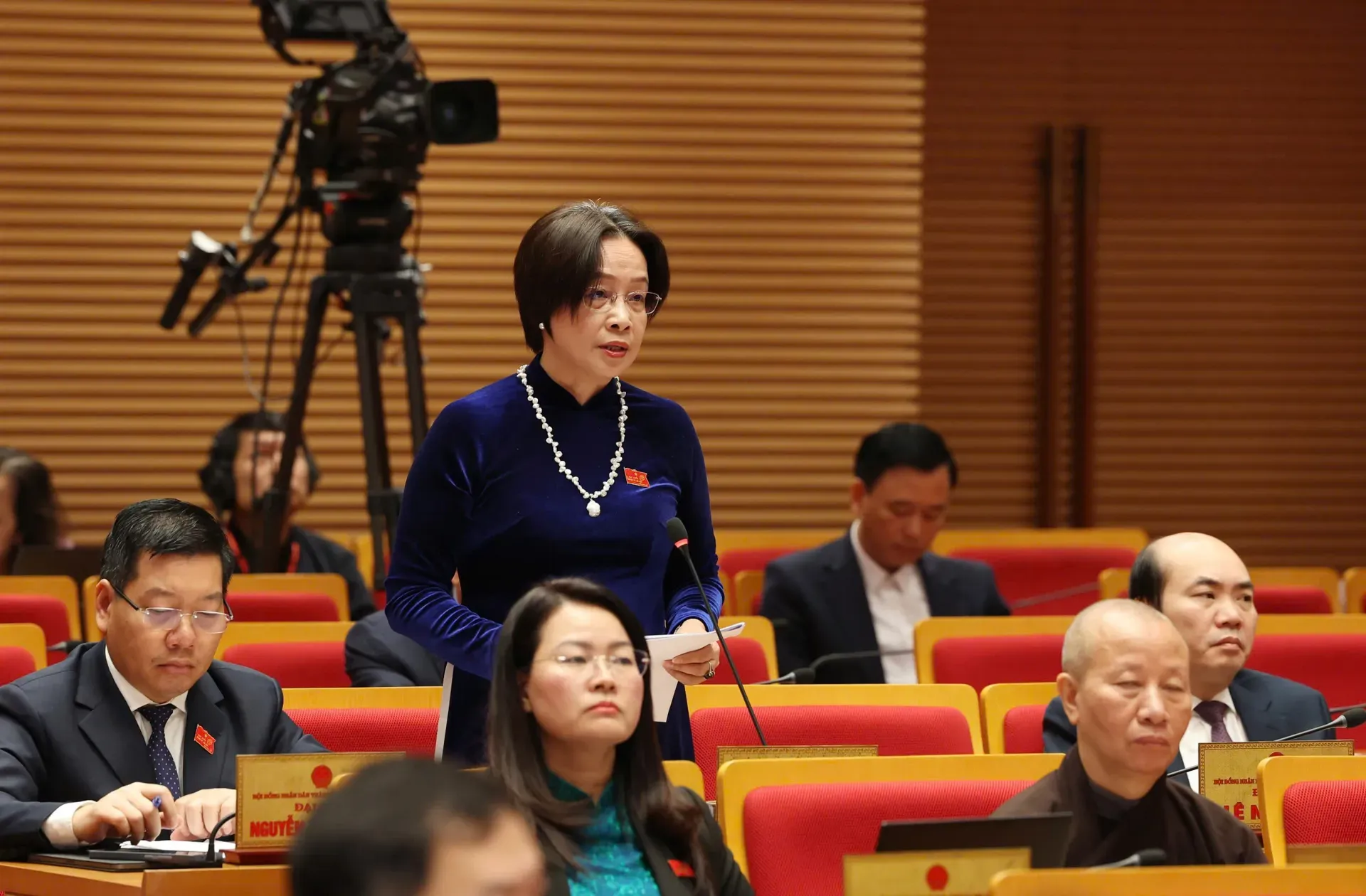
Deputy Nguyen Thi Lan Huong highlights the 2024 Capital Law as the background for Hanoi's futher development. Photo: Thanh Hai/The Hanoi Times
Hanoi targets GRDP growth of 11% in 2026, driven by services, industry and construction.
To meet that target in 2026, Luu expected services to grow 11.1%, industry 9.5%, construction 12.8% and agriculture 4.3%.
The city aims for VND730 trillion (US$29.2 billion) in total social investment capital, including VND216 trillion (US$8.64 billion) in state capital, VND60 trillion (US$2.4 billion) in FDI and VND454 trillion (US$18.16 billion) in private capital.
Infrastructure completion needed
Supporting the city’s socio-economic assessment, deputy Nguyen Minh Duc stressed the need to finish unfinished projects and resolve land-use issues, including issuing land deeds for residents and addressing units that built more floors than permitted.
On transportation, he proposed completing the road network, expanding urban rail, increasing parking lots and bus shelters, eliminating illegal bus routes and launching an intelligent traffic control center.
Duc also urged implementation of green transition programs, expansion of green finance and EV development and learning from international energy transition models.
As a representative of the press sector, he asked city leaders to carefully review the plan to reorganize Hanoi’s press, radio and television agencies.
“This must comply with national regulations while considering the capital’s unique needs, so the city’s media system can fulfill its tasks in the new period,” he said, noting that the city should also support journalists and staff affected by the restructuring.
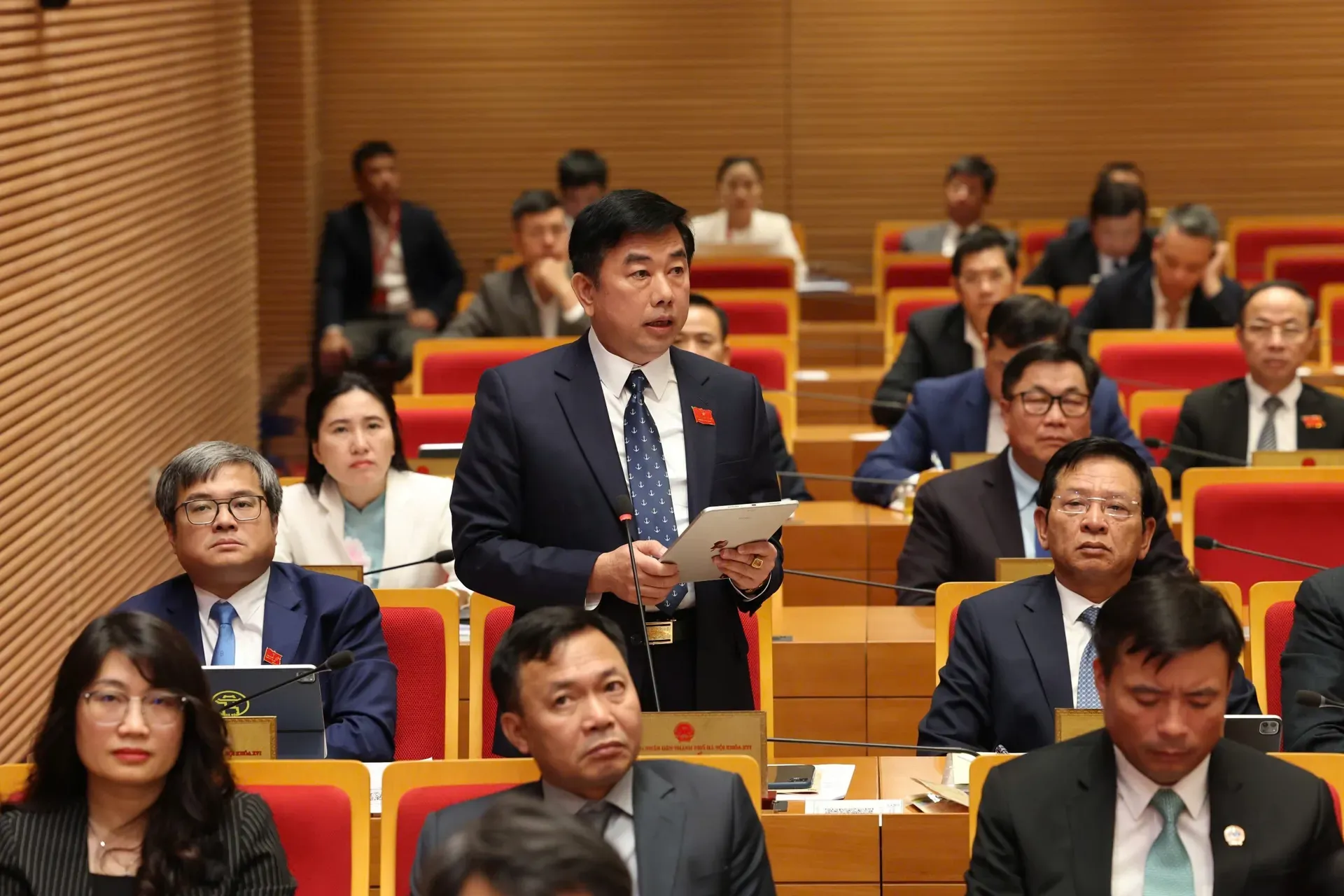
Deputy Nguyen Minh Duc raises concerns about infrastructure development and reorganization of press agencies. Photo: Thanh Hai/The Hanoi Times
Deputy Vu Manh Hai, Chairman of the Hanoi Artisans’ Association, emphasized the role of more than 1,350 traditional craft villages in socio-economic development.
He said craft villages preserve culture, support supply chains of goods, farm products and food, and generate major employment. For example, Bat Trang pottery village imploys 3,000 to 10,000 workers daily.
Hai urged the city to prioritize land planning, industrial clusters and transport development to support production, vocational training and tourism.
He said Hanoi should promote modern technologies to increase productivity and reduce pollution, noting Bat Trang’s shift from coal to gas kilns, which raised its product quality rate to 85%–90%.
Meanwhile, deputy Pham Hai Hoa praised the agriculture sector’s 3.4% growth in 2025 and stressed the 4% target for 2026.
She recommended reviewing linkages for safe agricultural production and consumption, high-tech and organic farming and expanding urban ecological agriculture linked with experiential tourism.
One key solution, she said, is connecting agricultural products with school-based experiential learning to help students understand the value of labor and adopt sustainable, green and healthy consumption habits.
She also proposed training farmers in two groups: skilled business-oriented farmers who drive local economic development and young farmers who pioneer innovative startups.
Hoa stressed the need to improve irrigation, dike systems and concentrated production zones to support sustainable development and social welfare.