Hanoi cooperative week showcases OCOP products and traditional craft villages
The One Commune One Product (OCOP) program has become a key driver of rural economic development, elevating the value of local specialties and opening doors to international markets.
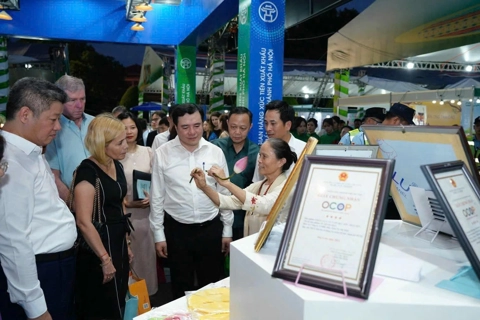
THE HANOI TIMES — The “Cooperative Week with OCOP products and Hanoi’s traditional craft villages 2025” is taking place in Le Mat Village, Viet Hung Ward, honoring the cultural identity of craft villages and promoting community tourism and local socio-economic development.
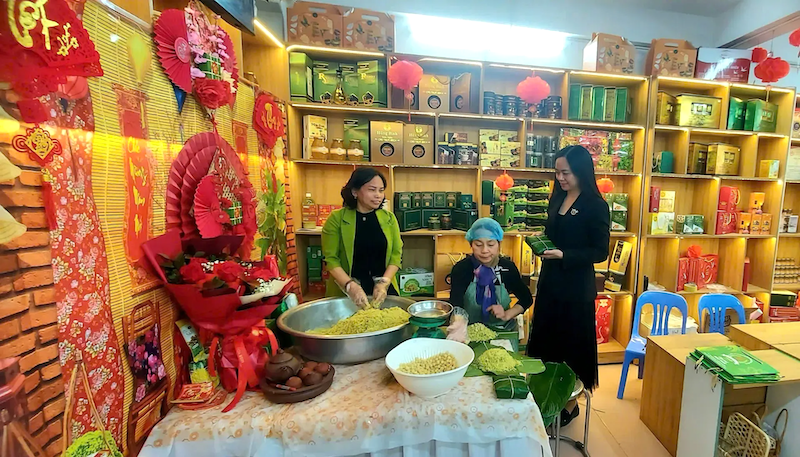
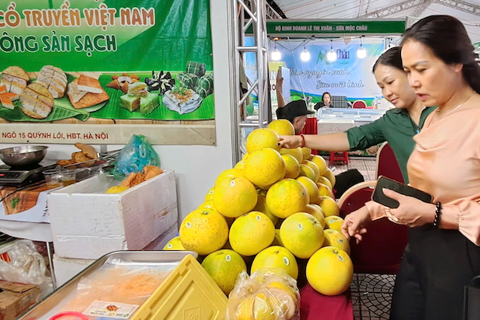
OCOP products displayed at a store in Hanoi. Photo: Kinh Te & Do Thi Newspaper
Running from October 1 to October 5, the fair gathers nearly 100 booths from cooperatives, craft production facilities and businesses from Hanoi and several provinces and cities in the North.
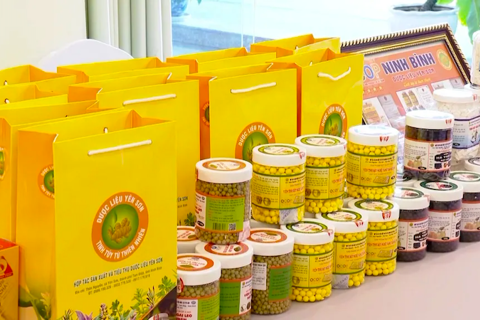
Consumers will enjoy and experience signature products made by Hanoi producers such as Me Tri green rice flakes, Uoc Le pork rolls, Thuong Tin embroidery, Dai Ang bronze casting, Xa Cau incense, Phuong Bac fermented pork rolls and Ba Vi fresh milk as well as specialties like Lao Cai Seng Cu rice, Mu Cang Chai honey, Haiphong rice paper with roach fish and Cao Bang sausages.
A distinctive feature of Cooperative Week 2025 lies in its blend of trade and cultural programs. Folk art shows, culinary presentations and community exchanges turn the fair space into a vibrant cultural festival.
These continuous activities affirm that developing OCOP and craft village economies must go hand in hand with preserving cultural identity. This harmony has created the lasting vitality of Vietnamese agricultural products.
Interactive experiences, culinary showcases and traditional craft demonstrations not only attract visitors but also give younger generations a chance to appreciate and inherit their ancestors’ crafts. In the face of many craft villages fading away, this is a valuable effort to preserve and revive cultural heritage.
Speaking at the opening ceremony on October 1, Nguyen Tien Phong, Vice President of the Hanoi Cooperative Alliance, said that the event honors the essence of craft products and clean agricultural produce.
“It reflects the aspirations, solidarity and creativity of Hanoi’s cooperatives and craft communities in the era of integration,” he said.
Phong hoped that the event will help cooperatives and craft villages promote and distribute their products and expand networks, especially on e-commerce platforms and online stores.
“The event will also raise consumer awareness of OCOP products, encourage the use of safe, traceable goods and create opportunities to connect cooperatives with businesses and investors, forming sustainable cooperation models,” the vice president added.
Phong also expected the week to contribute to preserving and promoting the values of traditional villages, while fostering collective economic growth and building modern and civilized rural areas.
According to the Hanoi Cooperative Alliance, in recent years, the collective economy, with cooperatives as its core, has developed in both scale and quality.
Many cooperatives have boldly applied science and technology, carried out digital transformation, expanded production, increased product value and connected with markets.
As a result, they have made growing contributions to the National Target Program on New Rural Development and the preservation of traditional village values in Hanoi.
According to the Domestic Market Management and Development Department under the Ministry of Industry and Trade (MoIT), as of July 31, Vietnam had more than 17,000 OCOP-certified products rated three stars or higher, including 126 that achieved the prestigious five-star national standard.
Since 2021, Hanoi has evaluated some 2,260 OCOP products, including 11 potential five-star items, 840 four-star products and 1,412 three-star products. The city has assessed over 3,300 OCOP products, including six five-star items, 22 potential five-star, 1,570 four-star and 1,700 three-star products during the last six years.
Launched in 2018, the OCOP program has marked a turning point for rural development by enhancing the value of agricultural goods and reviving traditional specialties nationwide.
According to Nguyen Ba Hai, Deputy Director of the MoIT’s Trade and Investment Promotion Center, OCOP tells the stories of “culture, intelligence and aspiration of Vietnamese communities and enterprises”, showcasing the creativity and resilience of farmers, cooperatives and businesses.
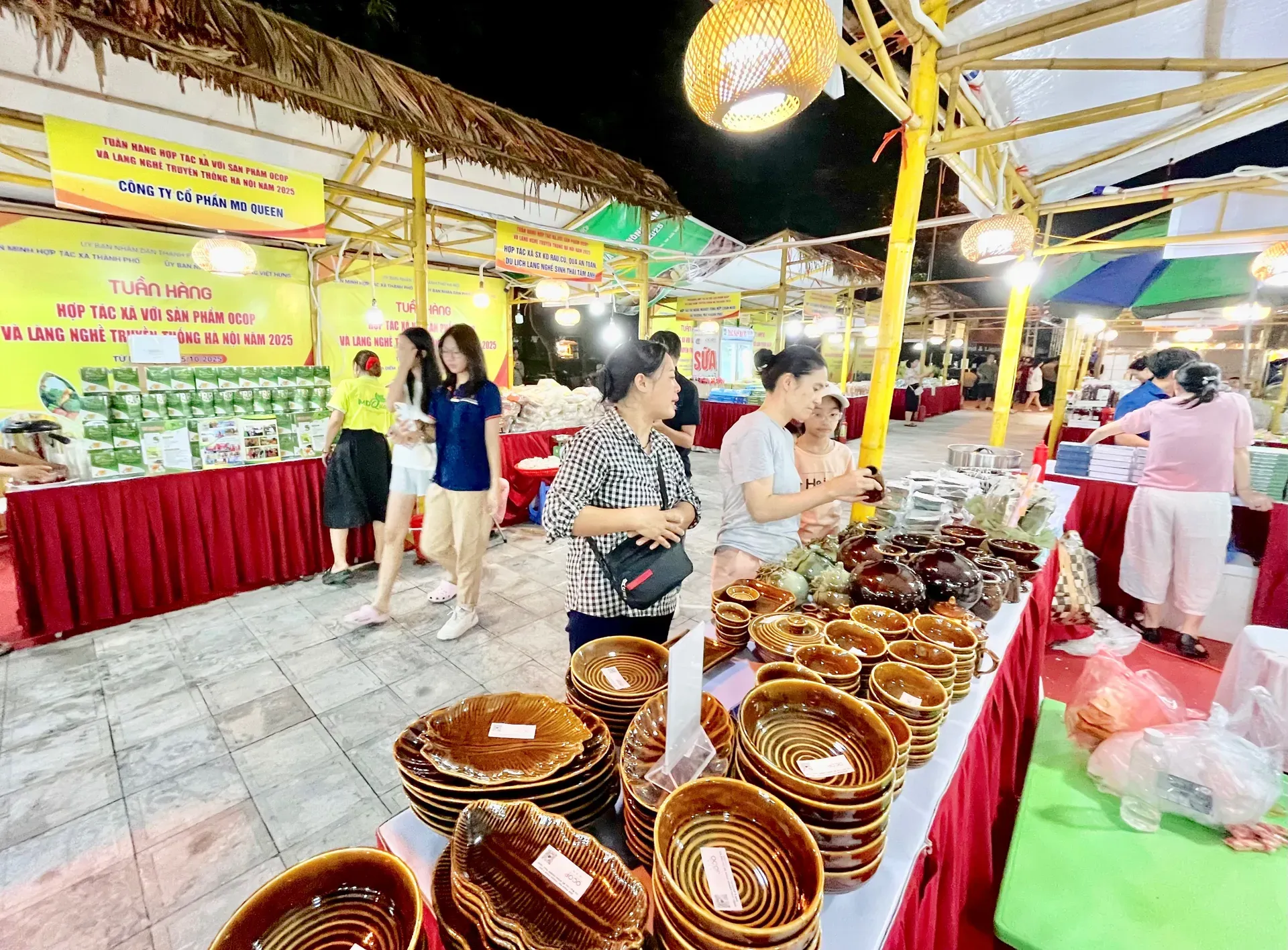
OCOP products displayed at the week-long program in Hanoi. Photo: Kinh te & Do thi Newspaper
Expanding OCOP’s global reach
One of the biggest challenges for OCOP products and craft villages is consumption. Many producers have struggled to find markets, face price suppression and remain confined to small local markets.
To ensure sustainable growth, the Vietnam Trade Promotion Agency has called for upgrading products from three to four stars and from four to five stars, to align with national and international standards.
“It requires enhancing the entire value chain, from raw materials and production processes to packaging and traceability, so OCOP products can compete globally,” Hải told a conference on OCOP program early this week.
Hai added that it is necessary to strengthen business linkages by building long-term distribution channels connecting cooperatives with major distributors and exporters.
Digital transformation is another priority, with OCOP products promoted on e-commerce platforms such as Amazon and Alibaba, the deputy director said.
“Partnerships with tech and logistics firms are helping cooperatives develop digital skills, online marketing and livestream sales, seen as the fastest way to reach global consumers,” he said.
Nguyen Van Nam, Director of Chu Rice Noodle Cooperative, said that e-commerce has already expanded their market reach and improved access to both domestic and international customers.
The MoIT is also integrating OCOP promotion into national trade and branding programs, aiming to position OCOP as a symbol of quality, sustainability and cultural identity, he added.
From 2026 to 2030, the program will continue to grow, combining product development with cultural and tourism experiences while deepening the use of digital economy tools in management and operations, Tuan said.