Log in
Social Affairs

Hanoi no longer requires Covid-19 quarantine mandate on returnees from high-risk areas

The capital city demands self-quarantine based on the visitors' vaccination status.

Hanoi has canceled the quarantine mandate for visitors from high-risk areas, including Ho Chi Minh City (HCMC) and some other southern provinces that was imposed two days ago.

According to the latest decision issued yesterday night, the capital city demands self-quarantine based on the visitors' vaccination status.

People who are fully vaccinated or have recovered from Covid-19 will have to self-supervise their health for seven days after arrival and be tested on the first day.

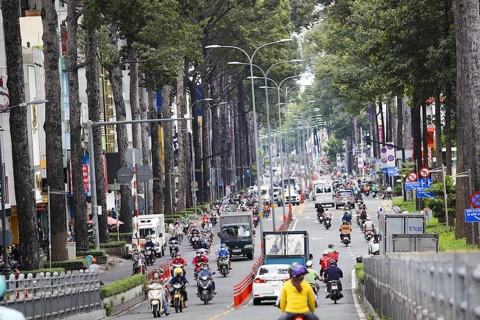
 Hanoi removes the Covid-19 quarantine mandate on returnees from high-risk areas. Photo: Tuan Kiet

Those who have not been fully vaccinated have to self-quarantine for seven days, be tested twice during this period, and supervise their health for another seven days.

People who have not received any vaccine shot have to isolate themselves for 14 days and be tested for the coronavirus on the seventh and 14th days.

Besides, the local authorities require fully vaccinated visitors to scan QR codes upon their arrival or at certain locations to facilitate contact tracing when necessary.

Nguyen Huy Nga, former Head of the General Department of Preventive Medicine under the Ministry of Health welcomed Hanoi's latest decision, saying such a move would ensure smooth travel and facilitate economic recovery.

“With a rather wide vaccination coverage, obeying the five safety rules (5K) is more important than self-quarantine which may not help reduce infection risks," he told The Hanoi Times.

HCMC makes U-turn on reopening of non-essential services in low-risk districts

 Ho Chi Minh City temporarily suspends karaoke, massage, discotheque, spa, and bar services. Photo: Van Dung

The HCMC People’s Committee yesterday evening ordered to close down local bars, discos, spas, massage parlors, and karaoke shops, only two days after it allowed the services to resume operations because of complicated Covid-19 situations. The non-essential services, even in low-risk districts, will be suspended until further notice.

The municipal Department of Health will be responsible for building Covid-19 safety protocols for businesses and services like bars, spas, and massage parlors in the current context, the municipal authorities said.

Cinemas and libraries are still allowed to open, but all employees and clients must either be fully vaccinated with two doses, recovered from Covid-19, or test negative for the coronavirus within the last 72 hours.

Officials in each district and Thu Duc City were tasked with enforcing the new order as well as sternly penalizing violators.

Earlier, on Tuesday evening, Chairman of the municipal People's Committee Phan Van Mai signed a decision to reopen cinemas, karaoke parlors, bars and discos, spas, massage parlors, and bike-hailing service following an over-six-month ban due to Covid-19. The reopening came with various conditions depending on the risk level of each ward and district.

HCMC has been the hardest-hit locality in Vietnam since the fourth virus wave began on April 27, with nearly 451,000 infections.

Authorities had previously closed bars, discos, and karaoke shops from April 30, and cinemas and massage parlors from May 3, while ride-hailing service was suspended from July 9.
Reactions:
Share:
Trending
Most Viewed
Related news
PM requests emergency in house rebuilding for flood-hit residents 

PM requests emergency in house rebuilding for flood-hit residents 

The Government leader has called the mission a mandate from the heart, urging all authorities to act as a moral commitment to the people.

Two-tier local government model strengthens Hanoi’s efforts to end urban flooding

Two-tier local government model strengthens Hanoi’s efforts to end urban flooding

Associate Professor Nguyen Hong Tien analyzes why Hanoi still faces chronic flooding, explains weaknesses in drainage planning and implementation and outlines how the two-tier local government model can support long-term solutions.

PetroVietnam advances nationwide STEM classrooms to drive innovation and future talent

PetroVietnam advances nationwide STEM classrooms to drive innovation and future talent

PetroVietnam expands its STEM Innovation program to develop high-quality classrooms and strengthen Vietnam’s future workforce in science, technology and innovation.

Vietnam Happy Fest 2025 spreads joy through simple things

Vietnam Happy Fest 2025 spreads joy through simple things

The Vietnam Happy Fest 2025 honors the idea that joy comes from everyday moments and Vietnamese smiles, sharing a spirit of happiness with the world.

Flood-hit people to have houses by Lunar New Year as committed by Vietnamese Government

Flood-hit people to have houses by Lunar New Year as committed by Vietnamese Government

Rebuilding houses for disaster-affected residents must be linked with rural and regional plans to ensure immediate recovery and long-term safety.

Investments in infrastructures, teaching staff to drive English to become second language

Investments in infrastructures, teaching staff to drive English to become second language

Vietnam’s ambition to make English a second language in all schools has gained strong support, yet teachers, experts and lawmakers warn that the plan requires major upgrades in infrastructure, staffing and policy to succeed nationwide.

Four American scientists win 2025 VinFuture Grand Prize for HPV vaccine breakthroughs

Four American scientists win 2025 VinFuture Grand Prize for HPV vaccine breakthroughs

Four American scientists received the 2025 VinFuture Grand Prize in Hanoi for pioneering discoveries that led to the HPV vaccine, recognized as a major breakthrough in preventing HPV-related tumors and advancing global public health.

Vietnam's health sector pushes zero-fee hospital treatment for all

Vietnam's health sector pushes zero-fee hospital treatment for all

The policy is a financial measure to carry profound social significance, promote fairness in access to health services so that no one is left behind.