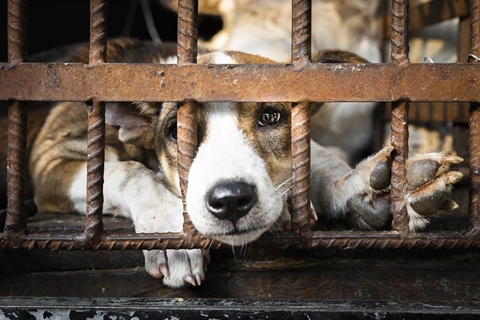
Hanoi people lose interest in dog meat
Dog meat is no longer as popular with Hanoi diners.
For years, Hanoi has been the largest market for dog meat.
"Dogs are friends, not food" has become a fashionable slogan in Vietnam as the country strengthens its global integration and Western influence and mentality take hold.
While the controversy over whether dogs are friends remains open, some think the time has come for Hanoi people to stop eating dog meat, not to satisfy the pleas of canine activists but for their own good.
Why are dogs being killed and their meat eaten?
No one knows for sure when and where the first dog was killed and served as food in Hanoi.
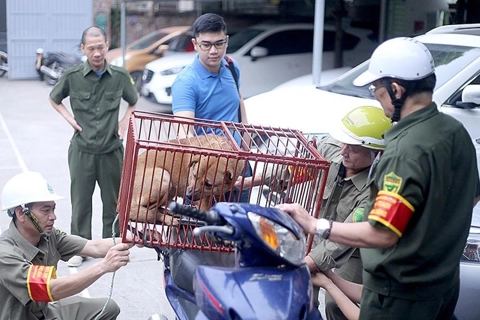
| The dogs are caught illegally or bought from their owners and are on their way to the slaughterhouse. Photo: kinhtedothi.vn |
Dog meat appears in some writings about Hanoi before the August Revolution of 1945.
In Vietnamese culture, the dog is nothing more than an asset that people raise and train to protect their homes from thieves and robbers.
Dogs have a bad connotation in Vietnamese. It would be a great insult to compare someone to a dog.
In a way, dog meat is one of the most delicious foods in Vietnamese cuisine. It can be prepared in seven different dishes.
Dog meat was only served on death anniversaries, weddings, and occasions when a Vietnamese family received honored guests.
Some even believe eating dogs can help them get rid of bad luck. People eat dog meat because they want to chase away misfortune during the lunar month and hope for something better.
Thus, no matter how much affection they receive from their owners, dogs are nothing more than food and property to the Vietnamese, not a friend or relative, as in Western countries.
Dog slaughter
"This is for you to be reincarnated into another creature in another life," is the last word a Vietnamese man says to the animal he is sacrificing to cook a meal.
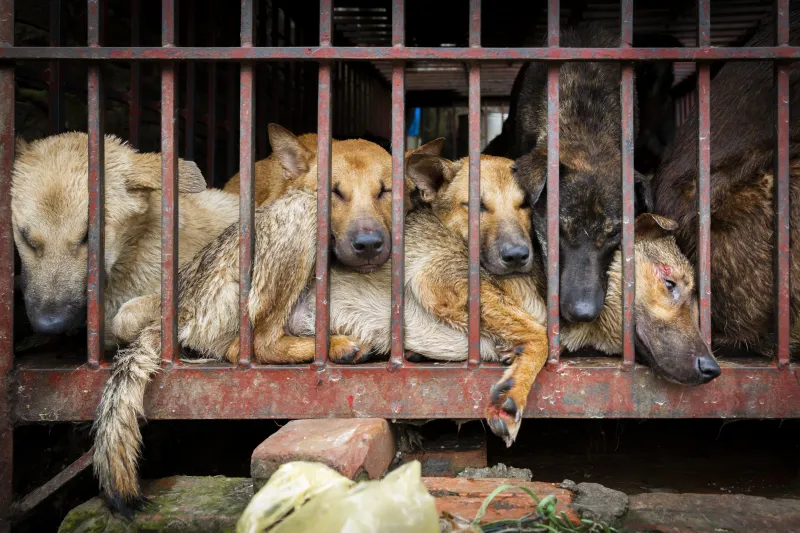
There is no accounting for how many dogs are killed each year to meet the demand for dog meat in large cities and rural areas. Some say the number could be as high as one million.
If you go to a local flea market, there will be one or two eateries serving dog meat, where some dogs have been killed, roasted, and displayed on the counter. Seeing this is a bit uncomfortable for foreigners coming to Vietnam for the first time.
There are mythical stories about dog killers, dog meat traders, and sellers, in which their families are haunted by the souls of the dogs they kill and give birth to deformed babies.
Social impact
After years of strong campaigning by dog activists, Vietnamese people have become more aware of both the positive and negative effects that dog meat can have on their lives.
It's true that dog meat is a tasty and highly nutritious food for humans because it contains a lot of nutrients and proteins.
But it is also a source of gout, high cholesterol, infectious diseases, and rabies.
In recent years, the amount of dog meat consumed has decreased significantly, and people in Hanoi are beginning to turn their backs on the food.
The first reason, they said, is that dog meat is not a healthy food. In addition, they feel guilty about eating dogs because they think they are helping bad people steal dogs.
The second reason, they said, is that children now love dogs more than before because they see dogs as their friends.
Nguyen Van Nam, a rickshaw driver, told The Hanoi Times that he used to have a dog, but it was stolen. "I'm not a fan of dog meat. It doesn't taste good to me. So I fully support the idea of fasting dog meat."
Meanwhile, like it or not, foreigners must accept that eating dog meat is a Vietnamese cultural trait, just as cows are sacred in India, soon after they see dogs being sold at an eatery.
"It's more of a cultural or social difference," Bradley Corbett Arthur, a Canadian businessman based in Hanoi, told The Hanoi Times.
"I don't mind the practice. I don't like the idea (of slaughtering dogs for food), but I don't judge people who do it," he said. It's an ethical issue, Bradley said, referring to the way dogs are killed. "We shouldn't cause harm, or at least we should minimize the harm we cause."
But it will take a long time for Hanoians to lose interest in dog meat.
"I can see that sales of dog meat have dropped a lot over the years, to the point where it is hardly worthwhile for people to be involved in this business. If people stop buying it, there will be no viable business.
The Canadian expatriate said people need to find a balance in society, adding that it's natural for people to think in different ways.