Historic pottery exhibition traces shared cultural journey from Thang Long to Phu Xuan
A new thematic exhibition in Hanoi brings together centuries-old pottery from the former capitals of Thang Long and Phu Xuan, highlighting shared cultural roots and the enduring legacy of Vietnam’s ceramic traditions.
THE HANOI TIMES — Centuries of Vietnamese ceramic heritage come alive at the thematic exhibition “From Thang Long to Phu Xuan – The journey of Vietnamese pottery”, now on display at the Van Mieu – Quoc Tu Giam relic complex, widely known as the Temple of Literature, in Hanoi.
Opened today (December 18), the exhibition forms part of activities marking the 65th anniversary of relations between Hanoi and Hue (1960-2025).
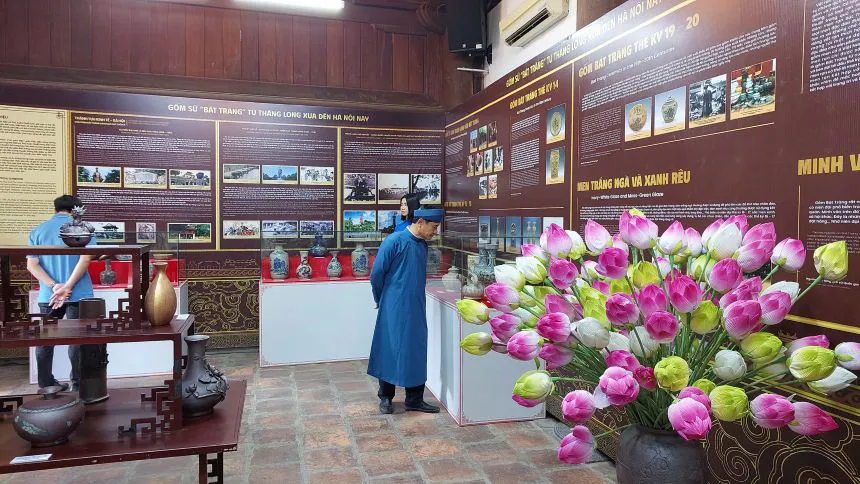
The exhibition showcases the traditional craft of two pottery villages Bat Trang and Phuoc Tich. Photos: Ngo Minh/The Hanoi Times
Through pottery, the exhibition traces the cultural and historical identities of Thang Long, present-day Hanoi, and Phu Xuan, now Hue, two former capitals that shaped Vietnam’s artistic and spiritual life for centuries.
The display highlights the meeting point of court culture and folk traditions, with Bat Trang pottery from Thang Long and Phuoc Tich pottery from Phu Xuan as its central focus.
As visitors move through the exhibition, they encounter a cultural journey where two pottery traditions engage in a quiet dialogue. Each piece tells a story of land, people and craft passed down through generations.
The Bat Trang section introduces the village’s formation and development across dynasties. It emphasizes distinctive clay formulas, refined shaping skills and precise firing techniques that established Bat Trang as one of Vietnam’s most enduring ceramic brands.

Pottery objects of Bat Trang Village dating from the 19th century.
Ivory-white glaze and moss-green glaze emerge as defining features of Bat Trang ceramics.
Artisans often applied ivory-white glaze to ritual objects such as lampstands, incense burners, guardian animal figures and ceremonial vessels. They enhanced these works with molded relief, applique and carved or incised details to achieve an elegant visual balance.
Artisans frequently combined moss-green glaze with ivory-white glaze to highlight raised motifs such as lotus blossoms, circular floral medallions, dragon figures, leaf-shaped borders, decorative bands, architectural columns, model structures and miniature palanquins.
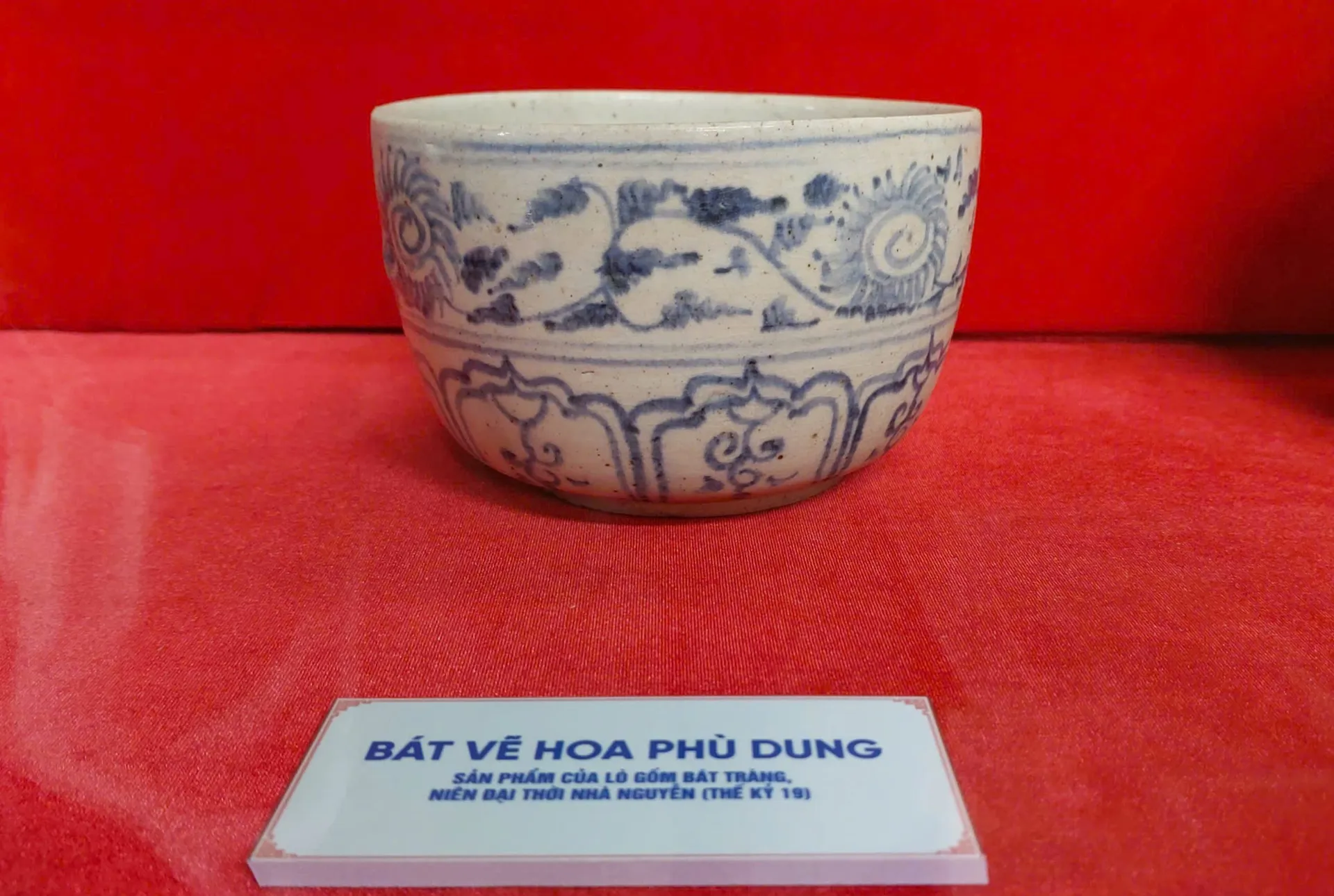
A close look of a Bat Trang bowl with flower patterns.
Dating mainly from the 16th and 17th centuries, moss-green glaze serves as a key marker for identifying Bat Trang ceramics.
During this period, widespread patronage by the aristocracy for temple construction and restoration fueled strong demand for ritual ceramics and led to large commissions for Bat Trang workshops.
The Phuoc Tich section reflects the pottery tradition of the Phu Xuan region. It introduces the architectural heritage of ancient Phuoc Tich Village, traditional production methods and the historical, cultural and economic value the craft once brought to the former imperial capital.
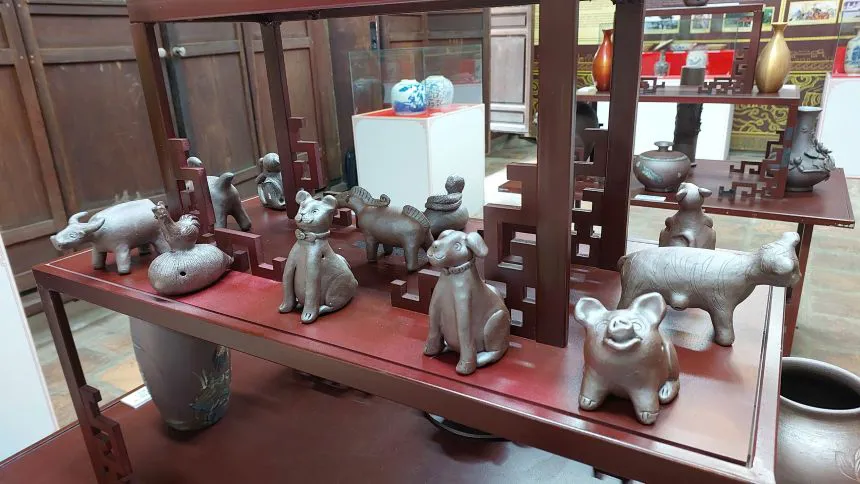
A collection of clay whistles of Phuoc Tich Village which are made in the shape of 12 zodiac animals.
With a history spanning more than 500 years, Phuoc Tich pottery once gained fame across central Vietnam.
The village produced everyday household items such as trays, pots, stoves, teapots, jars, lime containers, urns, platters and vases, along with finely crafted objects used by the Nguyen Dynasty royal court. Many of these artifacts now sit on display at the Hue Royal Fine Arts Museum.
Historical records reveal that during the Nguyen Dynasty, the royal court issued special regulations for Phuoc Tich Village. Each year, villagers had to supply about 400 clay pots for cooking rice for the king.
They could not use pots resembling royal ones, with strict penalties for violations. Twice a year, villagers transported the pots by boat along the O Lau River to the imperial palace.
Phuoc Tich clay pots began as simple household items for cooking rice, storing meat and preserving fish. Their exceptional quality led the royal court to select them for royal use.
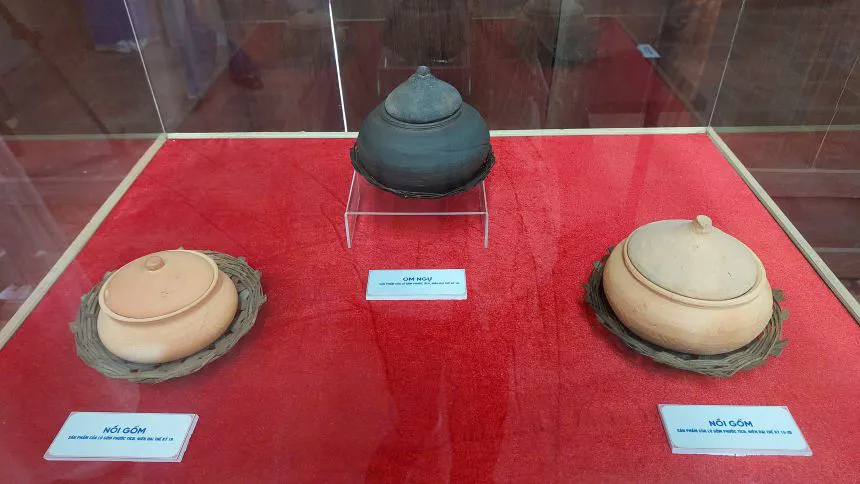
The difference between royal pot (the black one) and clay pots of normal citizens.
Phuoc Tich clay pots began as simple household items for cooking rice, storing meat and preserving fish. Their exceptional quality led the royal court to select them for royal use.
The pots feature thick walls, a dark brown body, a gourd-like shape and a handle on top. Because of their royal association, people called them “royal pots” and gave them the poetic name “the royal gem of utility.”
According to Le Xuan Kieu, Director of the Van Mieu – Quoc Tu Giam Cultural and Scientific Activities Center, the exhibition offers residents and domestic and international visitors a valuable opportunity to explore the pottery heritage of two renowned craft villages and gain deeper insight into Vietnam’s long-standing cultural values.
The exhibition also reflects national solidarity, pride in cultural roots and the enduring historical bond between Hanoi and Hue, he said.
Some photos of the exhibition:
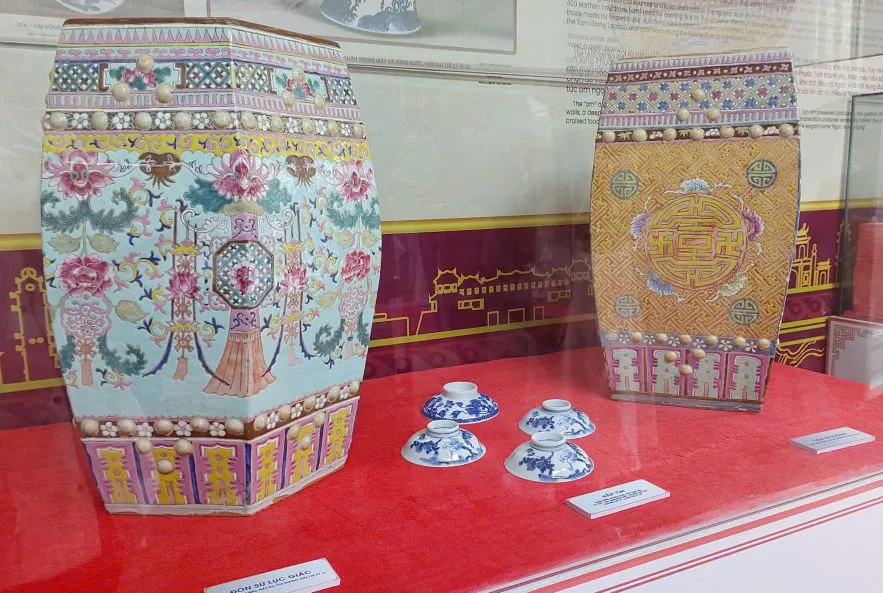
Products of Phuoc Tich pottery village.
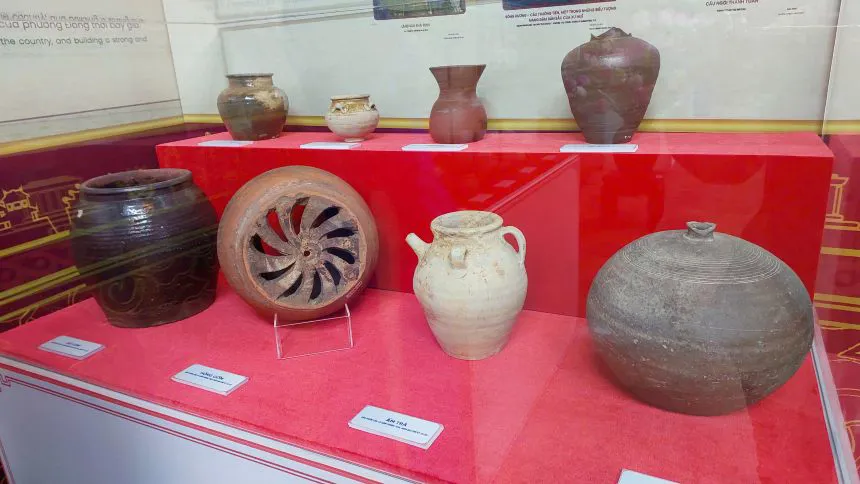
Products of Phuoc Tich pottery village.

Vases with cracked enamel of Bat Trang Village.
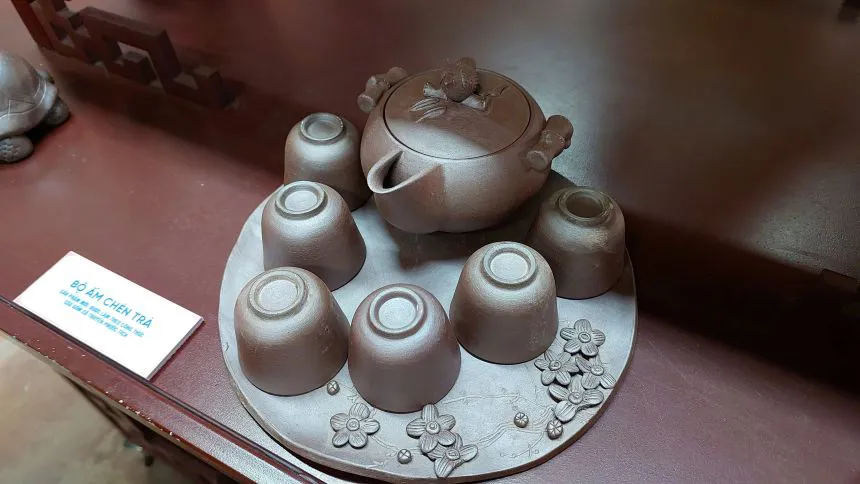
A tea set of Phuoc Tich pottery.

The exhibition provides information of culture, history and traditional crafts of the two pottery craft villages with half-a-millennium history.