Hanoi launches seven major infrastructure projects to reshape urban growth and connectivity
The projects, spanning urban renewal, transport, sports and social housing, underscore Hanoi’s ambition to build a modern, connected and livable city while contributing to national growth momentum.
THE HANOI TIMES — Hanoi broke ground on seven major infrastructure projects on December 19, including the Red River Landscape Boulevard and the Olympic Sports Urban Area, with a combined investment of nearly VND1.8 quadrillion (US$68.4 billion).
These two projects are among seven key projects that Hanoi launched on the same day, with total investment capital of VND2.1 quadrillion ($79.8 billion). They form part of 234 projects nationwide that began construction simultaneously, with total investment reaching VND3.4 quadrillion ($129.2 billion).
The projects commemorate the 14th National Party Congress and mark the 79th anniversary of the National Resistance Day (December 19, 1946 – December 19, 2025).
The groundbreaking activities help turn national strategic development orientations into reality and translate Hanoi’s development goals for a new phase into concrete action.
Olympic Sports Urban Area project
According to Vingroup, the project developer, the Olympic Sports Urban Area covers more than 9,000 hectares, with total investment exceeding VND925,000 trillion ($35.2 billion) and an estimated population of about 751,000 people.
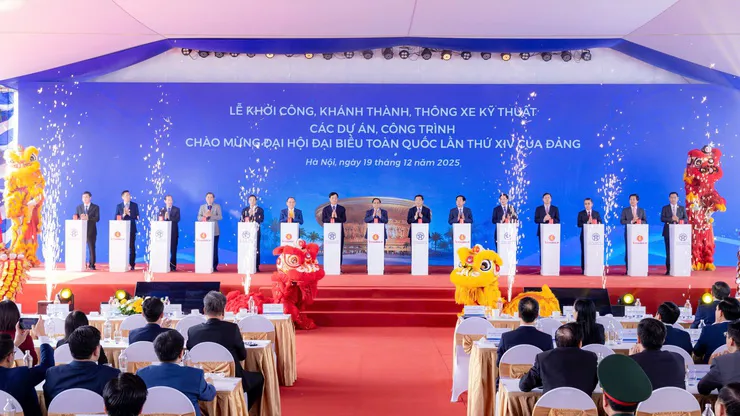
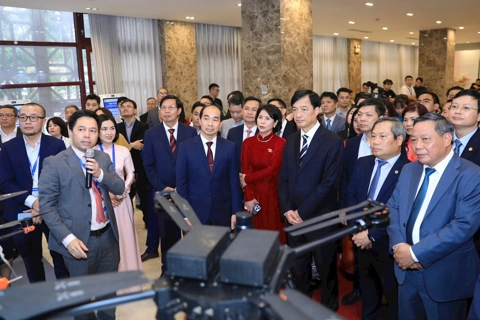
The groundbreaking ceremony for the Olympic Sports Urban Area project. Photo: hanoi.gov.vn
The project spans 11 communes of Hanoi, including Dai Thanh, Ngoc Hoi, Nam Phu, Thuong Tin, Hong Van, Chuong Duong, Thuong Phuc, Binh Minh, Tam Hung, Thanh Oai and Dan Hoa.
The project’s centerpiece is the Drum Bronze Stadium, a national-level facility built on 73.3 hectares with seating capacity of up to 135,000. Designers plan the stadium to meet FIFA standards and equip it with the world’s largest retractable roof.
The stadium will operate as a green and smart facility. It will integrate AI, enable pitch replacement within six to ten hours, feature smart 5G-connected seating, manage security and crowd flow in real time, recycle water to save 70% of fresh water, reduce heat absorption and UV radiation and use natural ventilation to cut energy use and noise.
The stadium will also include a dedicated area meeting international standards for hosting foreign leaders at major events.
Developers aim to complete the stadium by August 2028, gradually forming a regional and international sports and urban hub in Hanoi.
The urban area will function as a modern integrated sports and urban complex, capable of hosting major continental and global events such as the Asian Games, the Olympics and the World Cup.
The project aims to create a modern, internationally scaled sports and urban space, supporting Hanoi’s goal of becoming a civilized, modern and happy capital.
At the ceremony, Prime Minister Pham Minh Chinh praised the efforts of government agencies, ministries and local authorities in advancing key projects that drive development of the country’s socio-economic infrastructure.
According to the prime minister, the government has implemented five major shifts in thinking and action, including focused investment, decisive removal of institutional barriers and stronger decentralization and delegation of authority to localities.
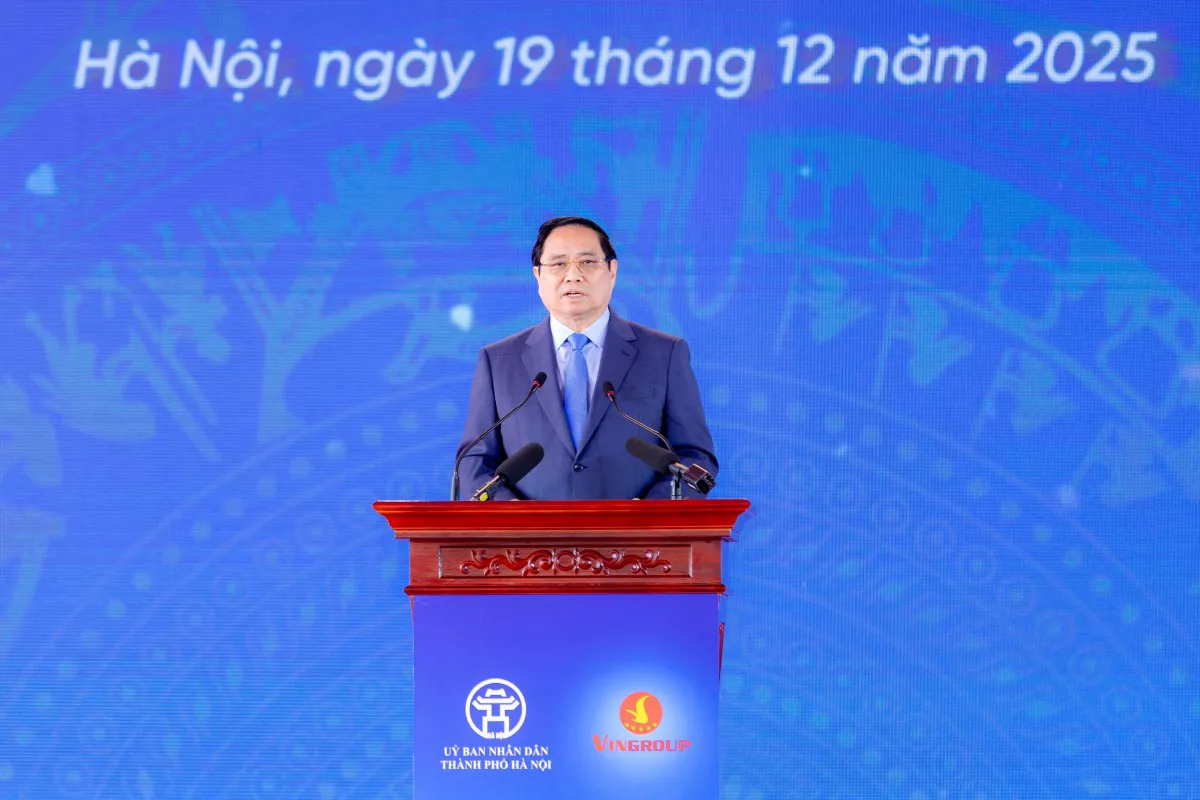
Prime Minister Pham Minh Chinh delivers his remarks at the ceremony. Photo: hanoi.gov.vn
The government also established steering committees for national key projects to resolve obstacles directly and approved the first National Master Plan to open new development space for the country.
In 2025, the government launched nationwide patriotic movements such as practicing thrift and preventing waste, a 500-day campaign to complete 3,000 kilometers of expressways, a nationwide drive to eliminate temporary and dilapidated housing and the Quang Trung campaign to build and repair homes for people affected by natural disasters and floods.
“The socio-economic infrastructure system has achieved breakthrough progress, with many large-scale, modern projects that offer strong connectivity and spillover effects, completed in record time,” the prime minister said.
“These achievements have reshaped the country’s landscape and created powerful growth momentum, opening new development space for all regions nationwide.”
Prime Minister Chinh stressed that developing socio-economic infrastructure remains one of the country’s three strategic breakthroughs to achieve double-digit growth.
The government and the prime minister called on all levels, sectors, localities and related agencies to build on achievements and overcome challenges with the highest determination.
“To realize our goals, we must work harder, unite more closely, act with stronger resolve and deliver greater efficiency,” he said.
Red River Landscape Boulevard project
The Red River Landscape Boulevard investment project has a preliminary total investment of about VND855,000 trillion ($32.5 billion) and follows a public-private partnership model.
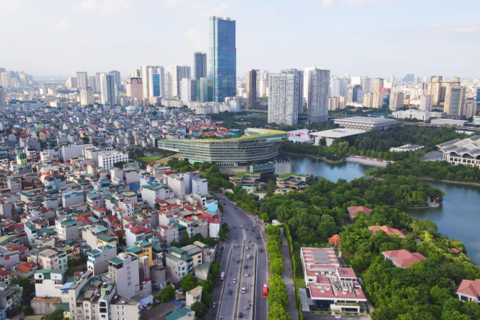
The project covers an area of about 11,000 hectares, stretching from Hong Ha Bridge to Me So Bridge, across 19 communes and wards of Hanoi.
The investment scope includes an 80-kilometer traffic boulevard, a landscape park and recreation system covering about 3,300 hectares and around 2,100 hectares of cleared land for urban redevelopment. The project consists of four independent sub-projects.
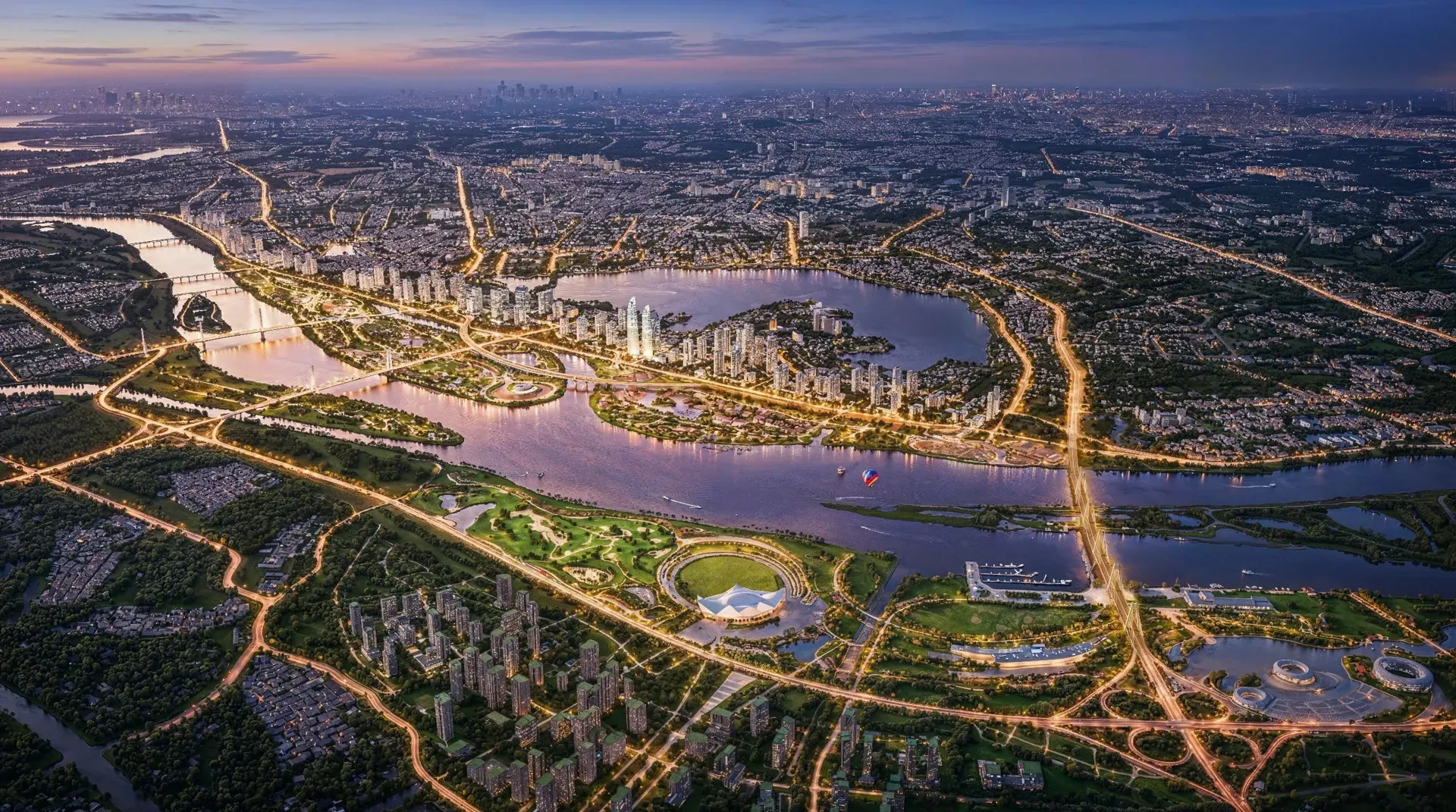
The design of the Red River Landscape Boulevard at its completion.
According to Hanoi People’s Committee Chairman Vu Dai Thang, investment in the Red River Landscape Boulevard responds to an objective and urgent need to redevelop riverfront urban space, improve infrastructure and open a more sustainable and modern development path.
The project aims to complete the transport infrastructure system, promote urban development along both riverbanks and create a high-quality riverside urban space aligned with sustainable development goals and improved living standards in the capital’s core.
The project aligns with guidance from the Party General Secretary To Lam during Politburo working sessions with the Hanoi Party Committee and reflects Politburo resolutions on Hanoi’s development direction and private economic growth.
Chairman Thang said the National Assembly promptly issued a resolution piloting special mechanisms and policies for major and important projects in the capital.
The government and the prime minister have also provided close guidance and a solid legal framework, enabling Hanoi to implement the project decisively, urgently and in compliance with regulations.
“This clearly demonstrates strong alignment from the central level to the local level in turning major policies into concrete projects with long-term value,” he said.
He emphasized that the Red River Landscape Boulevard will create a modern cultural, ecological and landscape space, ensure flood safety, support urban redevelopment, improve quality of life and generate socio-economic momentum, contributing significantly to the target of 11% growth in the 2026–2030 period.
“Hanoi commits to delivering the project on schedule, with high quality and efficiency, while fully respecting the legitimate rights and interests of people in the project area,” Chairman Thang stressed.
Representing the investor consortium, Tran Dang Khoa, chairman of Dai Quang Minh Real Estate JSC, said the Red River Landscape Boulevard carries global significance, affirms Vietnam’s rising position in a new era and elevates Hanoi and the country on the world stage.
He said the project represents a powerful and positive transformation of old residential areas, creating better living conditions and environments for residents and moving toward a smart, modern city on both sides of the river.
“We place national interests, community benefits, sustainable development and urban management standards at the center,” Khoa said.
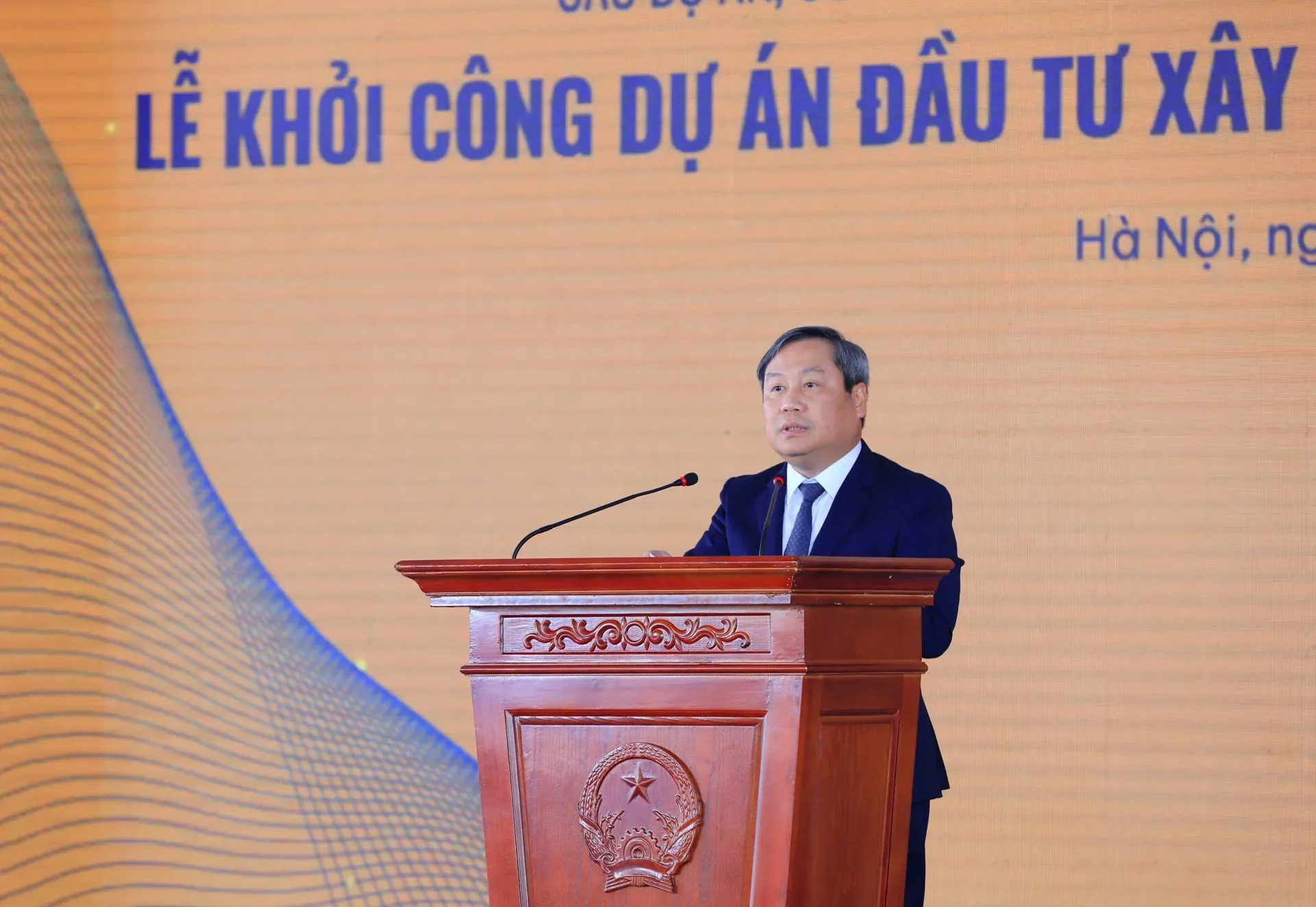
Chairman of the Hanoi People's Committee Vu Dai Thang speaks at the groundbreaking ceremony. Photo: Pham Hung/The Hanoi Times
“The investor consortium commits to meet the project timeline, ensure transparency, adopt advanced technical solutions in the operations and assure flood safety and stable livelihoods for local residents.”
The Red River Landscape Boulevard project aims for completion and inauguration in time for the 100th anniversary of the founding of the Communist Party of Vietnam (February 3, 1930 - February 3, 2030), carrying major political and social significance for Hanoi and the country.
|
Seven key infrastructure projects launched in Hanoi on December 19, 2025
|