Hanoi speeds up priority projects with Japan
As comprehensive strategic partners, Vietnam and Japan are strengthening bilateral ties more than ever, including cooperation between Hanoi and Japanese localities.
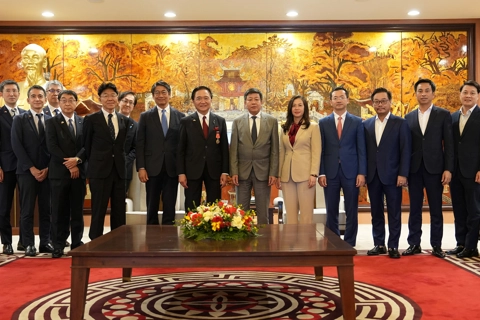
THE HANOI TIMES — Hanoi will continue advancing ongoing cooperative projects with Japan while seeking to learn from Japan’s experience across key sectors, said Secretary of the Hanoi Party Committee Nguyen Duy Ngoc at a meeting with Japanese Ambassador to Vietnam Ito Naoki on December 17.
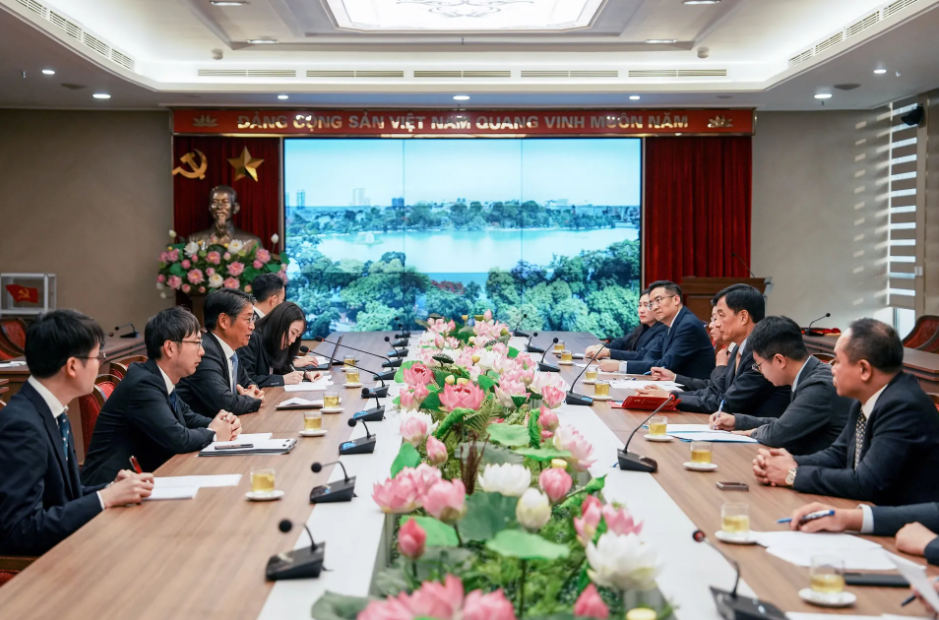
Overview of the meeting. Photos: Thanh Hai/The Hanoi Times
Ngoc reaffirmed Hanoi’s commitment to deepening cooperation with Japan, praising Ambassador Ito Naoki for his active contributions to Vietnam–Japan relations and cooperation between Hanoi and Japanese localities.
Reviewing key milestones in bilateral cooperation, the Hanoi Party Chief said the relationship has contributed to peace and prosperity in the region and worldwide. He expressed confidence that Ambassador Naoki would continue to serve as an important bridge linking Hanoi and Vietnam more broadly with Japan.
For his part, Naoki said that Vietnam and Japan, as comprehensive strategic partners, are strengthening bilateral ties more than ever. He added that Japan attaches great importance to expanding cooperation with Vietnam, including partnerships between Hanoi and the Japanese localities.
Regarding the North Hanoi smart city project, Naoki said participating companies are actively completing the necessary procedures, with construction expected to begin in January 2026.
On Hanoi’s Urban Railway Line No. 2, which involves the Japan International Cooperation Agency, he reaffirmed Japan’s determination to complete the project in full using Japanese technology.
For the Yen Xa wastewater treatment project, Naoki expressed confidence that it will enhance Hanoi’s wastewater treatment capacity and pledged to continue cooperation with Hanoi in the project’s second phase.
As for the Vietnam-Japan University project, he said construction is scheduled to kick off in 2026.
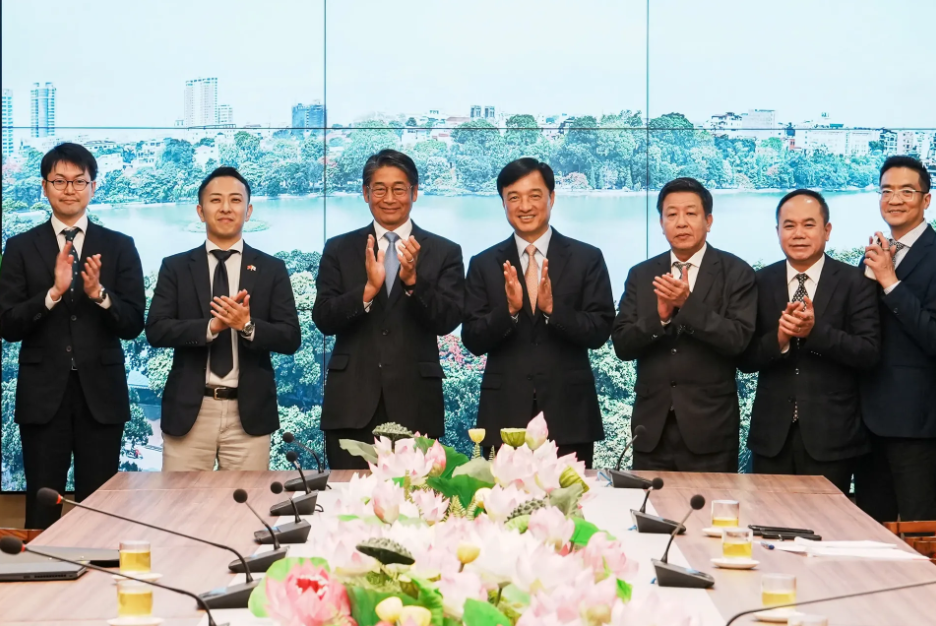
Delegates during the meeting.
Addressing measures to restrict gasoline-powered motorbikes in Hanoi, Naoki welcomed the municipal People’s Council resolution passed on November 26 approving low-emission zones, with time-based restrictions and a pilot program starting on July 1, 2026, in selected wards within Ring Road 1.
He expressed support for Hanoi’s efforts to curb air pollution while noting that implementation should be carefully considered to avoid negative impacts on residents’ livelihoods and related businesses.
Naoki affirmed that Japan prioritizes cooperation with Vietnam and Hanoi in areas such as innovation and cultural industries to support comprehensive economic development.
At the meeting, Ngoc outlined Hanoi’s recent development achievements, noting that the city has fulfilled all 24 development targets and is aiming for double-digit growth of at least 11% in the coming years.
He said the city is drafting a capital master plan with a 100-year vision, focusing on underground, low-altitude and surface-space development, while strengthening links with neighboring provinces for shared growth.
Meanwhile, Hanoi identifies science and technology and digital transformation as key growth drivers in its new economic model.
With this vision and favorable policy conditions, Ngoc said the city is well-positioned for strong development in the next decade and asked Naoki to continue supporting connections that allow Hanoi to learn from Japan’s experience.
Responding to issues raised by the ambassador, Ngoc said the city supports advancing the next phase of the North Hanoi smart city project between BRG and Sumitomo and will seek suitable solutions to accelerate site clearance.
For the Vietnam-Japan University project, he said Hanoi will work to resolve land clearance issues as soon as possible.
On measures to restrict gasoline-powered motorbikes to protect the environment, Ngoc said the city will carefully study the ambassador’s recommendations and feedback from associations to develop a roadmap aligned with Vietnamese government directives.
Regarding Urban Railway Line No. 2, Ngoc acknowledged the difficulties faced by the Japanese side and called for close coordination to share challenges, review proposals and identify solutions.
He said Hanoi’s upcoming planning will focus on integrated and synchronized transport development, including urban rail, and asked the ambassador to share initiatives to help address infrastructure constraints.
Ngoc expressed hope that Ambassador Naoki and the Japanese government would continue to support Hanoi, voicing confidence that bilateral relations and Hanoi–Japan cooperation would become more effective.
He also invited the ambassador to follow the city’s development updates from early 2026 to help facilitate timely cooperation, particularly in science, technology innovation and digital transformation.