Hanoi stays on course for 2030 green transport transition
Hanoi’s bus fleet has already met its 2026 green conversion target, one year ahead of schedule.
THE HANOI TIMES — Hanoi aims to complete most of its green transport transition by 2029 and fully shift to green vehicles by 2030, Vice Chairman of the Hanoi People’s Committee Nguyen Manh Quyen said at a progress review meeting on December 17.
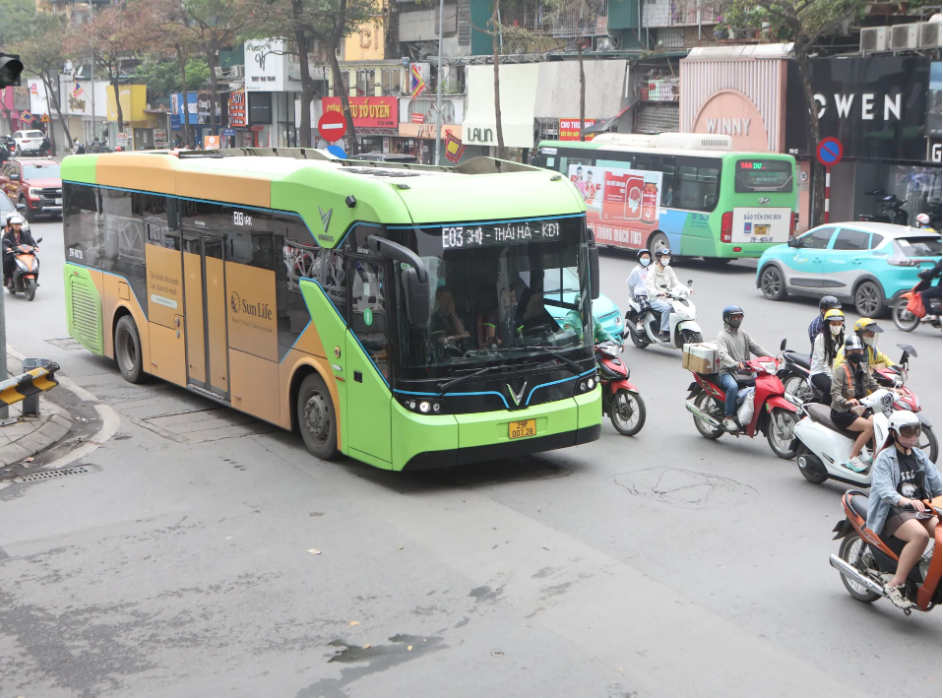
Green bus on Hanoi's street. Photo: Thanh Hai/The Hanoi Times
The city has already met its 2026 target for converting subsidized bus routes to green energy, one year ahead of schedule, according to Deputy Director of the Hanoi Department of Construction Dao Viet Long.
As of now, 23 of Hanoi’s 128 subsidized bus routes operate 367 green-energy buses, accounting for 19.4% of the total fleet, Long said. About 200 additional buses are expected to be converted in 2026, while the 2025-2026 period will focus on finalizing policy mechanisms to support businesses transitioning to electric and green-energy vehicles.
Tourist buses are scheduled to complete the transition between 2028 and 2030, with all buses expected to go green by 2030, he added.
To facilitate the shift, the Department of Construction is coordinating with businesses to expand charging infrastructure and green fuel supply, including fast-charging stations, and to apply technology for synchronized management and operations. An agreed roadmap has also been reached with the Hanoi Taxi Association and taxi companies.
Long said Hanoi currently has more than 14,300 taxis, nearly 8,800 of which are electric. Around 13,600 inactive taxis are awaiting replacement, with nearly 28,000 taxis in total expected to be converted by 2030, a target taxi firms have pledged to meet.
"Regarding infrastructure, an interagency task force has surveyed 110 locations and identified 78 feasible sites for charging and battery-swapping stations. That progress will depend largely on early support mechanisms, particularly access to credit, preferential interest rates and assistance with vehicle replacement," said Long.
After reviewing the reports, Quyen instructed the Department of Construction to submit proposals on support mechanisms and pricing norms. He called for a phased approach to charging infrastructure, starting with pilot projects before expansion.
Quyen also urged banks and the Hanoi Investment and Development Fund to increase support for businesses through capital access and preferential loans, while reiterating Hanoi’s commitment to completing most of the green transport transition by 2029 and fully achieving it by 2030.