Hanoi launches new metro project, targets better public transport and connectivity
The project aims to enhance Hanoi’s connectivity, reduce congestion and promote sustainable urban growth through modern, transit-oriented infrastructure.
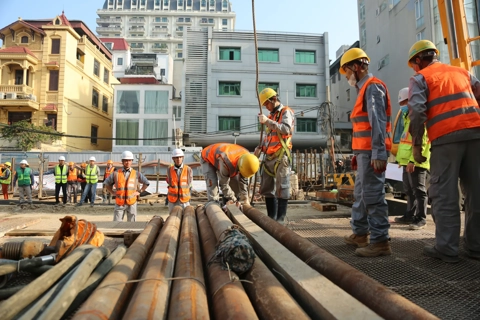
THE HANOI TIMES — Hanoi authorities on October 9 began construction of the Nam Thang Long–Tran Hung Dao section of metro line No.2, with a total investment of about VND35.7 trillion (US$1.4 billion), aiming to complete the city’s railway network and enhance public transport.
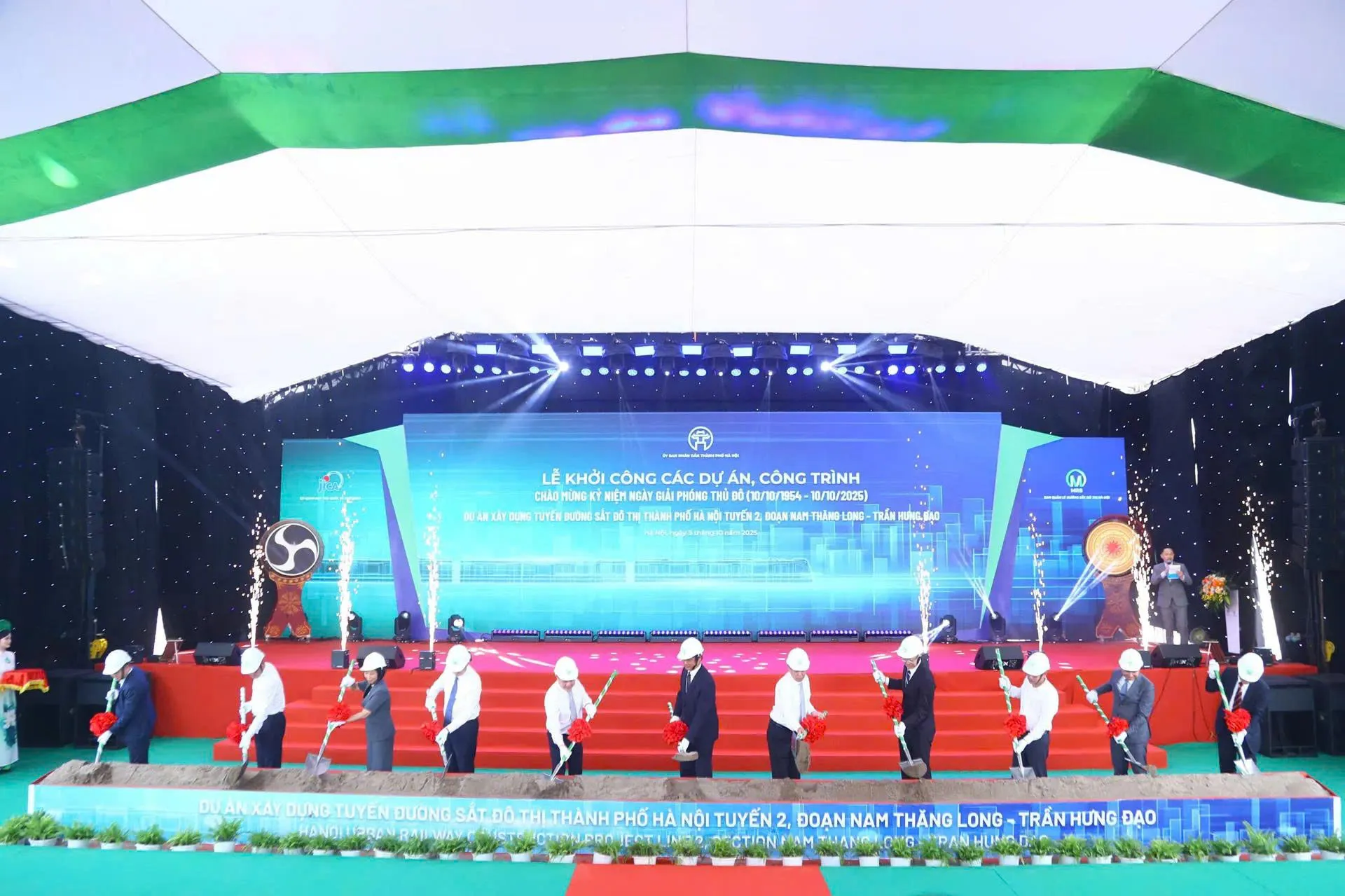
The Hanoi People’s Committee on October 9 held a groundbreaking ceremony for the Urban Railway Line No.2, section Nam Thang Long - Tran Hung Dao. Photo: Kinh te & Do thi Newspaper
The metro line connects underground transport infrastructure with public spaces while preserving cultural heritage and maintaining architectural harmony in Hanoi’s historic center.
Planned under the Transit-Oriented Development (TOD) model, which integrates transport infrastructure with urban growth, the project is scheduled for completion and commercial operation in 2029.
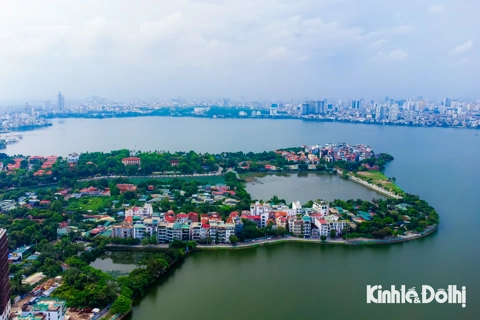
The route spans nearly 11 kilometers, including 1.94 kilometers of elevated tracks and 9 kilometers underground, with 10 stations. The underground section runs through the Hoan Kiem Lake area.
Underground lines will connect to the square and park on the east side of Hoan Kiem Lake, linking underground transport with public spaces while preserving heritage and adding a distinctive architectural highlight to the capital’s historic core.
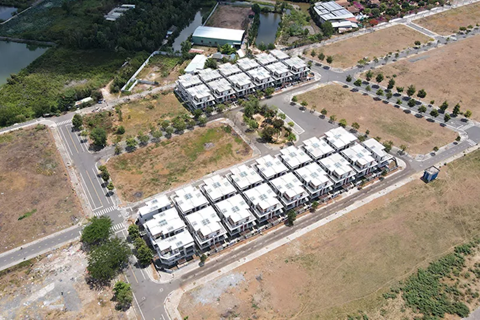
The Xuan Dinh depot covers 11.3 hectares and will function as a center for maintenance, repair and operational training. The TOD model at the depot combines passenger transit, commercial services and mixed-use housing.
Once completed, metro line No. 2 will connect central Hanoi with the Noi Bai International Airport, easing travel for both Vietnamese and foreigners.
It is funded through the Official Development Assistance (ODA) program from the Japan International Cooperation Agency (JICA) and counterpart funds from Hanoi’s budget.
Nguyen Cao Minh, Head of the Hanoi Metropolitan Railway Management Board (MRB), said that the project reflects the friendship and cooperation between Vietnam and Japan.
He said that the metro line will help reduce traffic congestion, improve air quality and enhance the quality of life for city residents. Minh affirmed that the MRB will ensure on-time completion, construction quality and safety, making the line a new symbol of the capital.
Speaking at the ceremony, Vice Chairman of the Hanoi People’s Committee Duong Duc Tuan said that the project is one of the city’s key infrastructure developments.
He added that the line demonstrates Hanoi’s vision and determination to develop urban areas closely linked with public transport, combining the city’s historical and cultural heritage with its modern pace of life.
Hanoi plans to build 15 urban railway lines totaling about 619 kilometers, forming a modern, high-capacity and interconnected public transport network that meets travel demands and supports sustainable growth.
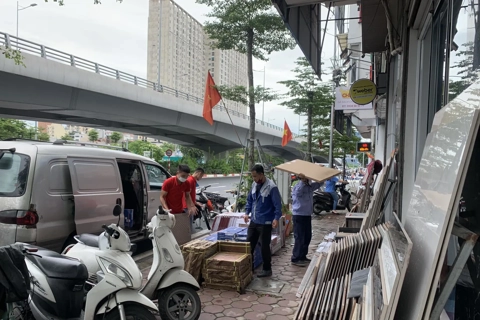
To ensure progress and quality, Tuan called on departments, sectors and local authorities to work closely with the project investor on site clearance and construction support.
He urged contractors to mobilize all resources, manpower and equipment to carry out construction efficiently, safely and in full compliance with regulations.
Hanoi has had two metro lines operated: the Cat Linh - Ha Dong route, which spans 11 kilometers, and the elevated section of the Nhon - Hanoi Railway Station, which stretches for 8.5 kilometers.