Hanoi plans record subsidies to speed up shift to electric motorbikes
The support applies to residents with permanent residence or at least two years of continuous stay in the city who switch from gasoline motorbikes to electric models priced from VND10 million (US$400).
THE HANOI TIMES — Hanoi is set to offer its biggest-ever subsidies for electric motorbikes, with support of up to VND20 million (US$800) for poor households under a draft resolution aimed at phasing out gasoline-powered vehicles in the capital.
People who switch from gasoline motorbikes to electric models priced from VND10 million (US$400) or more will be eligible for support of up to VND5 million (US$200). The policy is part of a draft resolution on promoting clean-energy road vehicles that the Hanoi People’s Council is expected to approve at its 28th session from November 26 to 28.
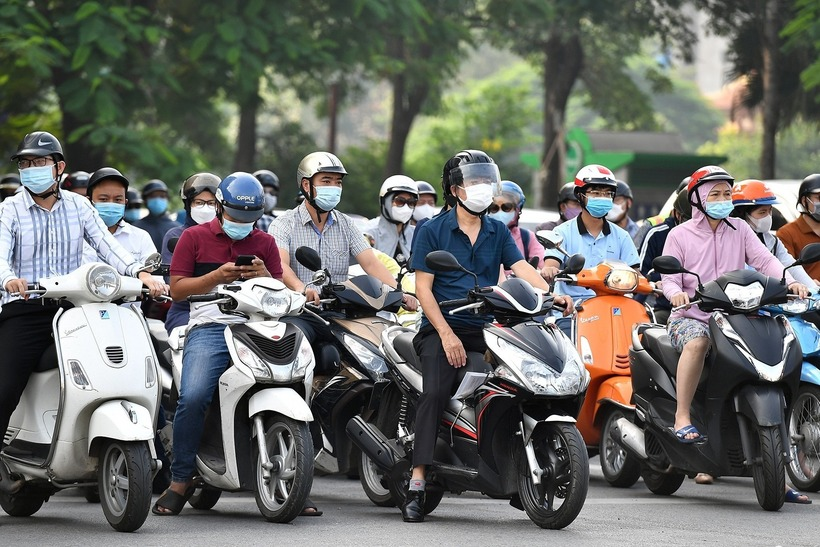
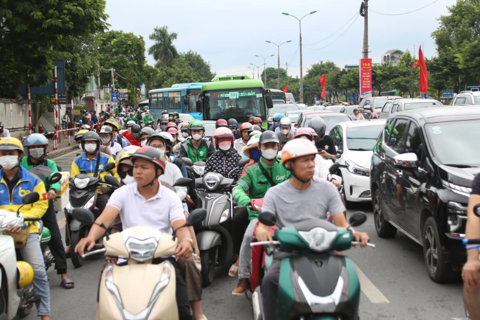
Hanoi is urging residents to switch from gasoline to electric motorbikes. Photo: The Hanoi Times
The city plans to support residents with permanent residence or at least two consecutive years of living in Hanoi who own gasoline motorbikes and switch to electric models priced from VND10 million.
The subsidy equals 20% of the value of the new vehicle but no more than VND5 million (US$200), VND20 million (US$800) for poor households, and VND15 million (US$600) for near-poor households. Each person is eligible for support for one vehicle from the effective date of the resolution until January 1, 2031.
The city also plans to support 50% of the fee for issuing license plates and registration certificates for motorbikes converted to clean-energy models until January 1, 2031. Poor and near-poor households will receive full support.
In addition, the city budget will support 30% of loan interest for individuals who buy clean-energy motorbikes using installment plans offered through financing companies or commercial banks, with repayment terms not exceeding twelve months.
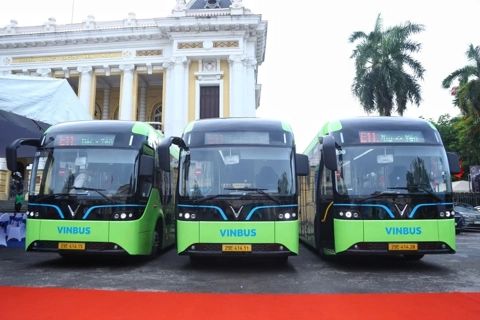
Passenger transport companies using taxis and buses that switch to clean-energy vehicles while keeping their existing identification plates will receive full support for registration fees.
Companies that provide self-drive rental services using clean-energy vehicles for public transport and use temporary on-street parking will be exempted from street and sidewalk parking fees for up to five years.
To reduce private vehicle use, the city will waive fares for mass transit services for people with meritorious service to the nation, persons with disabilities, senior citizens, children under six, members of poor households, students and industrial-park workers.
Expanding public clean-energy charging network
Local authorities will review and propose suitable locations for installing public clean-energy charging stations based on actual demand.
Parking areas in apartment buildings, commercial towers, hospitals and other public facilities within Ring Road 3 must convert at least 15% of their parking spaces into public clean-energy charging stations by January 1, 2030.
Newly built facilities must install charging stations for at least 30% of total parking spaces. Road infrastructure such as streets, bridges, tunnels, bus stations, parking lots and rest stops within Ring Road 3 that provide parking must also convert at least 15% of parking spaces into clean-energy charging stations by January 1, 2030.
Newly built road infrastructure must allocate at least 30% of total parking spaces for this purpose.
The city will support 30% of bank loan interest or allow access to the city’s development investment fund for up to five years for companies investing in public clean-energy charging infrastructure.
The city budget will also support 50% of site clearance costs and full land rent for the first five years for investment projects related to charging stations.
Projects to build public clean-energy charging stations will move directly to investment approval without the need for separate procedures related to investment guidelines.
The new policy framework is intended to implement the 2024 Capital Law on environmental protection and Directive 20 issued by the prime minister on July 12, which outlines urgent measures to tackle pollution.
Under Directive 20, Hanoi will ban gasoline motorbikes inside Ring Road 1 from July 1, 2026, expand the ban to Ring Road 2 in 2028 and to Ring Road 3 in 2030, accompanied by restrictions on gasoline cars.
Hanoi currently has 6.9 million motorbikes, including about 450,000 within Ring Road 1. At an environmental forum in July, Vice Chairman of the Hanoi People’s Committee Duong Duc Tuan cited research showing that gasoline motorbikes contribute up to 60% of the city’s air pollution, with nearly 70% of the fleet made up of old vehicles whose emissions are difficult to control.