Hanoi launches free electric sightseeing bus route in city center
The new electric bus line provides a clean-energy transportation solution for sightseeing destinations.
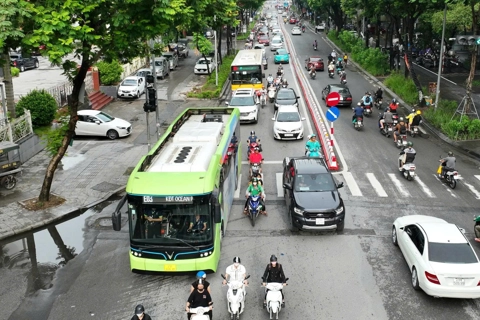
THE HANOI TIMES — Hanoi has launched the E11 electric bus route, offering free rides to residents and tourists to explore the city’s main attractions.
Developed by Hanoi's Public Transport Management and Operation Center and Vinbus Eco Transport Services, the service will take residents and tourists to visit President Ho Chi Minh’s Mausoleum, Hoan Kiem Lake, and other sites in the Hoan Kiem and Ba Dinh wards.
It aims to boost tourism while promoting environmentally friendly public transport in the capital.
The route also stops at the Thang Long Imperial Citadel, the National Museum of History, and Tran Quoc Pagoda.
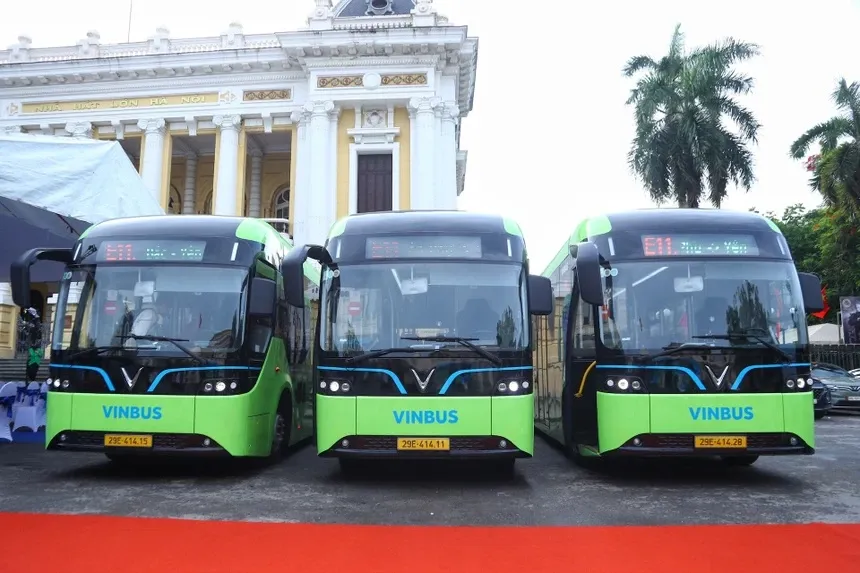
Electric sightseeing buses on route E11 at the opening ceremony in Hanoi. Photo: The Public Transport Management and Operation Center
Introduced on August 18, E11 buses operate from 7 AM to 6:12 PM, offering 112 trips per day at 12-minute intervals on Saturdays and Sundays.
From Tuesdays to Thursdays, there are 90 trips per day with 15-minute intervals, and 76 trips per day at 18-minute intervals on Mondays and Fridays.
The route is served by 10 electric buses, each capable of carrying 60 passengers.
It is the seventh electric bus route in Hanoi, increasing the total number of electric buses in the city to 108.
The project aims to ensure safety, reduce the use of personal vehicles, ease traffic congestion, and cut down pollution, said Dao Viet Long, Deputy Director of the Hanoi Department of Construction.
At the end of the year, authorities will review and adjust the service to reflect real demand, and ensure an effective, convenient service that attracts public use, he added.
As the new service is in line with Hanoi’s policies in building a green transport network, the construction department will help businesses remove bottlenecks in operations, Long added.
The key missions now include developing proper charging stations for people and transport firms, he said.
The launch of the new e-bus fleet reinforces Hanoi's ambition to develop a green transport sector, placing e-vehicles at the center of attention.
The city aims to replace all diesel-fueled buses with those running on electricity and green energy by 2030, according to Nguyen Hoang Hai, Vice President of the Hanoi Public Passenger Transport Association (HAPTA).
Green energy vehicles are an inevitable trend in the world, and Hanoi has planned to intensify the use of bicycles, motorcycles, and electric automobiles, and others running on compressed natural gas (CNG) and solar and wind energy.
Hanoi is now home to 154 bus routes, including 26 using green or clean energy vehicles. The city now operates 277 electric and clean CNG buses, accounting for 14% of the public transport fleet. Thousands of electric taxis, public bicycles, and electric bikes have been licensed in some downtown areas.
Hai told The Hanoi Times that green public transport makes it more appealing for people, and that it is a way to encourage Hanoians to switch from gasoline vehicles to electric ones.
"Hanoi needs a specific and detailed roadmap and policy, both in terms of raising people's awareness and building infrastructure, to develop green transport," he added.