Hanoi reviews infrastructure for green transition
The city aims to accelerate its green transport shift by reviewing vehicles and identifying sites for charging stations.
THE HANOI TIMES — Hanoi has asked all 126 communes and wards to count private cars and motorbikes, including those running on gasoline, diesel, or electricity to serve the city's shift to green transport.
Local authorities also need to survey households with home-charging capacity and identify sites for public charging stations.
The city prioritizes public land, vacant lots, or places with existing infrastructure. Preferred sites include public parking lots, government offices, cultural centers, local people’s committees, stadiums, shopping malls, bus shelters, and parks.
Charging points should be near residential areas, schools, markets, bus routes, or other high-demand zones. The deadline for completion is mid-August.
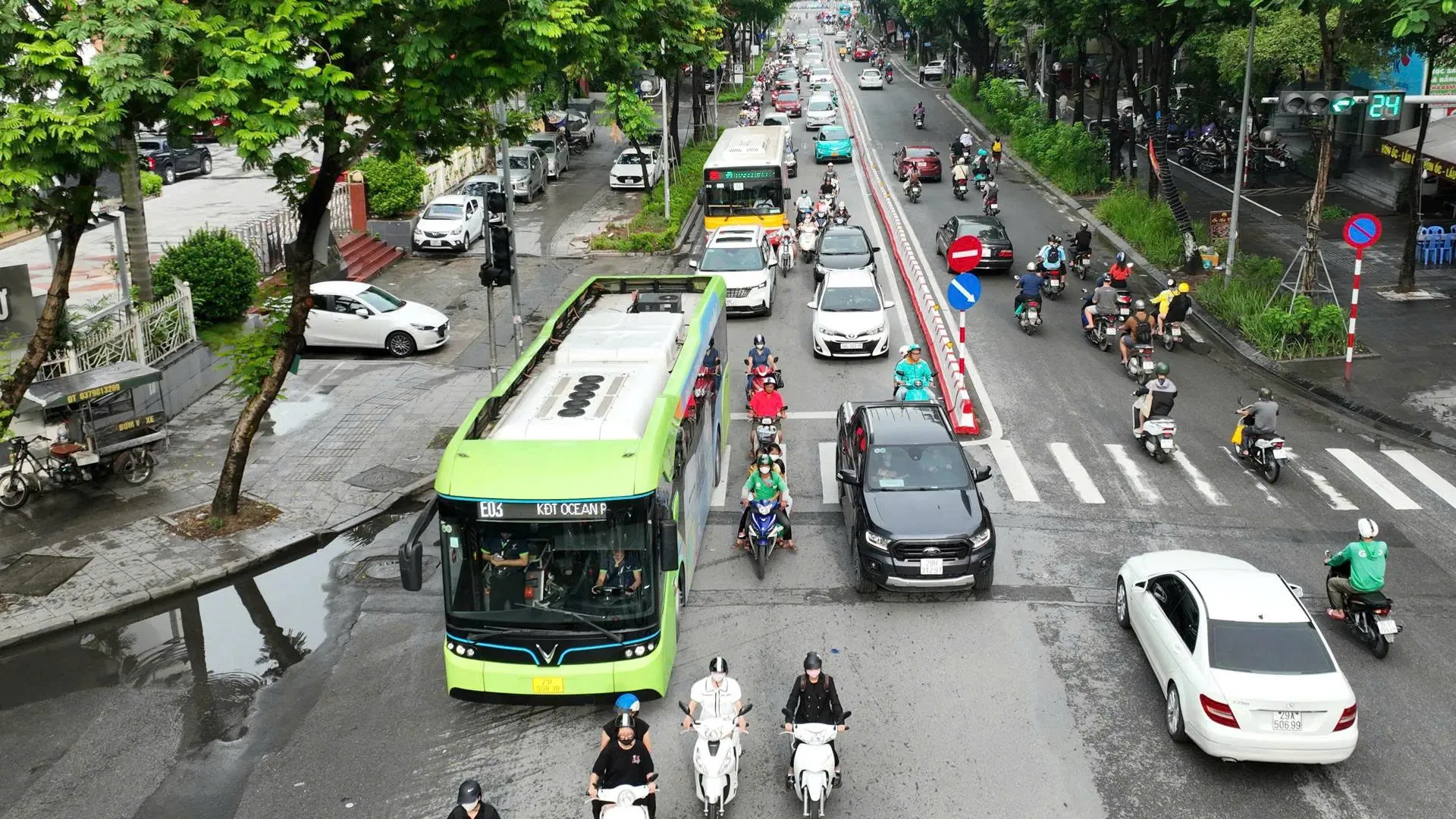
An electric bus operates on a Hanoi street. Photo: Pham Hung/The Hanoi Times
Authorities must also propose measures to implement the prime minister’s Directive No. 20 issued on July 12 that sets milestones: banning gasoline and diesel motorbikes inside Ring Road 1 by July 1, 2026.
From January 1, 2028, fossil-fuel cars will also face restrictions inside Ring Roads 1 and 2. By 2030, the rules will cover all personal fossil-fuel vehicles within Ring Road 3.
Following the directive, the city drafted a resolution on green vehicles and charging infrastructure. Of which, it considers subsidies for residents in low-emission zones who replace gasoline or diesel motorbikes (registered before the resolution takes effect).
For electricity vehicles worth at least VND15 million ($570)/each, each buyer is estimated to receive VND3 million ($114), while near-poor households get VND4 million ($152) and poor households VND5 million ($190). Each person can receive financial support for only one vehicle until 2030.
The city will also exempt all green vehicles from registration and license plate fees through 2030.
Hanoi has around 8 million motorbikes and nearly 1.5 million cars, and private vehicle numbers grow 4.5% annually. However, land for transport makes up only 12.13% of urban construction land, half the government’s target.
Parking space allocation remains below 1%, far short of the required 3% - 4%, underscoring mounting pressure on the city’s infrastructure and the urgency of shifting toward green transport solutions.