Ho Chi Minh City to replace 400,000 gas two-wheelers with electric ones by 2028
The plan is part of the city’s strategy to transition to a greener economy and slash emissions in Vietnam’s bustling economic hub.
THE HANOI TIMES — Ho Chi Minh City is mulling a plan to replace the 400,000 gas-powered motorbikes used by ride-hailing and delivery drivers with electric vehicles (EVs) by 2028.
The plan is part of the city’s Green Transformation Project for 2025-2030 and was drafted by the Ho Chi Minh City Institute for Development Studies (HIDS), in collaboration with Vin University and other stakeholders.
It targets motorbikes operated by drivers using platforms like Grab and Be.
These motorbikes are identified as the highest per-vehicle emitters due to their daily travel distances. They cover around 80-150 km daily, which is three to four times more than personal bikes. Transitioning to EVs could reduce CO2 emissions by 315,000 tons and fine dust emissions by 2,000 tons annually.

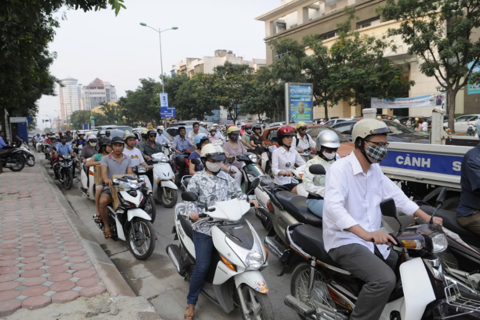
The HCMC drive targets motorbikes operated by drivers of ride-hailing and delivery services such as Grab, Be. Photo: Pham Cong/Kinh Te & Do Thi Newspaper
The plan outlines four phases, beginning in 2026 when 30% of gas bikes (120,000) will transition to EVs. Incentives for the transition include VAT exemptions, waived registration fees, and low-interest loans for drivers.
The percentage will increase to 50% by the end of 2026 and to 80% by December 2027. The goal is to achieve full electrification by 2028. By December 2029, gas-powered motorbikes will be banned from providing ride-hailing and delivery services.
To support drivers, many of whom are low-income freelancers, the proposal includes financial incentives, such as exemptions from VAT, registration fees, and license plate costs, as well as low-interest loans of no more than 6% annually.
Another focus is developing charging infrastructure.
Currently, Ho Chi Minh City has over 9.6 million vehicles, including 8.6 million motorbikes. These bikes contribute 29% of nitrogen oxides, 90% of carbon monoxide, and over 30% of particulate matter to the city’s air, according to the Center for Air Pollution and Climate Change Research at the National University of Ho Chi Minh City.
Without any intervention, transportation-related emissions could multiply by 2.6 times by 2030, reaching over 44 million tons of pollutants annually.
Therefore, the transition is critical to meeting Vietnam’s net-zero goals. If successful, Ho Chi Minh City’s plan could set a benchmark for urban green mobility not only in the country but also in Southeast Asia.
“The policy is designed in a way that ensures no one is left behind,” said Le Thanh Hai, director of the Economic Application Consulting Center at HIDS. “Its core objective is to control emissions and improve air quality in Ho Chi Minh City.”