Hanoi proposed delaying the roadmap for motorbike emissions inspections
The inspections are expected in 2027 for motorbikes manufactured before 2008.
THE HANOI TIMES — The Vietnam Register has proposed postponing the rollout of motorbike emissions inspections in several cities nationwide, including Hanoi and Ho Chi Minh City.

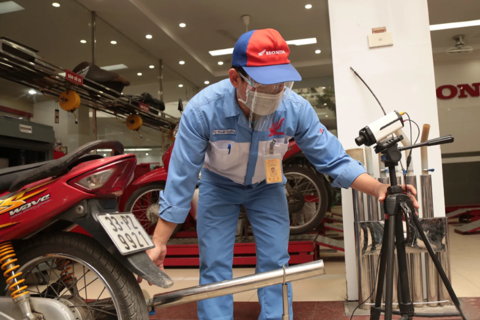
Motorbike emissions testing at a facility in Hanoi. Photo: Pham Hung/The Hanoi Times
The agency has expressed concerns about the feasibility of the Ministry of Agriculture and Environment's draft roadmap for the simultaneous launch of emissions inspections for all motorbikes in Hanoi and Ho Chi Minh City starting in January 2027.
The agency noted that the number of motorbikes in these cities far exceeds the capacity of existing inspection facilities, which could lead to severe congestion.
To address this issue, it has proposed a more gradual phasing-in of inspections. The inspections for all motorbikes is suggested starting on July 1, 2027 instead of January, with motorcycles manufactured before 2008. Bikes produced before 2016 would be subject to the move from July 1, 2029, and those produced before 2026 would be inspected from on January 1, 2032.
The same roadmap would apply to other subnational cities (Haiphong, Danang, Hue, and Cantho), but with a one-year delay. In other provinces, inspections would begin on January 1, 2029, for vehicles manufactured before 2008 and on January 1, 2031, for those produced from 2009 onward.
The Vietnam Register believes this adjusted roadmap will meet the demand for inspections nationwide during the first two years of deployment.
The roadmap aims to phase in tighter emissions standards in densely populated urban areas, giving residents time to repair, upgrade, or replace their vehicles. Lower-standard vehicles that no longer meet urban emissions requirements could operate in rural areas with less population density. When issuing emissions inspection certificates, testing centers must clearly state the met emissions standard so vehicle owners know where their vehicle is permitted to operate.
The agency also proposed that local authorities allocate resources to help low-income residents replace older vehicles that fail to meet standards.
The Ministry of Finance has been asked to introduce tax and fee incentives to help residents transition to cleaner vehicles and support the development of emissions inspection infrastructure.
Under the Ministry of Agriculture and Environment's previously proposed roadmap, emissions inspections were set to begin in Hanoi and Ho Chi Minh City on January 1, 2027; in Haiphong, Da Nang, Can Tho, and Hue on January 1, 2028; and in other provinces on January 1, 2030.
According to the Vietnam Register, Hanoi would require an additional 340 inspection stations and Ho Chi Minh City would require an additional 400, along with over 700 certified inspectors and 700 emissions analyzers, to meet the draft plan’s targets. However, the current shortage of qualified inspectors and lack of financial incentives for facilities to invest in equipment pose significant challenges. Moreover, implementing the software system to manage motorbike emissions inspections would take 12–18 months.
Currently, Vietnam has over 70 million motorbikes, including 19.7 million manufactured before 2008, 21.5 million from 2009 to 2016, and 23.5 million from 2017 to the present. Hanoi and Ho Chi Minh City account for the largest shares, with 5.6 and 8.6 million motorbikes, respectively.