

Hoan Kiem’s low-emission zone pilot sets stage for greener Hanoi
Hanoi plans to designate Low Emission Zones (LEZs) based on factors such as population density, air pollution levels, and traffic infrastructure
THE HANOI TIMES — Hoan Kiem, a core district of Hanoi, is piloting a Low Emission Zone (LEZ) to cut air pollution and promote sustainability, setting a model for other Vietnamese cities.
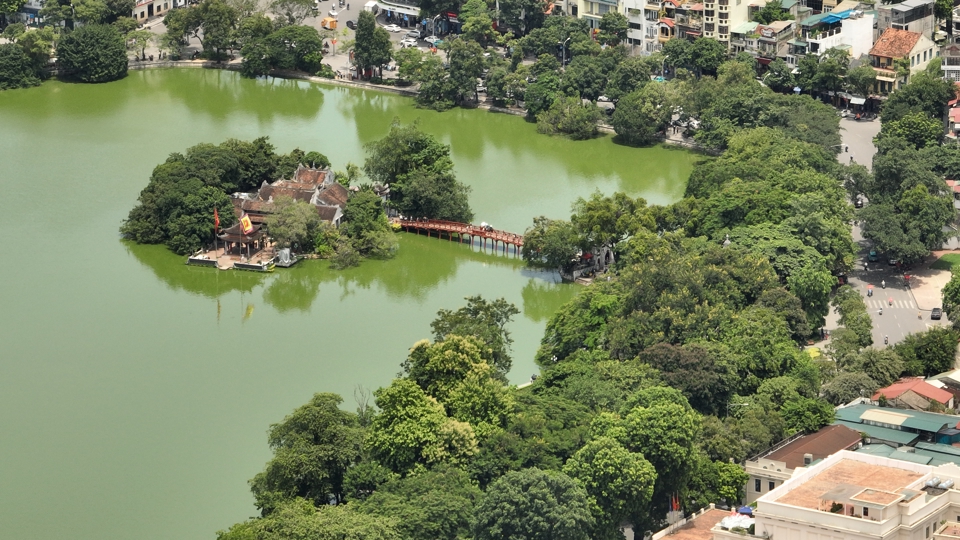
Hoan Kiem Lake from above. Photo: Pham Hung/The Hanoi Times
Hanoi, a city of more than 10 million people, suffers from severe air pollution, with the Air Quality Index (AQI) often reaching alarming levels, especially in winter. Reducing vehicle emissions is critical to improving air quality and protecting public health.
According to the Hanoi Department of Transport, there are some 9.2 million private vehicles in the city, including those registered in other provinces but frequently used in the capital. With nearly one vehicle per resident, including nearly 7 million motorcycles, traffic congestion and pollution have reached critical levels.
Solution for green urban city
Low Emission Zones (LEZs) are a proven solution in major cities around the world, imposing strict emissions standards on vehicles to reduce pollution. London's Ultra-Low Emission Zone (ULEZ) led to a 13% drop in CO₂ emissions from traffic, as well as improvements in PM2.5 levels. Similarly, cities such as Paris, Berlin, Seoul, and Amsterdam have successfully adopted LEZs that combine vehicle restrictions with incentives for greener transport.
Recognizing the urgency, Hanoi plans to designate LEZs based on factors such as population density, air pollution levels, and traffic infrastructure. Hoan Kiem District is a strong candidate due to its dense population, well-developed transport system, and accessibility to public transit. The pilot program will start in 2025 and run until 2030.
Nguyen Toan Thang, Head of Urban Management in Hoan Kiem District, explained that implementing an LEZ requires clear emission criteria, a monitoring system, and appropriate regulations.
"Hoan Kiem District is considering the Old Quarter and surrounding areas for the pilot LEZ because of several advantages," said Thang. "The existing weekend pedestrian zones, the presence of historical sites and tourism services that require reduced pollution, and the potential to connect major tourist areas using green transportation such as electric vehicles and public bicycles are the reasons why it is the place for the trial."
As Hanoi's central district, Hoan Kiem already has pedestrian zones around Hoan Kiem Lake and the Old Quarter, where motorized traffic is restricted on weekends. Public acceptance of these car-free spaces provides a solid foundation for expanding the LEZ measures, he added.
Moreover, Hoan Kiem is a major tourism and service hub, where improved air quality could enhance its appeal to visitors and businesses. The district's existing pedestrian infrastructure, signage, and enforcement mechanisms can support gradual traffic restrictions.
The official, however, noted that Hanoi has a large number of motorcycles, many of which are old and do not meet emission standards.
Restricting these vehicles could meet some resistance from residents and businesses that rely on motorcycles for daily transportation and deliveries. In addition, Hanoi's mass transit system remains inadequate, making it difficult for commuters to move away from private vehicles, he continued.
No one-size-fits-all model
Dr. Hoang Duong Tung, Chairman of the Vietnam Clean Air Network, told the Economic & Urban Newspaper that LEZs are not a "magic wand" but must be part of a broader strategy to tackle air pollution.
"International experience shows that the success of LEZs depends heavily on implementation. Proper understanding, careful design, and effective enforcement are essential. While the goal remains the same: to reduce pollution, there is no one-size-fits-all model," said Tung.
He suggested key measures such as motorcycle emission testing, incentives for switching to electric bikes, installing charging stations, subsidizing public transport fares, and expanding bicycle and electric scooter rental systems.
Tung added that Hanoi can learn from successful LEZ models in global cities. He mentioned Paris, which has been gradually expanding its LEZ since 2019, combining restrictions with incentives and prioritizing public engagement. London has set clear emissions standards while providing financial support for greener transportation options.
In Hoan Kiem, large trucks, trailers, and buses are already banned, and all vehicles, including cars and motorcycles, are prohibited in designated areas on weekends. Expanding the LEZ could involve additional traffic signage and time-based restrictions without requiring drastic changes.
"By leveraging existing policies and infrastructure, Hanoi can move towards a cleaner urban environment while balancing economic and social considerations," said Tung.







