Hanoi residents support bold 2026 ban on fossil fuel motorbikes
Hanoi residents back a bold new government plan to ban fossil fuel motorbikes by 2026 in the city center, hoping for cleaner air and quieter streets despite challenges ahead.
THE HANOI TIMES — Every morning, Le Thi Dong rides more than 10 kilometers from Da Sy Village in Ha Dong Ward to downtown Hanoi for work. But what troubles her most is not the traffic, it’s the thick and choking air.
“The smell of exhaust fumes from motorcycles and cars is everywhere,” said Dong. “It makes my chest feel heavy. I can’t imagine what long-term exposure is doing to our health.”
"Despite the high salary, I had to resign from my job. It wasn’t the accounting work that wore me down. It was the exhausting daily commute between home and the office," said Dong.
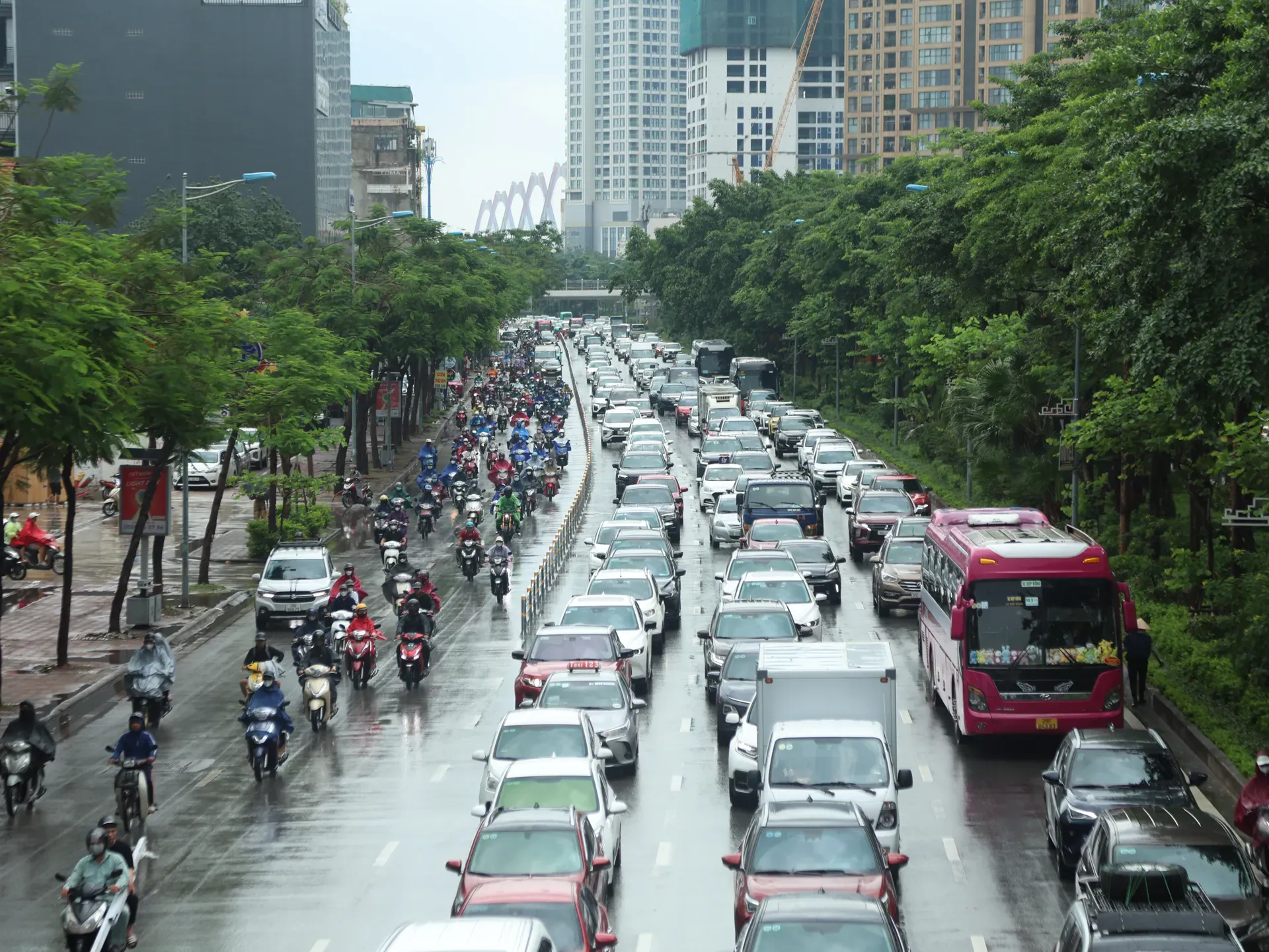
A section of Vo Chi Cong Street in Hanoi. Photo: Pham Hung
For millions like Dong, the air pollution in Vietnam’s capital is no longer just an environmental issue. It’s a daily struggle. That’s why many Hanoians are welcoming the government’s latest move to ban fossil fuel-powered motorbikes within the city’s inner Ring Road No.1 starting July 2026.
On July 12, Prime Minister Pham Minh Chinh signed Directive No. 20, calling for urgent and determined measures to address nationwide pollution . One of the directive’s most notable requirements is for Hanoi to draft and implement a plan to phase out gasoline and diesel motorbikes in its central core.
The directive states that Hanoi's air quality is among the worst in the world at certain times of the year, with dangerous concentrations of suspended particulate matter, especially PM2.5 and PM10. Meanwhile, the city’s rivers have consistently failed to meet safety standards for years.
Scientific data backs it up. According to a study by the National Institute of Occupational and Environmental Health, daytime noise levels at major traffic intersections in Hanoi range between 77.8 and 78.1 decibels, up to 8.1 decibels over the legal limit. At night, the noise levels spike even higher, in some areas exceeding the permissible threshold by up to 20 decibels.
For residents like Nguyen Xuan Tien, who lives in Dai Mo Ward, the motorbike ban is a welcome idea.
“Hanoi’s high urbanization and overwhelming traffic density are key contributors to environmental degradation,” he said. “Phasing out fossil-fuel motorbikes will definitely improve quality of life. If fees are also applied based on emissions, it could push people toward clean vehicles.”
However, Tien added that success will depend heavily on whether authorities can accelerate public transportation projects and ensure that financial support reaches people who need it.
“Banning gasoline-powered motorbikes is a bold move, but it has to be supported with viable alternatives. We need real investment in public transit and incentives for switching to electric vehicles,” said Tien.
Nguyen Hai Hung, a man from Thanh Xuan Ward, said the city has long discussed air pollution but rarely acted decisively. “This ban is a civilised step forward,” he said.
“It aligns with global trends. Tighter fees on fossil fuel vehicles will nudge people toward electric options and help change commuting habits,” said Hung.
Still, Hung cautioned that Hanoi must account for lower-income groups who rely on motorbikes as their main asset. “It’s important to ensure fairness. Electric vehicles are not cheap for everyone.”
From a policy perspective, the shift toward clean transportation would also allow the city to eliminate outdated, high-emission vehicles and better manage the number of newly registered vehicles. It’s a step toward the national goal of net-zero emissions by 2050.
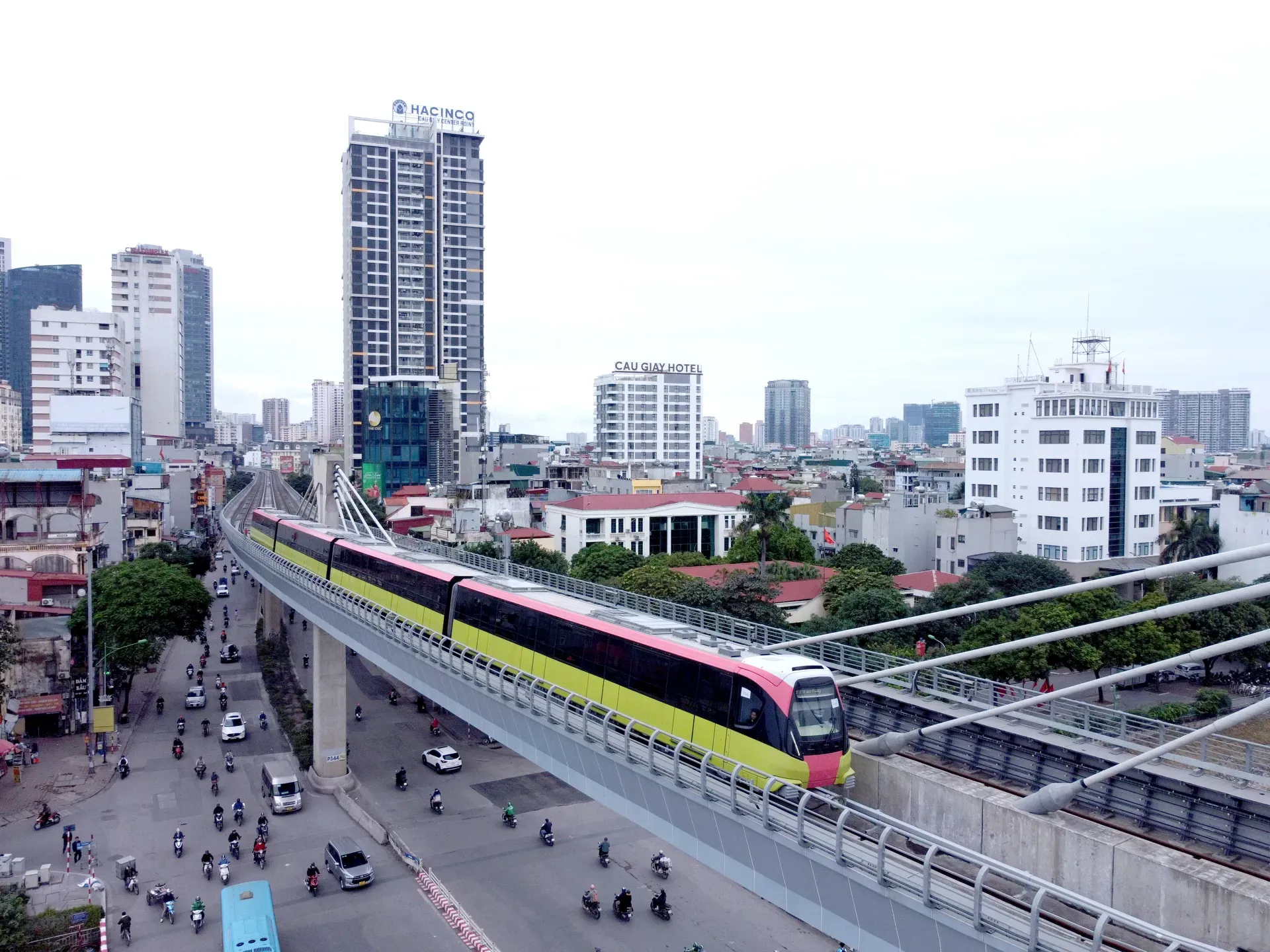
Hanoi has prioritized investment in public transportation and urban railway projects to ease traffic congestion and improve air quality. Photo: Thanh Hai
Speaking at a recent meeting with Chairman of Hanoi People’s Committee Tran Sy Thanh, Sayaka Arai, Chairwoman of the Vietnam Association of Motorcycle Manufacturers (VAMM), said that transitioning to clean vehicles is a major shift requiring consensus from all stakeholders.
Arai proposed Hanoi develop separate timelines for gasoline and electric vehicles. For petrol-powered bikes, she suggested stricter fuel consumption limits, Euro 4 emission standards, and mandatory emissions checks. For electric vehicles, she urged the city to start transitioning as early as 2030, with clear and feasible roadmaps.
According to Chairman Thanh, the issue of motorbikes must be viewed from multiple perspectives. However, he stressed that no city can develop in a modern and civilized way without a healthy environment and sound urban culture.
To address the issue, Hanoi’s People’s Council issued Resolution No. 04 in 2017, launching a long-term plan to manage private vehicles, reduce traffic congestion, and curb pollution through 2030.
Thanh said that countries including Japan and members of the European Union are currently supporting Hanoi’s efforts to expand public transportation. Under the city's 2030–2035 roadmap, Hanoi plans to construct about 10 urban railway lines.
For commuters like Dong, Tien and Hung, the coming shift marks a transportation change, representing hope for cleaner air, quieter streets, and a healthier city.
If supported with real infrastructure and inclusive policies, the morning rides of today, filled with smog and noise, could soon give way to a greener, quieter, and more breathable future.
|
Ring Road No.1 is a 7.2-kilometer closed-loop route connecting east to west through the heart of Hanoi. It passes through several of the city’s busiest administrative areas, including Cau Giay, Tay Ho, Ba Dinh, Hoan Kiem, Hai Ba Trung, and Dong Da, based on pre-merger boundaries. The route forms a traffic belt around the urban core, where both population and vehicle density are highest. Banning gasoline-powered motorbikes within this region is expected to significantly improve air quality and accelerate the transition to greener transport options. Following the July 2026 ban on fossil fuel-powered two-wheelers, further restrictions will be gradually introduced. Starting January 1, 2028, personal gasoline-powered cars will also be restricted within Ring Roads No.1 and No.2. By 2030, all personal vehicles running on fossil fuels will be banned from operating within Ring Road No.3. |