Hanoi to restrict fossil fuel two-wheelers next year
Starting in July 2026, Hanoi will restrict fossil-fueled motorbikes in the inner areas limited by Ring Road 1.
THE HANOI TIMES — Prime Minister Pham Minh Chinh on July 12 requested that the Hanoi authorities restrict fossil fuel-powered two-wheelers inside Ring Road 1 starting July 1, 2026.
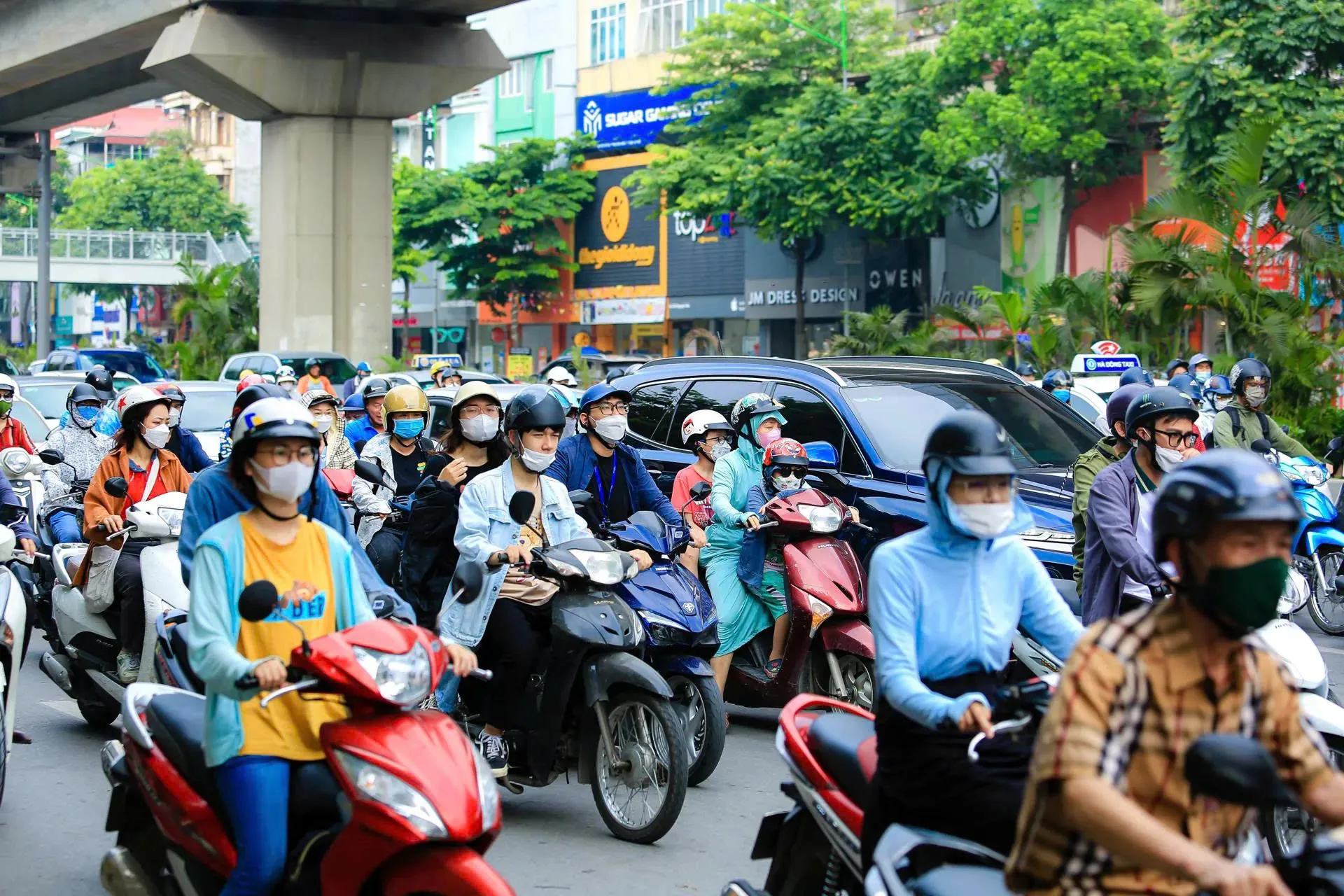
Gas-powered motorbikes on the streets of Hanoi. Photo: Hai Linh/The Hanoi Times.
By January 1, 2028, the restrictions will extend to the area inside Ring Road 2 and will target both motorbikes and private cars running on gasoline or diesel. By 2030, all personal vehicles running on fossil fuels will be banned inside Ring Road 3, or the metropolitan area.
The prime minister also asked Hanoi to release its low-emission zone plan by the third quarter of 2025. By 2030, the city must have a multimodal public transportation network covering major roads, densely populated areas, and transportation hubs.
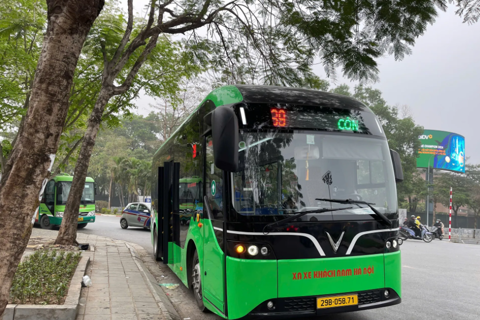
The city must also expand its charging infrastructure, clean energy vehicle services, electric bus, and metro fleets to encourage people to move away from private vehicles.
Moreover, the city needs to introduce policies that support the production and assembly of clean vehicles, while raising registration fees and parking charges for fuel-powered vehicles in central areas.
Hoang Duong Tung, Chair of the Vietnam Clean Air Network, said Hanoi needs a swift implementation plan focusing on public education and financial support for the millions of people affected by the transition.
At a June meeting with the Vietnam Motorcycle Manufacturers Association, Hanoi Mayor Tran Sy Thanh said that all parties involved cannot delay the enforcement of low-emission zones any longer.
"We must move forward with restricting gasoline motorbikes," he said. "We cannot afford to wait; we must start with motorbikes and then look at cars."
Chairman Thanh insisted that Hanoi cannot become a modern, civilized city with a clean environment and high cultural standards if it continues to rely heavily on motorbikes.
According to the city's transportation master plan, Hanoi is expected to have seven ring roads by 2030, with Ring Road 1 being the innermost and encircling the city center.
Currently, Hanoi has around eight million vehicles, including nearly 1.5 million cars. Private vehicle ownership is growing by 4.5% annually, while car ownership is growing by about 10%.
In 2017, the Hanoi People’s Council approved a resolution supporting restrictions on fuel-powered vehicles. However, delays in infrastructure development and inconsistent policies have stalled enforcement.
On December 12, 2024, the council passed a new resolution on low-emission zones, which will take effect on January 1, 2025. The resolution restricts or bans heavy diesel trucks and cars that fail to meet Euro 4 emission standards, as well as motorbikes with emissions below Level 2, in designated low-emission areas.
The city plans to pilot low-emission zones in the Hoan Kiem and Ba Dinh districts from 2025 to 2030 and then expand coverage. By 2036, all areas where air quality fails to meet national standards will be required to implement low-emission zones.
During this period, Hanoi aims to have 100% of its buses and taxis run on electricity or green energy. All bus terminals and rest stops must meet "green" standards. The city will also replace all fossil fuel–powered loading and unloading machinery with clean or renewable energy sources.
Residents and businesses in low-emission zones will have 12 months to switch to compliant vehicles. The city is working to expand the public charging network to serve residents and businesses.
To support this transition, Hanoi is accelerating its preparations for electric vehicle infrastructure. By 2030, all public buses are expected to be powered by electricity or green energy.
The Hanoi Department of Construction has been tasked with developing charging stations at bus terminals, parking lots, residential areas, and public rest stops. The Hanoi Power Corporation will ensure a stable electricity supply for the charging network.
Several major cities around the world have already banned fossil fuel motorcycles. Beijing and Shanghai have done so for years. The European Union plans to ban the sale of gasoline vehicles by 2035. Indonesia has mandated that 20% of two-wheelers be electric by 2030.
How can people in Hanoi switch to green vehicles?
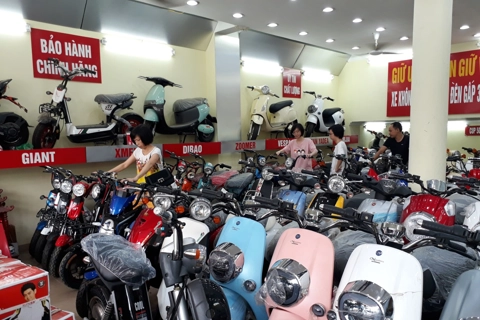
For many Hanoi residents, the benefits of using electric vehicles are obvious: no fuel costs, cheaper charging, cooler engines, and greater comfort.

An electric bus on a Hanoi street. Photo: Pham Hung/The Hanoi Times
According to transportation expert Hoang Son, who spoke to the online newspaper Dan Viet, an extended transition period, subsidies, old-vehicle exchange programs, encouragement to purchase electric vehicles, and an expanded charging network are all important components of a gasoline motorbike ban.
Son suggested offering tax incentives and subsidies for electric motorcycles, implementing buyback programs for old gasoline models, and providing support for companies that build charging and battery swap stations.
“The question is no longer whether fossil fuel bans are needed, but rather, when and how to ensure that no one is left behind during the shift,” he said.
Automotive expert Nguyen Manh Thang, Director of Whatcar Vietnam, pointed out that Beijing used to be one of the most polluted cities in the world.
However, strong leadership and strict policies, such as banning high-emission vehicles from inner-city areas, helped turn things around.
"Some localities only allow electric vehicles inside their urban areas," he added.
Tran Huu Minh, Head of the National Traffic Safety Committee Office, stated that Hanoi and Ho Chi Minh City experience poor air quality for more than half the year.
The Ministry of Agriculture and Environment reports that motorbikes make up 87% of all vehicles in major cities and contribute significantly to fine dust (PM2.5), nitrogen oxides, and hydrocarbons - pollutants linked to respiratory and cardiovascular diseases.
A 2024 World Health Organization report listed Hanoi as one of the ten most polluted cities in Southeast Asia, citing personal vehicles as the main contributor.
Other pollution sources include construction, crop burning, and industrial activity. However, transportation accounts for 50%-60% of overall emissions, according to Minh.
Vietnam currently has 77 million registered vehicles. With a population of 100 million, this translates to roughly 770 motorbikes per 1,000 people.