Hanoi plans monetary incentive for electric motorbike swap
The city plans to reduce air pollution and accelerate its transition to green transportation by offering incentives, investing in infrastructure, and implementing progressive vehicle bans.
THE HANOI TIMES — Individuals who trade in their gasoline motorbikes for electric models valued at VND15 million (US$573) or more may receive up to VND3 million (US$115) in financial support, according to a proposal from the municipal Department of Construction.

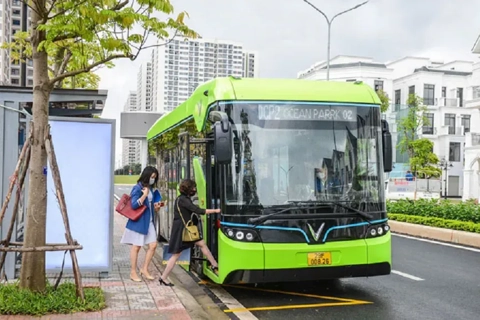
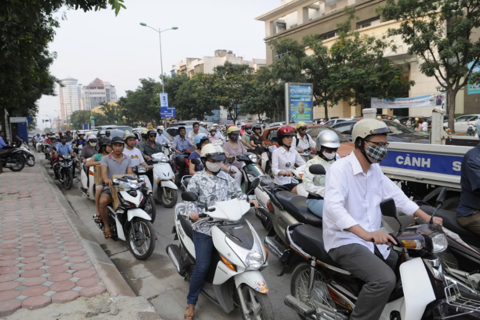
Hanoi set to offer a range of incentives for locals to switch to e-motorbikes. Photo: Pham Cong/The Hanoi Times
The move is intended to encourage residents to switch from gasoline-powered to electric motorcycles as part of the city’s strategy to promote green transportation and reduce urban air pollution.
The draft policy proposes higher levels of support for near-poor and poor households: VND4 million ($153) and VND5 million ($192), respectively. Everyone will be eligible for support for one vehicle until the end of 2030.
It also suggests waiving 100% of registration fees and license plate charges for green vehicles from the policy's effective date until the end of 2030.
Hanoi plans to complement these incentives with additional financial and regulatory measures to support the green transition by offering preferential loans to transport companies, vehicle recyclers, and logistics operators. These loans would carry interest rates between 3% and 5% annually, cover up to the full contract value, and offer repayment terms of up to five years.
As part of the city’s roadmap for low-emission zones, Hanoi plans to phase out gasoline and diesel vehicles in core urban areas.
From January to June of 2026, the city will pilot limits on gasoline-powered motorbikes. Starting in July 2026, gasoline motorbikes will be banned inside Ring Road 1. This ban will then expand to Ring Road 2 in 2028 and Ring Road 3 in 2030.
Petrol and diesel cars will also be restricted in these areas starting in 2028. Full restrictions on all personal fossil fuel vehicles within Ring Road 3 will be implemented based on practical conditions determined by the city government.
Between 2035 and 2050, the city will gradually tighten restrictions on all non-green vehicles, including CNG and hybrid models. This process will begin with Ring Road 1 and expand outward, covering the entire city by 2050. To support these efforts, Hanoi plans to implement congestion charges and adjust parking fees for vehicles with high emissions.
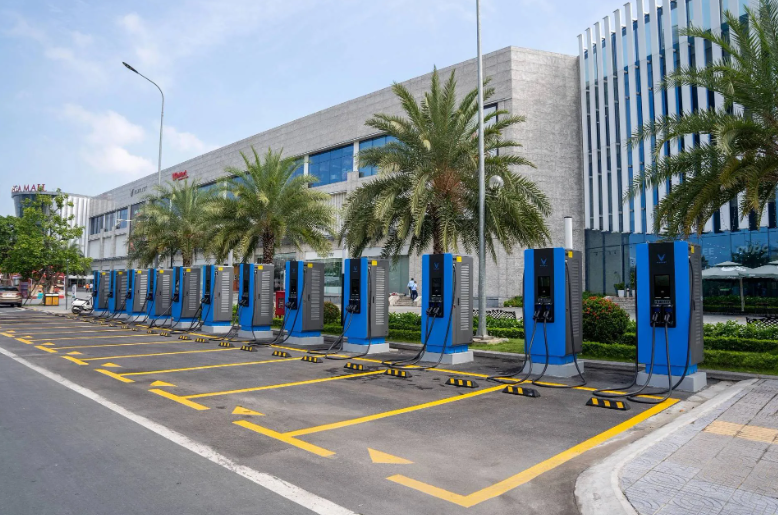
A Vinfast's charging station. Photo: Vinfast
More charging stations to be installed
By the end of 2026, all existing buildings must allocate at least 10% of their parking spaces for electric vehicle (EV) chargers, and new developments must ensure that at least 30% of their parking spaces are equipped for EV charging.
Hanoi will boost public charging infrastructure by subsidizing 70% of loan interest for five years and offering up to 50% land clearance cost support, plus full land rent exemptions for projects with at least 30% of spaces equipped with chargers.
Hanoi plans to prioritize sidewalk EV chargers, promote hydrogen and clean fuel stations, and offer land access with full rental exemptions through 2033 to investors in clean transport infrastructure via public-private partnerships.
Hanoi is committed to building synchronized technical and transportation infrastructure to support the transition to clean energy.
Meanwhile, the Department of Construction is developing detailed guidelines to ensure the new policy is implemented effectively and the incentives are delivered properly.
The draft resolution will be submitted first to the Hanoi People’s Committee and then to the municipal People’s Council for review and approval at the September 2025 meeting.
Once adopted, the city will issue a detailed implementation plan that assigns clear responsibilities to relevant departments in areas such as financial support, fee adjustments, decommissioning old vehicles, enforcement, and investing in charging stations.
These actions align with Directive No. 20, issued by Prime Minister Pham Minh Chinh on July 12, which mandates a progressive ban on gasoline motorcycles in Hanoi. The ban will begin with Ring Road 1 in 2026, expand to Ring Road 2 in 2028, and encompass Ring Road 3 in 2030. After that, restrictions will also apply to gasoline and diesel cars.
With 6.9 million motorbikes, including 70% of them outdated and gasoline motorcycles responsible for up to 60% of air pollution, Deputy Chairman of the municipal People's Committee Duong Duc Tuan said the city’s transition to green transport is urgent.