Hanoi prioritizes funding for green transport transformation
Hanoi pledges to prioritize investment in clean transport, including electric buses and taxis, while tackling infrastructure and policy challenges in its push for a greener capital.
THE HANOI TIMES — Hanoi will push forward with its transition to green transportation, with local authorities affirming their commitment to prioritize investment in electric vehicles despite budget constraints.
Vice Chairman of the Hanoi People’s Committee Nguyen Manh Quyen said the city is ready to allocate necessary resources but stressed the importance of collective determination from local departments and residents.
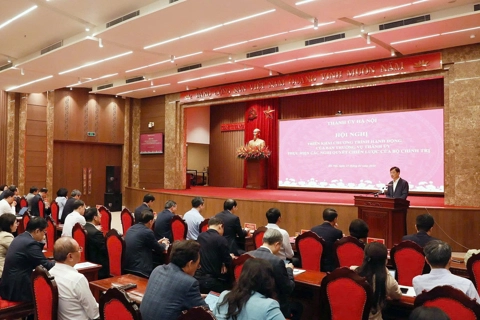
Speaking at a July 16 meeting with the city’s government agencies and transportation firms, Quyen reaffirmed Hanoi's proactive approach to green mobility, citing major steps already taken to electrify the city’s bus fleet.
“Public and private operators are participating in the transition,” said Quyen.

Vice Chairman of the Hanoi People’s Committee Nguyen Manh Quyen speaks at the conference. Photo: kinhtedothi.vn
According to Dao Viet Long, Deputy Director of the Department of Construction, Hanoi has already surpassed its green bus targets for 2026 and aims to complete the full transition by 2030.
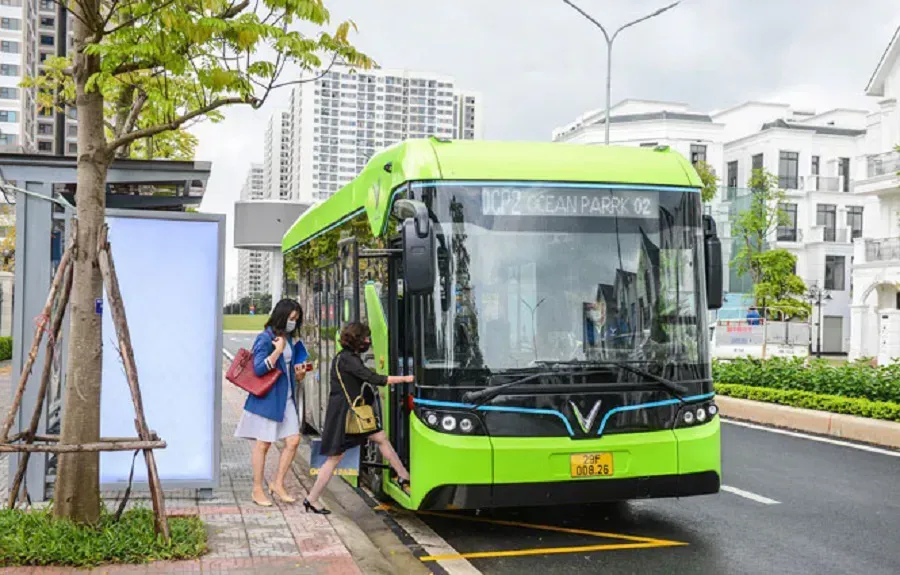
“The city has issued policies supporting businesses converting to electric or clean energy buses, expanded charging networks, and constructed charging stations across the city,” said Long.
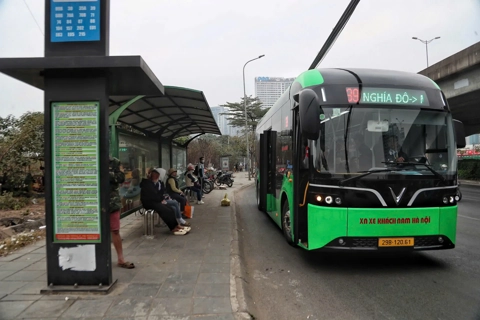
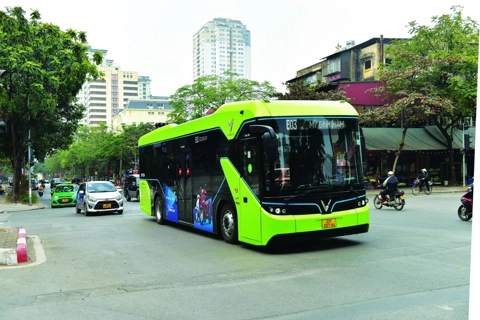
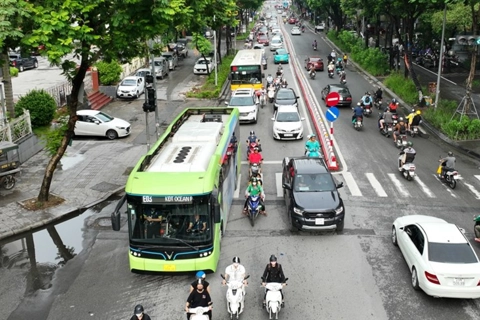
By the end of 2025, 10 percent of the bus fleet is expected to be electric or clean energy-powered. That share is projected to grow to 20–23 percent in 2026, 34-39 percent in 2027, 47-54 percent in 2028, 79-89 percent in 2029, and 100 percent by 2030. As of mid-2025, six electric bus routes are operational, representing 12.86 percent of the fleet.
Long said electric taxi conversion is also underway in the city, where is home to 65 taxi firms with a combined 18,612 vehicles. By the end of June 2025, 47.4 percent (8,831 taxis) had switched to electric. Twenty-three firms have submitted plans to fully transition their fleets by 2030.
“These transitions show high commitment from the private sector, but continued support is needed in terms of policy and access to finance,” he added.
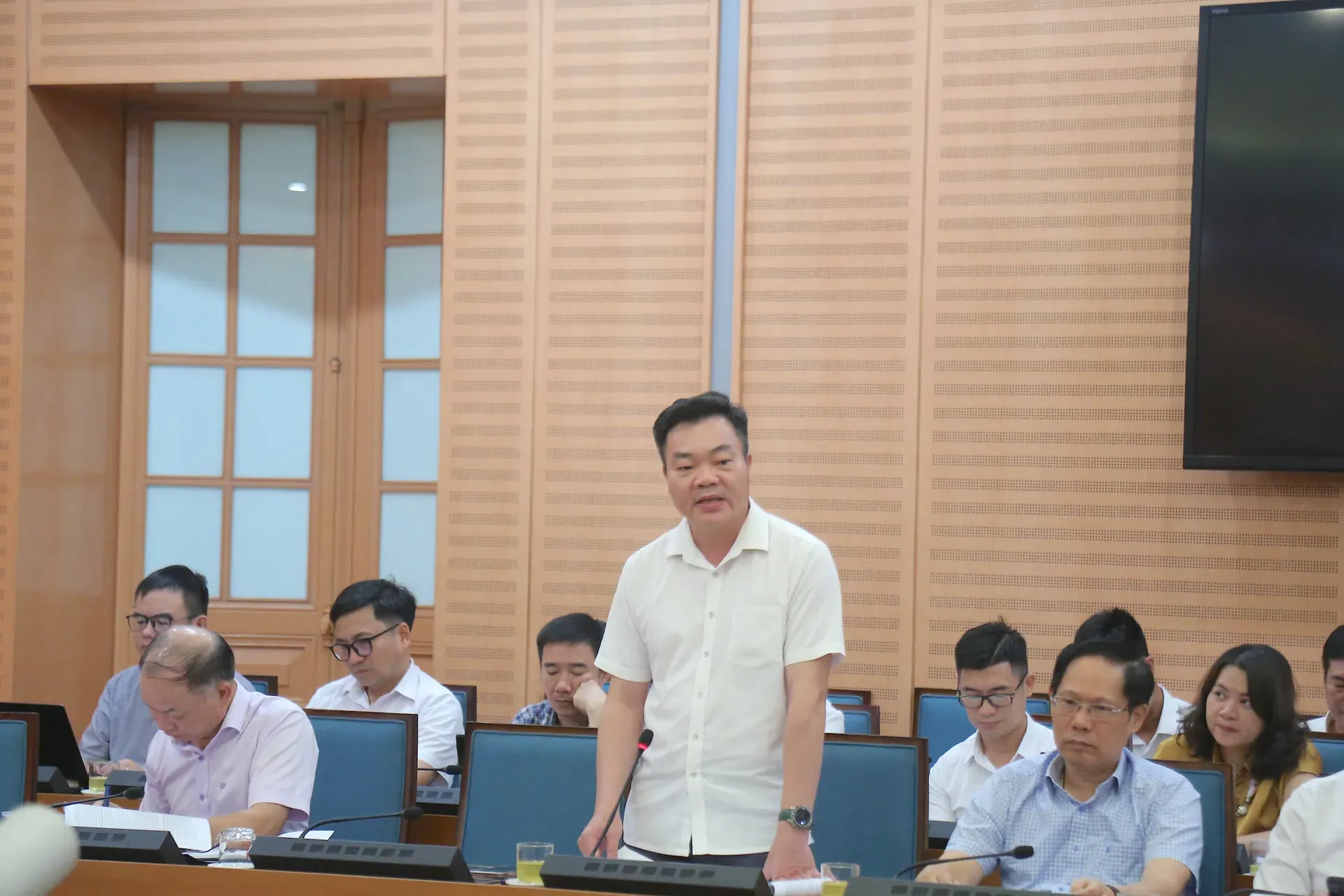
Dao Viet Long, Deputy Director of the Department of Construction.
To support the shift, the Department of Construction is drafting a resolution on clean energy transport policy, aligned with the revised Capital Law. The resolution includes mechanisms for financial incentives, regulations to limit high-emission vehicles, and development plans for green infrastructure.
Officials noted persistent challenges, particularly high investment costs and the uneven distribution of charging stations. Many neighborhoods in Hanoi either lack enough public charging points or have surplus capacity that goes unused.
Vice Chairman Quyen said that charging station development must be planned in sync with demand, and the infrastructure needs to be deployed ahead of mass adoption.
Nguyen Thanh Nam, CEO of the Hanoi Transport Corporation, said that his company has already invested VND320 billion to deploy four electric bus lines and is working on building 70 charging stations.
He told the conference that the company's peak implementation year will be 2027, with the full transition targeted by 2030. However, he raised concerns over management challenges. “At present, software systems of charging stations are still controlled by manufacturers, limiting operational transparency for transport firms.”
Nam proposed that the city quickly issue standard pricing frameworks for electric vehicle services to help companies plan effectively. He also urged the government to introduce favorable loan terms or funding programs to help firms afford the upfront costs of transitioning fleets.
Speaking at the conference, a representative from the Hanoi Electricity Corporation confirmed that electricity supply is currently stable and meets demand. However, as more vehicles switch to electric, grid load balancing and distribution planning will be increasingly critical. “A comprehensive district-level charging station roadmap is necessary to ensure an efficient supply,” he said.
In addition to electrifying buses and taxis, Hanoi is planning to convert motorbikes as part of its long-term roadmap. The Department of Construction was assigned to study route adjustments and develop a comprehensive scheme to modernize public transportation networks in tandem with the vehicle transition.
Other green transport policies are under consideration, including restrictions on polluting vehicles and incentives for clean-energy alternatives. This includes studying financial subsidies, credit programs, and mechanisms to reclassify land use for charging station construction. The city is also working to align its efforts with national digital transformation and sustainability goals.
Vice Chairman Quyen concluded the meeting by praising the proactive efforts of city departments and businesses but stressed the urgency of a citywide master plan for the green transition.
“A coordinated and inclusive approach is required, with buy-in from political leaders, businesses, and citizens alike,” said Quyen.
"Charging infrastructure must be built ahead of demand," said Quyen. "Despite budget pressures, Hanoi is determined to lead the shift to clean urban transport. Our success depends on early planning, flexible regulations, and public engagement."
While financial constraints remain a hurdle, the city has made clear that green transport will be a budget priority moving forward. The shift represents not only an environmental goal but also a commitment to a more livable and sustainable Hanoi in the years ahead.