Hanoi removes barriers to green transport
THE HANOI TIMES — Hanoi aims to have a green transport system by 2030, with 100% of the capital's buses running on electric or green energy by 2035, according to Nguyen Hoang Hai, Vice President of the Hanoi Public Passenger Transport Association (HAPTA).
Green energy vehicles are an inevitable trend in the world, and Hanoi is no exception, with a vision to intensify the use of bicycles, motorcycles, electric cars, CNG (compressed natural gas) vehicles, and vehicles powered by solar and wind energy.
The capital city currently operates 277 electric and clean CNG buses, accounting for about 14% of the public transport fleet, and licenses thousands of electric taxis, public bicycles, and electric bikes in some downtown districts.
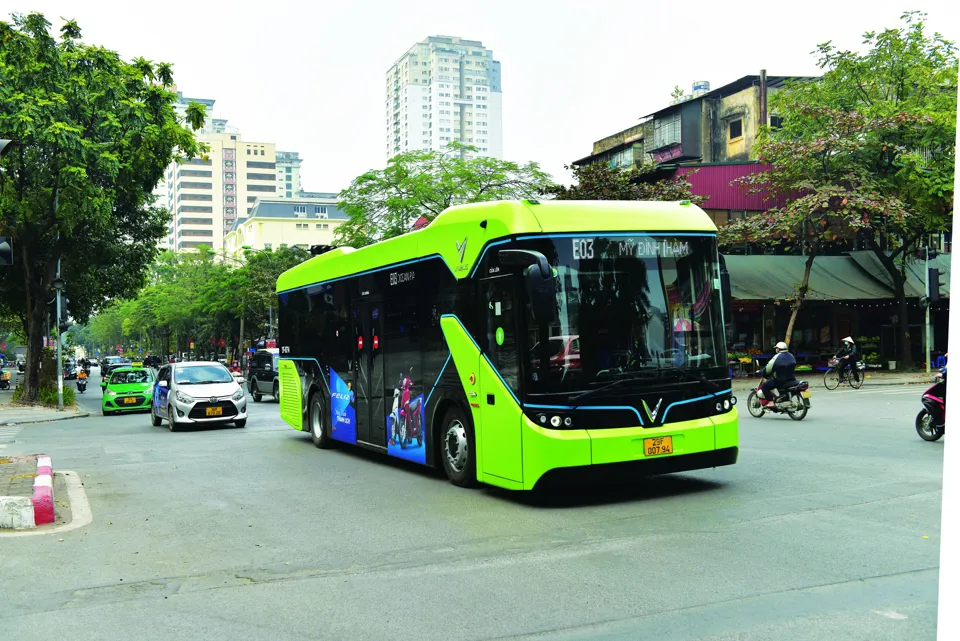
Electric bus line No.03 in Hanoi. Photos: Pham Hung/The Hanoi Times
In addition, Hanoi's first and second metro lines (Cat Linh - Ha Dong and Nhon - Hanoi Station metro), which were put into service in 2021 and 2024 respectively, have contributed to reducing emissions.
Hai told The Hanoi Times that green public transport makes it more appealing for people to eventually give up their private vehicles.
He stressed that Hanoi needs specific and detailed roadmap and policy, both in terms of raising people's awareness and building infrastructure, to develop green transport.
The Action Program on Green Energy Conversion and Reduction of Carbon and Methane Emissions from the transport sector was approved by the Government of Vietnam on July 22, 2022. The program aims to develop green transport and achieve net-zero greenhouse gas emissions by 2050.
For Hanoi, the program has set a specific roadmap that by 2025-2030, all new or replacement buses will be powered by green energy, and the share of public transport in Hanoi will reach 45-50%. At least 50% of vehicles will run on electric or green energy, and 100% of new or replacement taxis will be electric. By 2050, all buses and taxis will be electric or green energy vehicles.
"Over the next 30 years, the central and local governments will invest heavily in green bus charging infrastructure," the official said.
Public agencies and businesses in Hanoi need to take the lead in the movement to get rid of gasoline-powered vehicles and use bicycles, electric buses, sky trains, electric motorcycles, and cars," he added.
Encouraging investment
According to Phan Truong Thanh, Head of Planning and Finance of the Hanoi Department of Construction, the biggest hurdle to the goal of greening the city's bus fleet is the huge amount of capital. "A policy is needed to mobilize all local and international, state and private resources, as green energy buses are much more expensive than gasoline and diesel vehicles," he said.
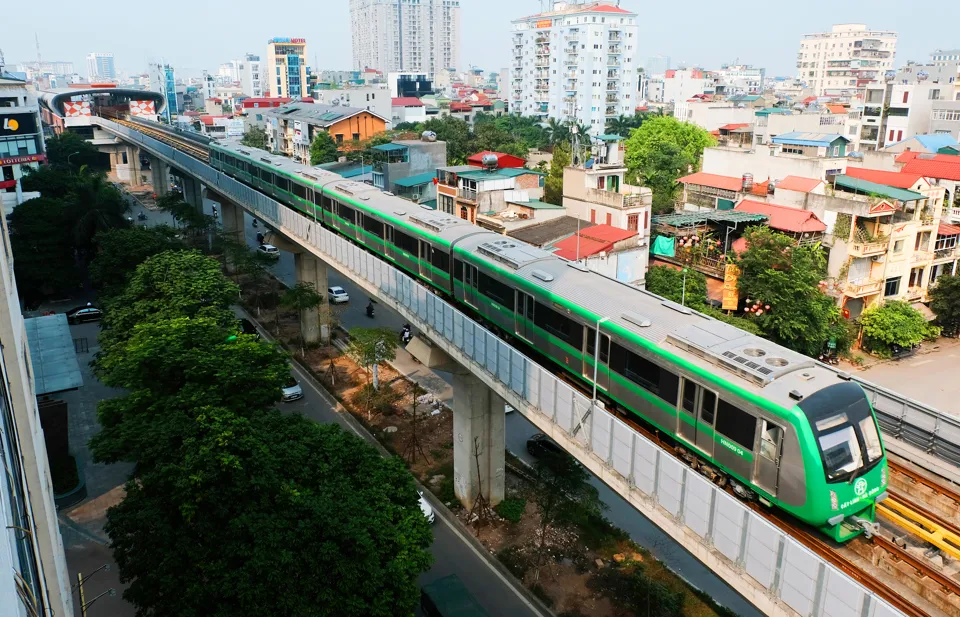
The Cat Linh - Ha Dong urban railway, Hanoi’s first metro line.
"Hanoi is seeking over $2 billion to green its bus system, with nearly $1.5 billion expected to come from the city budget and the rest from private enterprises," Thanh told the Economic & Urban Newspaper.
Nguyen Manh Quyen, Vice Chairman of the Hanoi People's Committee, said there must be mechanisms and policies to encourage people and economic sectors to participate in the transition to green energy vehicles.
The official emphasized that the development of the city's infrastructure network gives top priority to green and environmentally friendly transportation.
"These goals are in line with the national green growth strategy, which aims to promote the greening of various sectors, including transportation," Quyen said.
Hoang Thi Thu Phuong, an expert in economic management, noted that the transition from fossil fuel vehicles to those powered by renewable energy and electricity remains a key part of the country's quest for sustainable development.
"However, a major challenge is the high cost of electric vehicles. To address this, two approaches are needed: improving technology, especially battery technology, to reduce production costs and vehicle prices; and providing financial resources to support domestic manufacturers so that more money can be invested in infrastructure, technology, and services for electric vehicles," Phuong said.
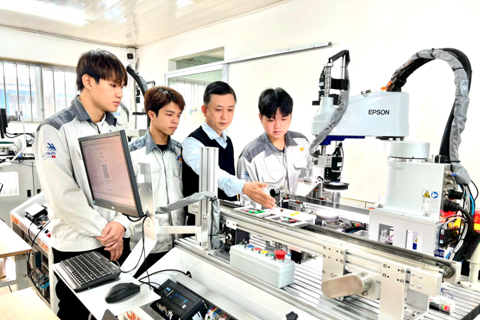
She pointed out that human resources are a crucial prerequisite for the development of green buses. "To be prepared for the transfer, management and operation of new technologies in infrastructure and green energy buses, Hanoi needs to train and build the capacity of its current human resources in the sector," Phuong suggested.