Air pollution control in Hanoi hinges on correct diagnosis, experts warn
Air quality must be viewed as a long-term and costly challenge rather than a problem that can be solved quickly.
THE HANOI TIMES — As haze is seen across parts of Hanoi, city officials and experts say accurately identifying pollution sources is the decisive first step to cleaning the capital’s air, cutting costs and avoiding unintended consequences.
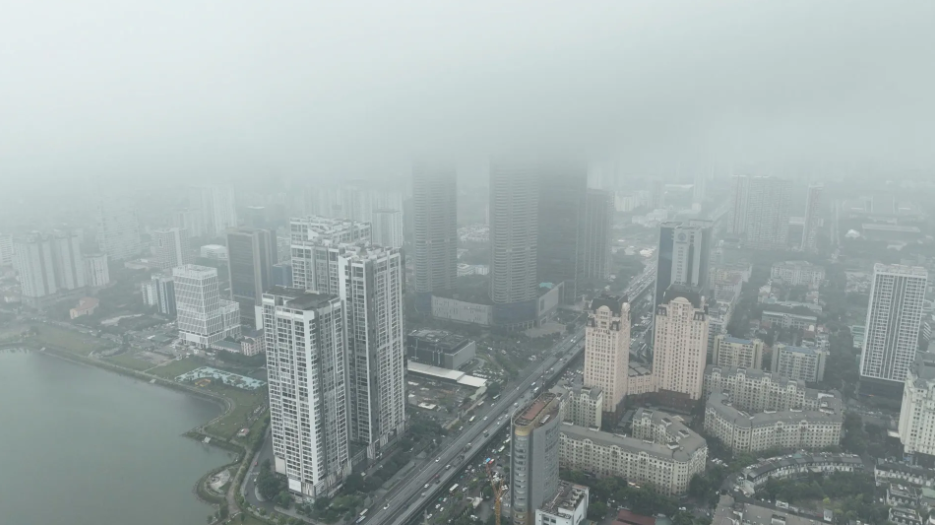
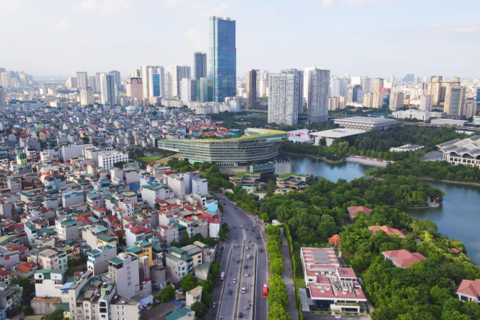
Haze blankets Hanoi’s skyline on recent mornings. Photo: Cong Hung/The Hanoi Times
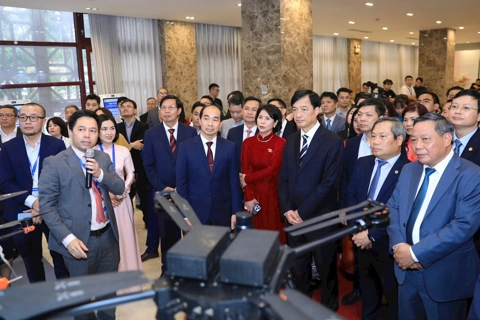
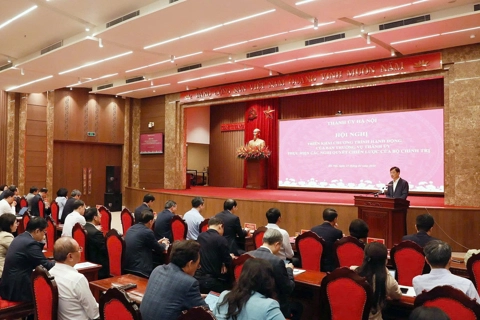
Director of the Hanoi Department of Agriculture and Environment Nguyen Xuan Dai shared the view during a meeting discussing measures to tackle air pollution in the city on December 19.
A department report showed that air pollution in the capital has become increasingly severe, with pollution episodes lasting longer in both hours and days, particularly from November through April of the following year.
The largest sources of emissions are vehicle exhaust and road dust, which together account for more than 50% of PM2.5 concentrations. Industrial emissions follow, contributing an estimated 14% - 23%.
Modeling calculations indicate that about 58.65% of primary PM2.5 originates from sources within Hanoi, while the remainder is influenced by neighboring provinces and cross-border transport. This highlights the urgent need for interprovincial coordination in air pollution control efforts.
The department is currently carrying out a comprehensive emissions inventory project and expects to complete it in the first quarter of 2026.
Dai said that the city has achieved several notable results in controlling air pollution sources in recent years. These include the elimination of honeycomb coal stoves, the removal of manual brick kilns and an estimated 80% reduction in the open burning of straw and agricultural byproducts.
"The livestock sector has undergone a significant shift to reduce emissions, with a move away from large-scale commercial farming toward breeding production and the development of experiential and ecological agriculture," said Dai.
Household waste treatment has also seen major progress with the operation of large waste-to-energy plants such as the Soc Son facility and the Seraphin plant.
Two additional waste-to-energy plants are planned in Soc Son and Son Tay and once completed, the city expects nearly all household waste to be treated by 2028, Dai said.
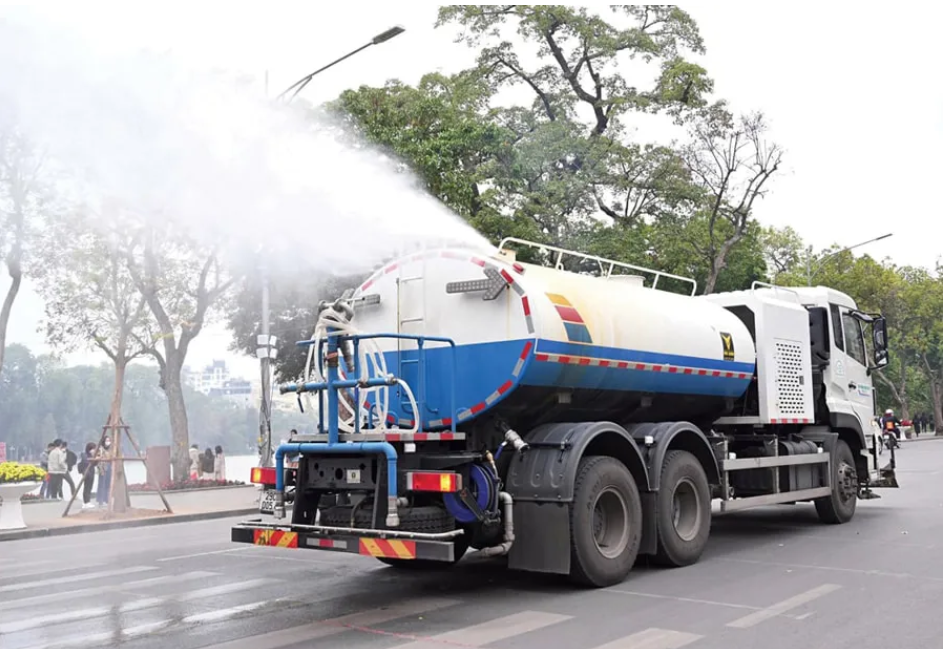
Hanoi Urban Environment One Member Limited Liability Company (Urenco) uses mist-spraying vehicles to reduce fine dust levels in the air. Photo: Urenco
Right diagnosis needed
Speaking at the meeting, Professor Hoang Xuan Co, Head of the Science Committee of the Vietnam Environmental Economics Association, outlined key tasks Hanoi should prioritize through 2030 to achieve its air quality goals.
These include fundamental research to clarify pollution levels and characteristics, comprehensive emissions inventories and databases, completion of a standardized monitoring system and rigorous evaluation of the effectiveness of measures already implemented.
He stressed that air quality must be viewed as a long-term and costly challenge rather than a problem that can be solved quickly.
“While significant funding mechanisms exist for water quality, there remains no clear financial framework dedicated to air quality management,” he said.
Hoang Duong Tung, Chairman of the Vietnam Clean Air Network, questioned why air pollution remains severe despite measures that have been in place for many years. He said it is time for breakthrough solutions.
He also underlined the critical role of grassroots authorities such as wards and communes in protecting Hanoi’s air quality.
Air pollution remains a concern mainly at the city and departmental levels and responsibility at the ward and commune level needs to be clearly defined.
Beyond accountability, Tung said greater investment is needed in air pollution research.
With many major universities and leading environmental experts based in Hanoi, the city could partner with academic institutions to conduct in-depth studies on environmental protection and air quality, citing Beijing’s model of assigning research tasks to Tsinghua University while managers focus on governance.
Acknowledging the experts’ views, Director of the Agriculture and Environment Department Nguyen Xuan Dai said their contributions are important for the city’s professional agencies to review and incorporate as they refine appropriate solutions for protecting Hanoi’s air environment.
“The city can only cure the problem once it correctly diagnoses the causes, identifies the right remedies, minimizes costs and avoids unintended side effects,” he said.
Based on the meeting outcomes and expert input, the department will consolidate recommendations to advise the municipal People’s Committee on deploying both urgent and long-term measures to improve air quality across the capital.