Hanoi plans 1,200 schools to boost education access by 2050
Tran The Cuong, Director of the Hanoi Department of Education and Training has pledged to upgrade specialized classrooms, foreign-language rooms and physical-education facilities so that 90% of public schools in Hanoi will meet national standards.
THE HANOI TIMES — Facing rising student numbers and crowded classrooms, Hanoi is launching a major school-building program, aiming to construct more than 1,200 new schools by 2050 to improve learning conditions and expand access across the capital.
The program includes 884 preschools, 567 primary schools, 519 lower-secondary schools and 140 upper-secondary schools.
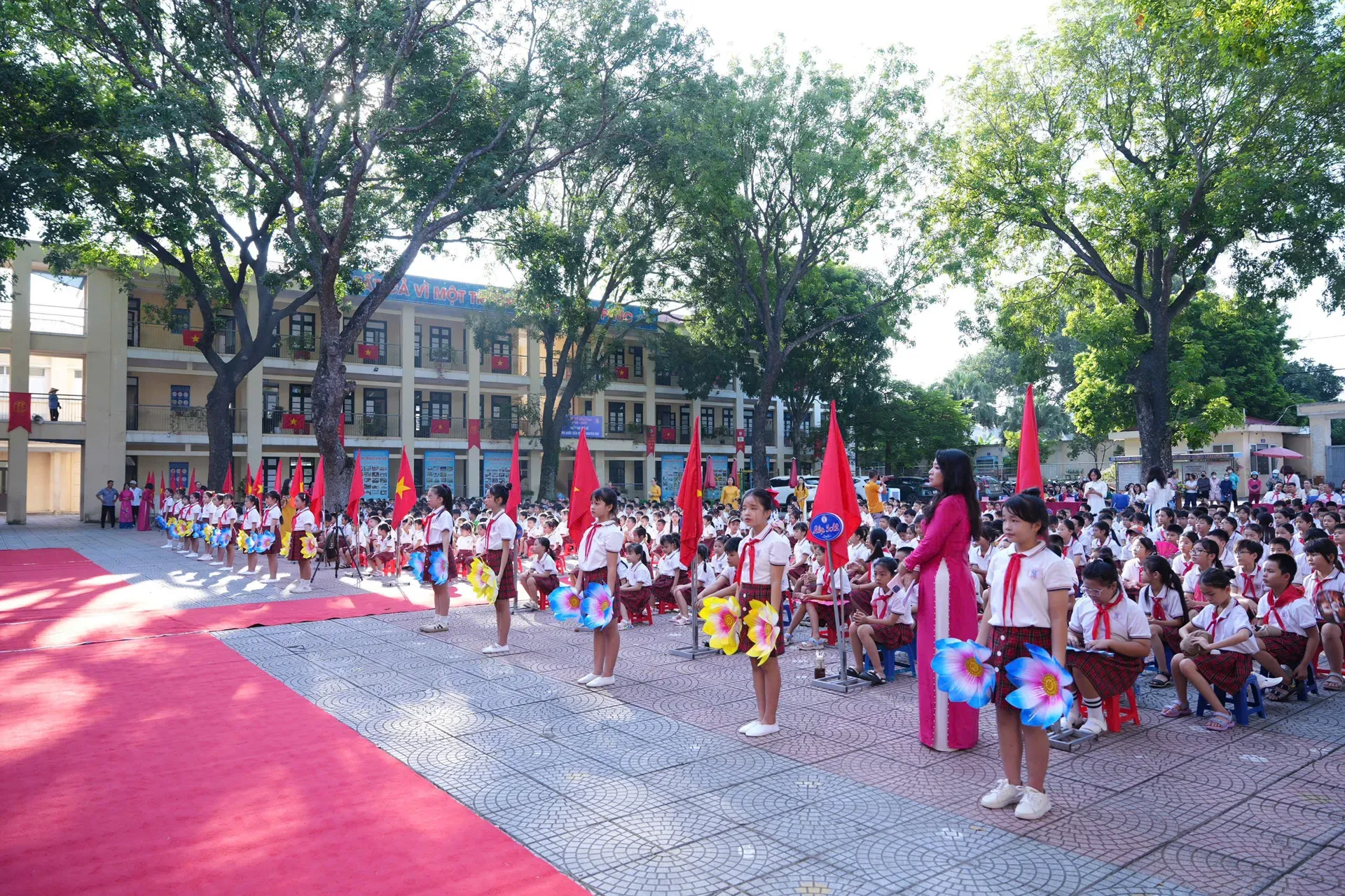
Opening ceremony of the new school year at Ninh Hiep Secondary School. Photo: Kinh te & Do thi Newspaper.
Hanoi has completed land allocation and is reviewing public-school needs under its new administrative boundaries. From 2021 to 2025, the city built and renovated 653 schools with total investment exceeding VND30 trillion (US$1.14 billion).
In the 2025–2026 school year, the city will open 43 new schools and welcome 60,000 incoming students. Hanoi currently has nearly 2.3 million students.
Public-school overcrowding remains severe, with many primary classes accommodating 40–50 students and even 50–60 in fast-urbanizing districts, far above the 35-student limit.
Slow progress in school construction has prevented the network from keeping pace with population growth.
Experts recommend tightening enrollment quotas, strengthening oversight and promoting education socialization to ease pressure on public schools.
According to Tran The Cuong, Director of the Hanoi Department of Education and Training, the city benefits from a large teacher workforce, early access to advanced educational models and strong parental support. However, he warned that Hanoi faces significant pressure in class size, school facilities and ensuring uniform quality across districts.
Cuong reaffirmed Hanoi’s commitment to completing its school network planning, prioritizing high-growth areas and developing modern multi-level schools and high-quality education centers.
He also pledged to upgrade specialized classrooms, foreign-language rooms and physical-education facilities so that 90% of public schools in Hanoi will meet national standards.