Discipline and professionalism to guide Hanoi success in 2026: Hanoi Party Secretary
As the Lunar New Year of the Horse 2026 arrives, Hanoi glows with flags and flowers and steps into the new year with renewed confidence. Drawing on its heroic legacy and thousand-year cultural heritage, the capital aims to spearhead national development, advance innovation under the 14th National Party Congress Resolution and pioneer new growth models for a prosperous and modern future. Below is an article by Politburo member and Hanoi Party Secretary Nguyen Duy Ngoc outlining the capital’s key priorities for 2026.
The 14th National Party Congress set two centennial goals: by 2030, Vietnam will become a developing country with modern industry and upper-middle income; by 2045, it will achieve developed and high-income status.
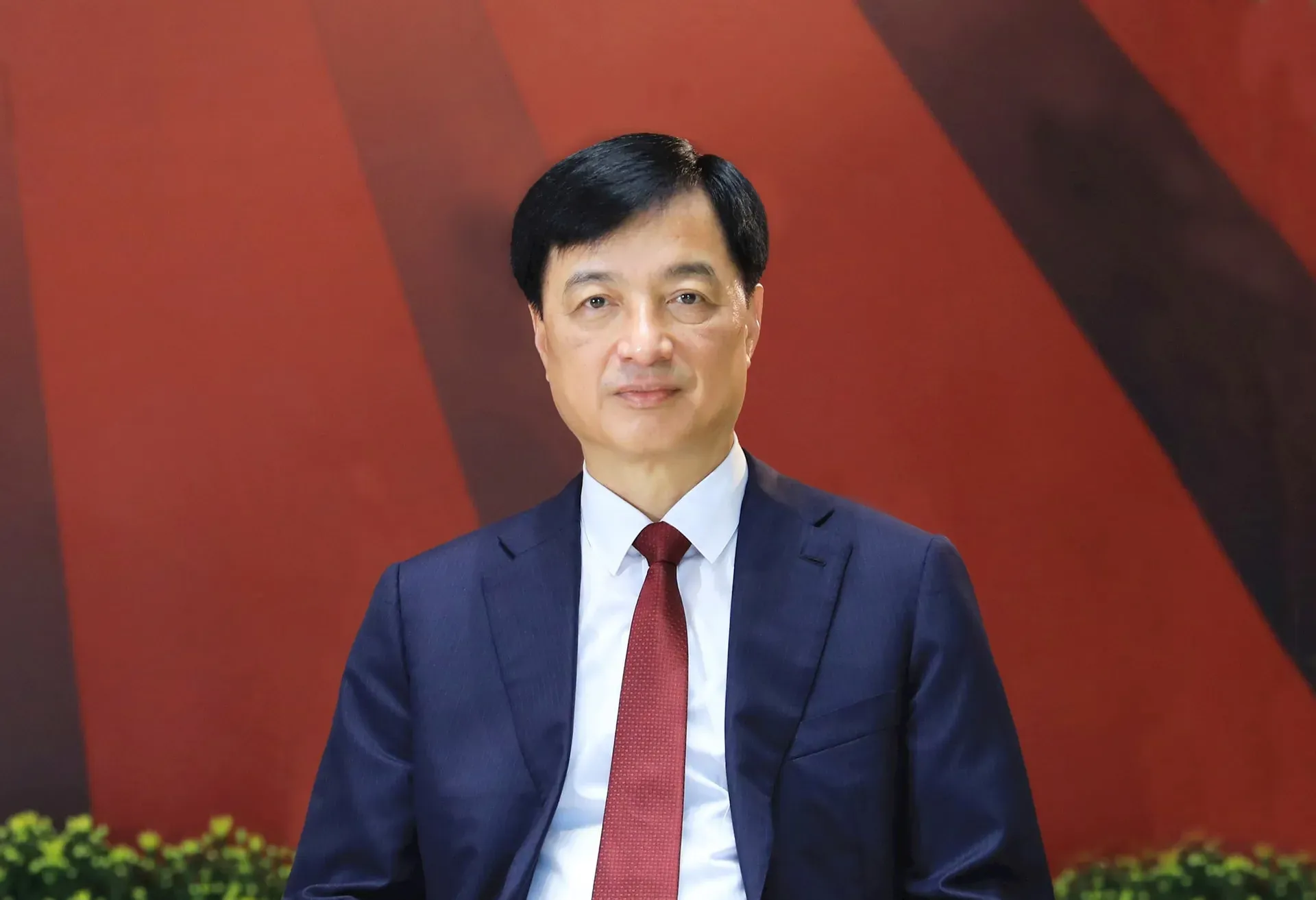
Secretary of the Hanoi Party Committee Nguyen Duy Ngoc. Photo: Photo: Quang Thai/The Hanoi Times
Within that national vision, Hanoi serves as the country’s political, administrative, economic, cultural and scientific center and the growth engine of the Red River Delta and the northern key economic region. The city aspires to stand alongside leading capitals in the region.
Accounting for about 1% of Vietnam’s land area and 8.5% of its population, Hanoi contributed nearly 13% of national GDP and more than 26% of total state budget revenue in 2025, making it one of the country’s most dynamic growth poles.
In this new era, Hanoi must improve the lives of its more than 8.7 million residents while setting an example and generating momentum for regional and national progress.
Accordingly, “Discipline – Professionalism – Breakthrough – Innovation – Efficiency – Sustainability” will guide the capital’s development.
Foundation lies in discipline and professionalism
Discipline underpins effective governance. To reinforce its leadership role, Hanoi must build a system grounded in accountability, where discipline sets direction, resources support implementation and results measure performance.
Discipline must shape every action and decision. Firm adherence to rules creates the conditions for rapid and lasting growth.
Professionalism rests on high-quality public service, capable governance and streamlined operations driven by data.
Each task must have a clearly assigned owner, a defined deadline and measurable outcomes. Only this approach can deliver tangible change and strengthen public trust.

The use of the citizenship app iHanoi improves the connection between the city authorities and people. Photo: Phuong Nga/The Hanoi Times
In 2025, Hanoi posted strong results: GRDP growth of 8.16%, state budget revenue of VND711 trillion (US$27.4 billion) exceeding projections, leading rankings in digital transformation and innovation, a tourism surge and progress on major infrastructure projects.
These outcomes reflect disciplined leadership and a determination to act decisively and effectively.
In the digital era, professional governance is imperative. A metropolis of more than 8.7 million people cannot rely on outdated methods or fragmented information.
Hanoi is building integrated, accurate and shared data systems across agencies to move from traditional administration to modern, data-driven urban governance.
Breakthrough and innovation: unlocking potential
Hanoi cannot fulfill its pioneering role by following established paths. The capital must confront complex and unprecedented challenges and deliver concrete results.
The 18th Hanoi Party Congress identified three strategic breakthroughs: completing the capital’s institutional framework; developing high-quality human resources and attracting talent; and building modern, smart and interconnected infrastructure.
In 2025, the city advanced major projects, including new Red River bridges, ring roads, urban railway lines, key radial routes, an Olympic sports urban complex and the Red River landscape corridor. These initiatives expand development space and strengthen regional connectivity.
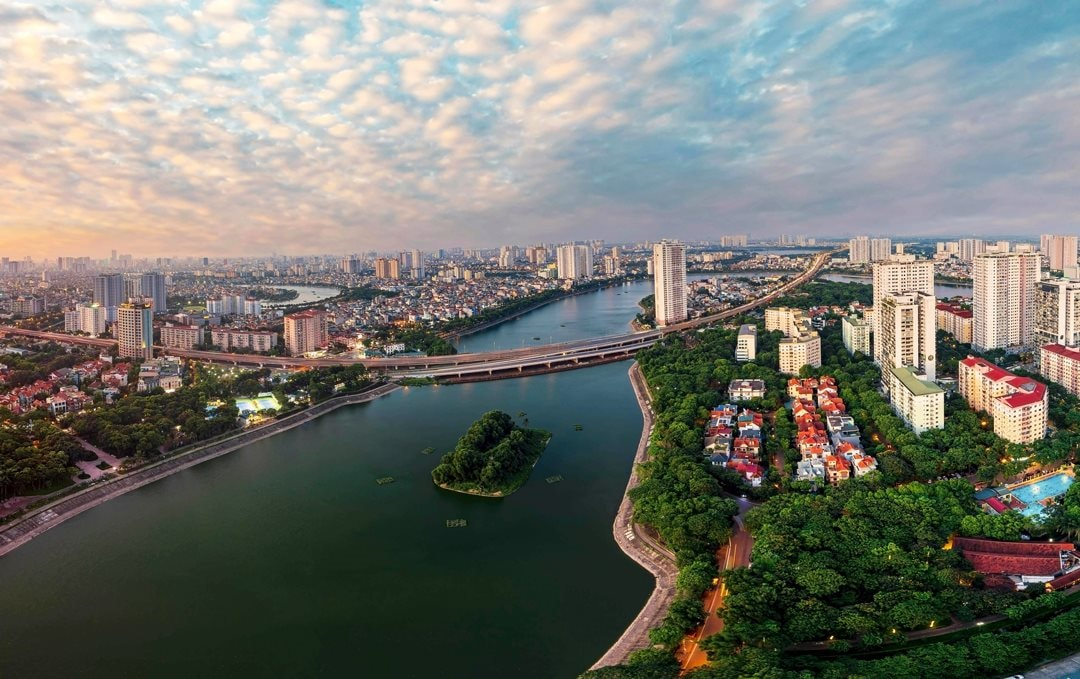
The view of Ring Road 3 crossing Linh Dam Lake. Photo: Quang Trung/The Hanoi Times
Hanoi also led in science, technology and digital transformation. The city applied artificial intelligence in urban management, launched a digital technology park, expanded the Hoa Lac Hi-Tech Park, trained skilled workers and developed a smart city blueprint.
Sustained progress requires bold reforms. Hanoi must leverage special policy mechanisms, pilot innovative models and take responsibility for experimentation to scale successful practices.
A modern capital measures achievement through culture, knowledge, technology and creative vitality. Creativity should build upon heritage, enriching identity and transforming culture into a powerful development resource.
Hanoi’s recognition by UNESCO as a Creative City and a Global Learning City, along with tourism growth reaching about 33.7 million visitors in 2025, underscores this dynamic energy.
The city will continue to nurture creativity across neighborhoods, villages, schools and enterprises.
Following the Politburo’s Resolution No. 80 on cultural development, Hanoi pledges to lead implementation through concrete, results-oriented action programs.
Efficiency and sustainability: the ultimate goal
All policies and targets must answer fundamental questions: Are residents living better? Are they safer? Are they happier? These are the true measures of effectiveness.
In 2025, Hanoi recorded robust growth, high budget revenue, progress in rural development, strong education performance and improved healthcare and social welfare. Yet the city must press forward to ensure that every resident benefits from development.
Sustainability reflects responsibility to future generations. A thriving capital must remain attractive to residents, investors, visitors and international partners alike.
Strategic directions for global integration
General Secretary To Lam has posed a central question: how can Hanoi preserve the spirit of Thang Long while evolving into a creative, green, smart and globally connected metropolis?
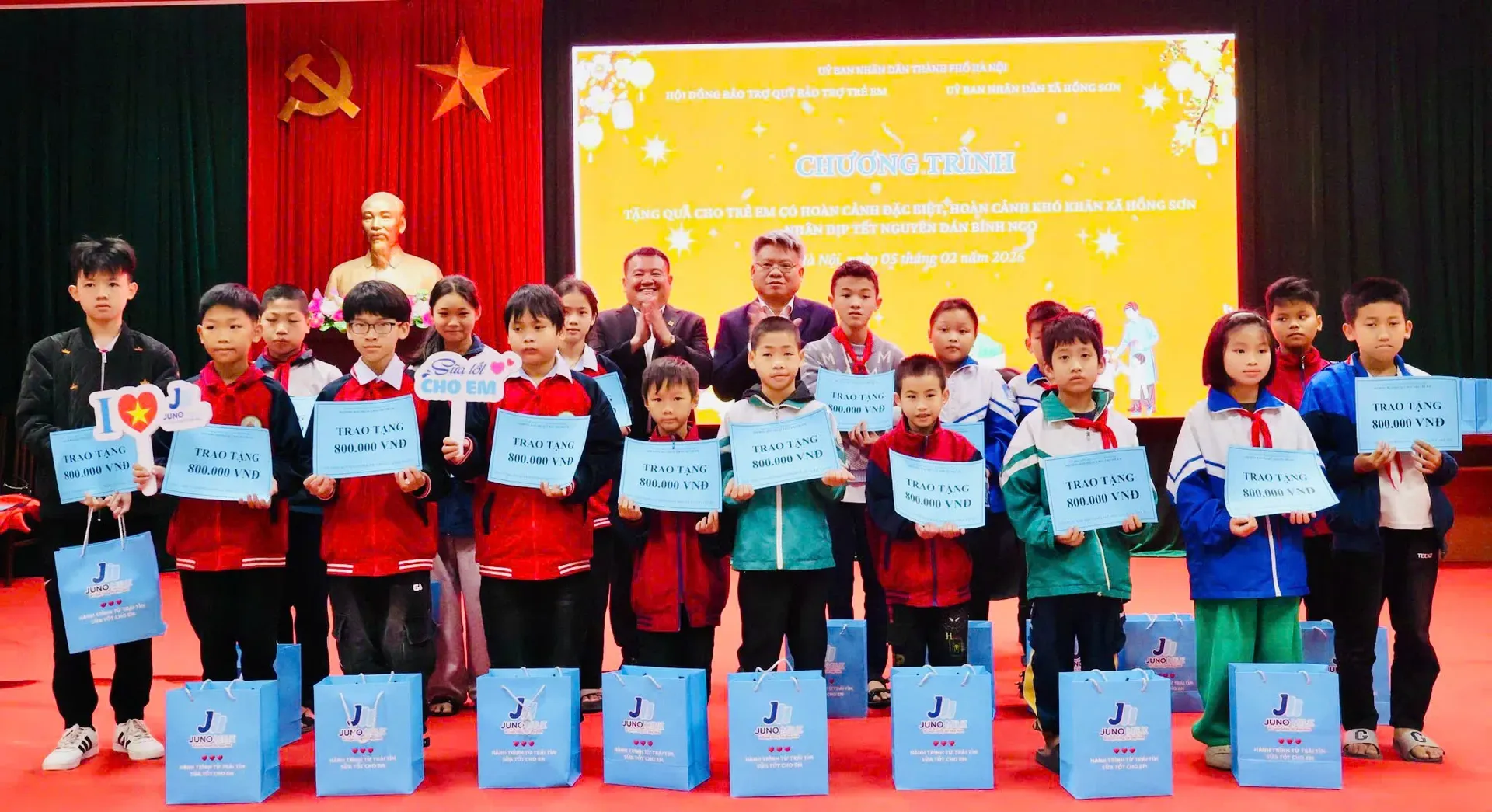
Children in Hong Son Commune receives Tet gifts. Photo: Van Bien/The Hanoi Times
To meet that challenge, the city will reform leadership methods, enhance accountability and build a clean, capable political system with officials who are responsible and forward-thinking.
Hanoi will also finalize a long-term master plan with a 100-year vision and pursue double-digit growth, accelerate strategic infrastructure and strengthen regional connectivity.
Municipal and local authorities will tackle five persistent bottlenecks: traffic congestion, urban order, environmental pollution, flooding and food safety.
Hanoi will place people at the center of policy, expand social welfare and ensure that no one is left behind. Furthermore, the city will maintain national defense and public security while deepening substantive and effective international integration.
Preserving the soul of Thang Long while building a creative, green, smart and globally connected metropolis will guide Hanoi from 2025 to 2030.
As the nation’s heart, Hanoi carries immense expectations. The city’s Party organization, government, armed forces and residents will uphold their thousand-year heritage and fulfill President Ho Chi Minh’s vision of a peaceful, beautiful and strong capital.
Entering 2026 with unity, determination and strong support from central authorities and General Secretary To Lam, Hanoi aims to achieve its targets, implement the 18th Hanoi Party Congress Resolution and contribute to national prosperity in this new era.
The resilience and stature of the thousand-year-old capital will continue to anchor new achievements in Vietnam’s next phase of development.